Visual comprehension Addition Worksheets
7 filtered results
-
From - To
Enhance your child's math skills with our engaging Visual Comprehension Addition Worksheets! These printable resources are designed to help early learners develop a strong foundation in addition through visual aids. By combining pictures, diagrams, and real-life scenarios, children can better understand concepts and improve problem-solving abilities. Our worksheets encourage critical thinking, enabling kids to visualize addition in a fun and interactive way. Perfect for homeschooling or classroom settings, these worksheets make learning math enjoyable and accessible. Explore our collection today and empower your child with the skills they need for academic success in a playful manner!
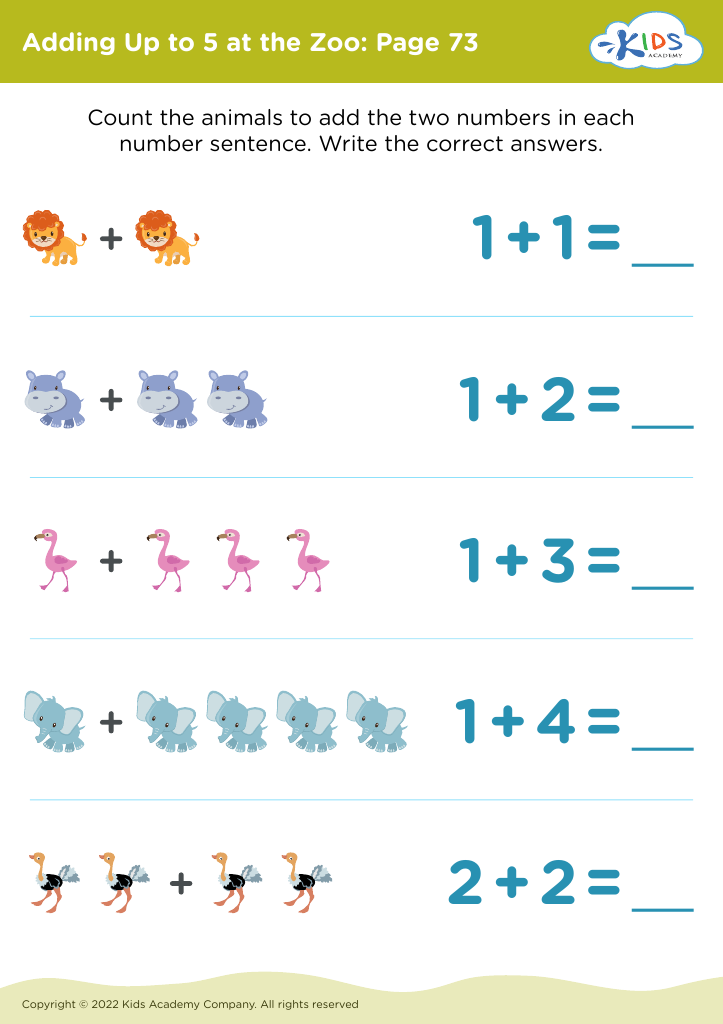
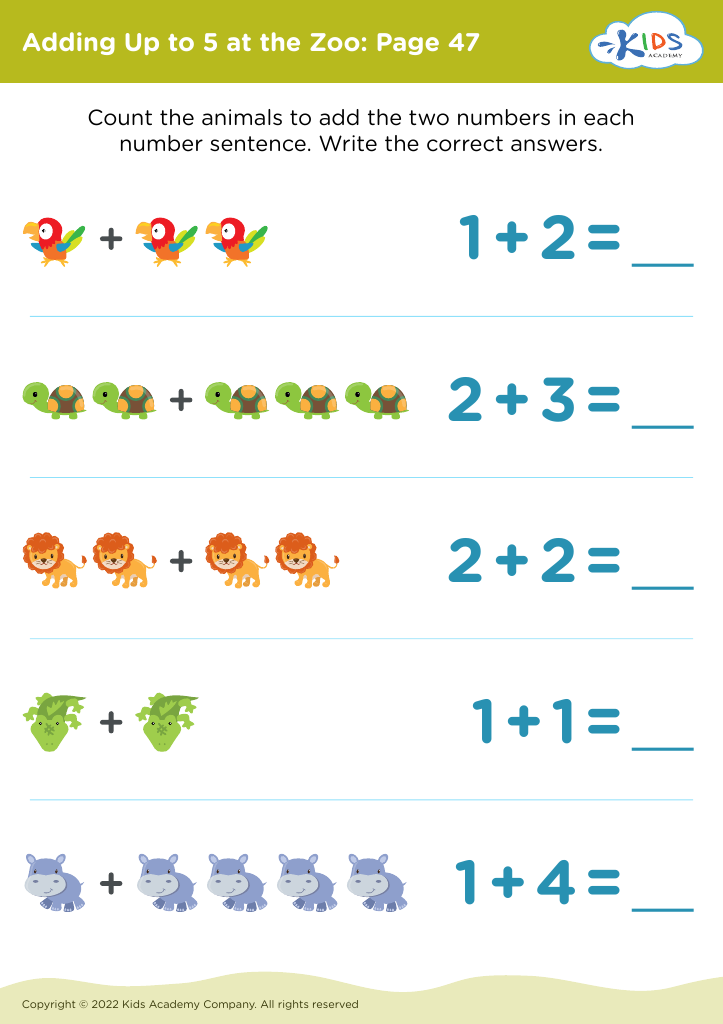
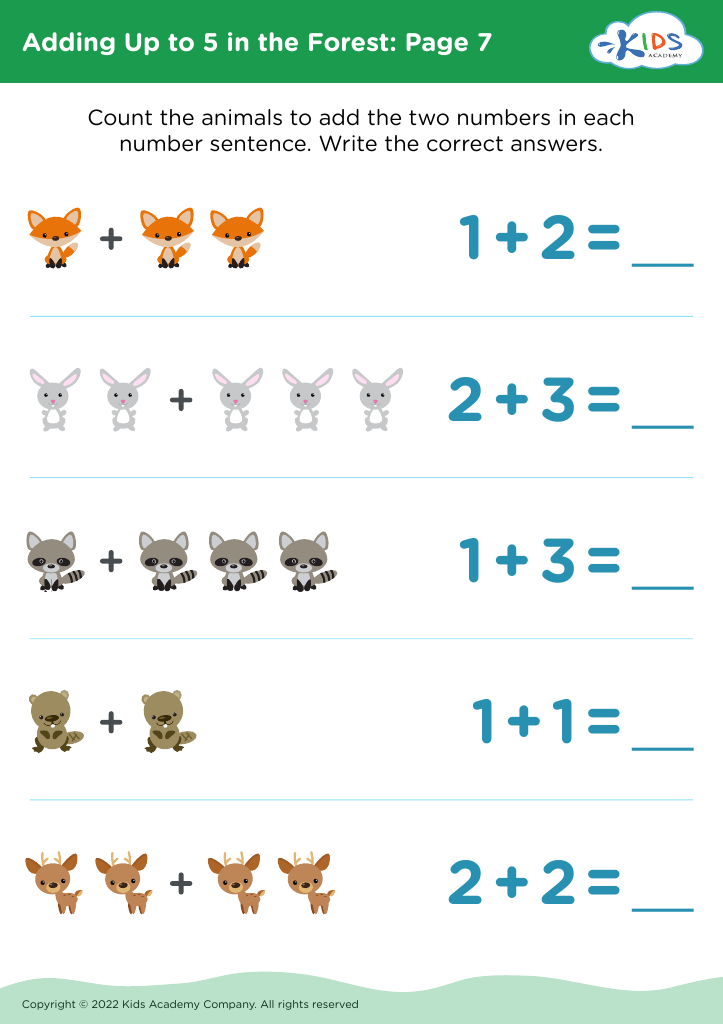
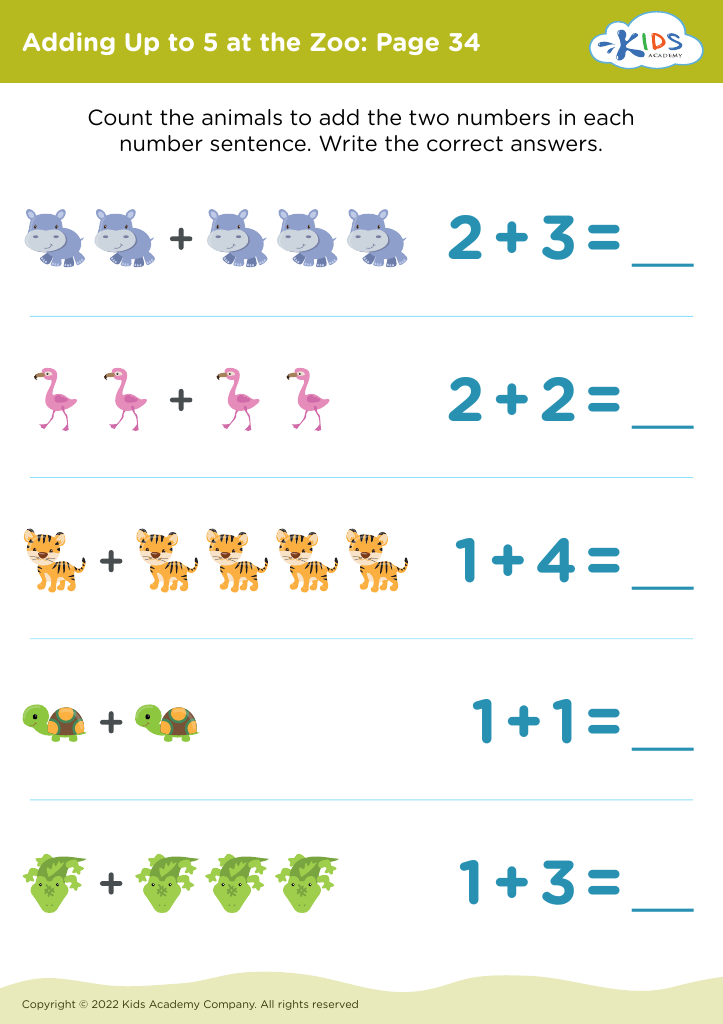
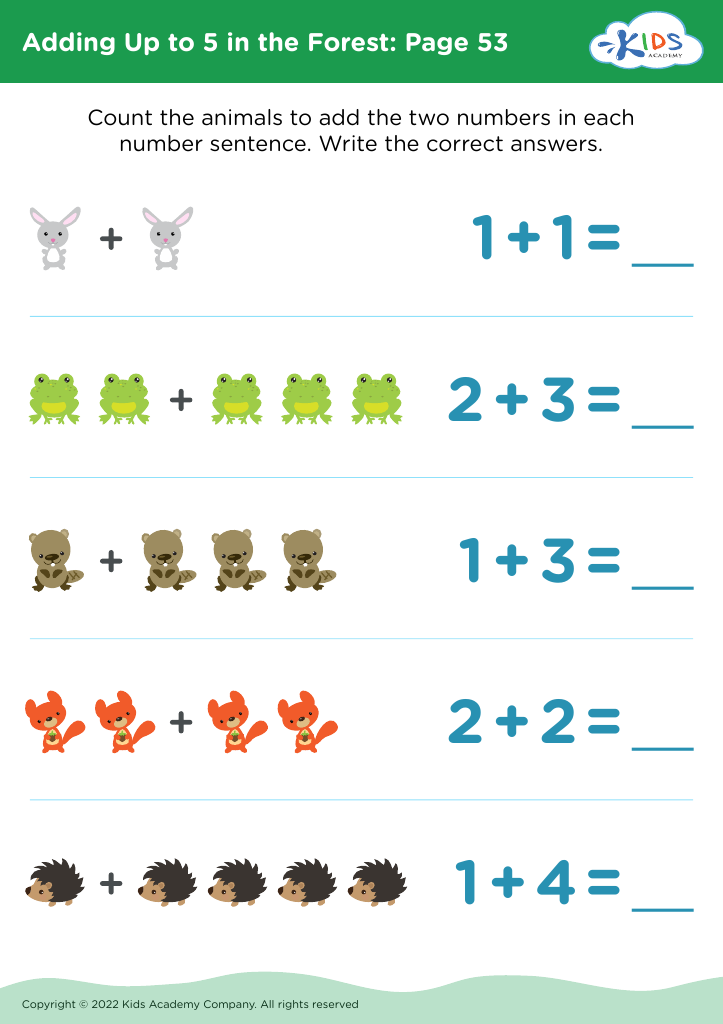
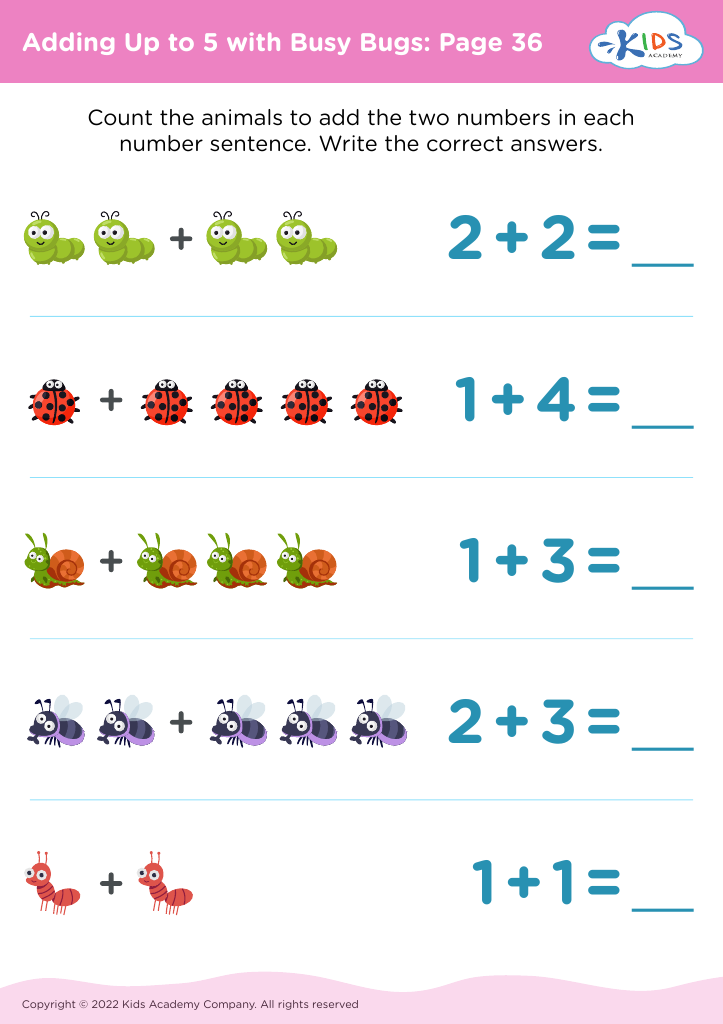
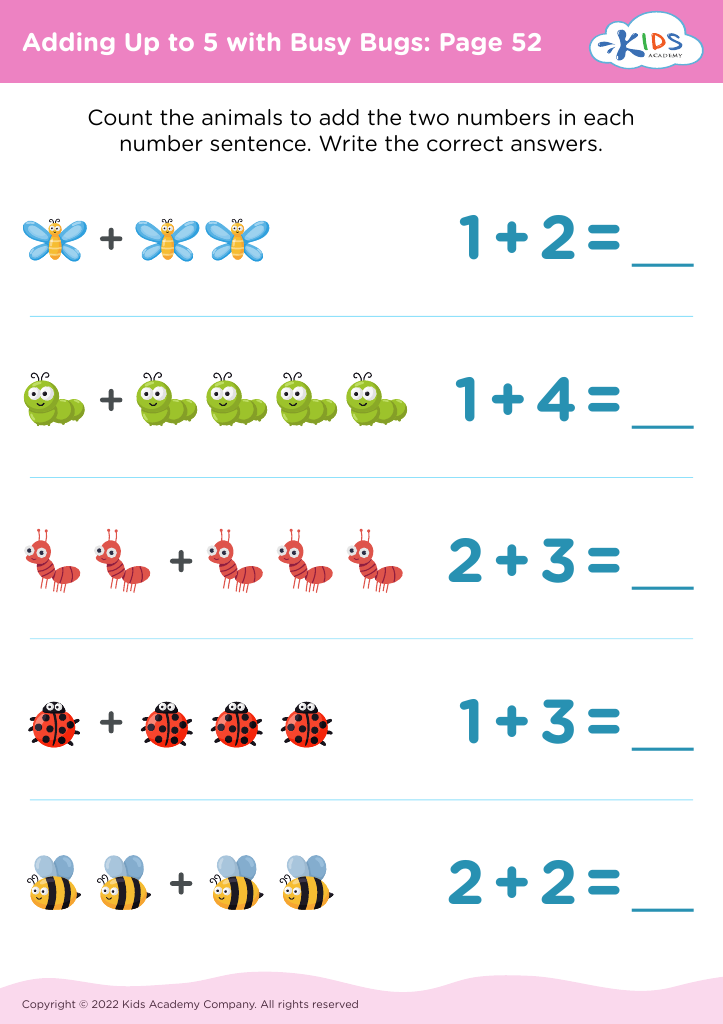








Visual comprehension in the context of addition is crucial for early learners as it lays the foundation for their mathematical understanding. When children develop strong visual comprehension skills, they can better grasp the concept of quantity, number relationships, and even the process of addition itself. This skill involves recognizing patterns, quantities, and visual representations such as blocks or number lines, enabling students to successfully solve problems.
Parents and teachers should care about visual comprehension in addition because it helps to foster critical thinking and problem-solving skills. By enhancing their visual comprehension, children become more confident in making connections between numbers and understand how different components fit together to form a solution. This understanding goes beyond rote memorization, encouraging deeper learning.
Furthermore, visual comprehension supports diverse learning styles. Many children benefit from visual aids, and when teachers incorporate these methods in their instruction, it engages students more meaningfully. This can ultimately lead to improved academic performance and a positive attitude towards math. Additionally, children who cultivate strong visual skills acquire a valuable tool that will assist them throughout their education and future pursuits. Therefore, prioritizing visual comprehension in addition is essential for holistic development in young learners.








