Visual learning enhancement Addition Worksheets
4 filtered results
-
From - To
Elevate your child's math skills with our Visual Learning Enhancement Addition Worksheets from Kids Academy! Specially designed for early learners, these engaging and colorful worksheets offer a dynamic approach to mastering addition. By incorporating visual aids and interactive elements, children can easily grasp concepts through hands-on practice. Perfect for developing critical thinking and problem-solving skills, our worksheets transform learning into an enjoyable experience. Ideal for both classroom and home use, these resources ensure your child builds a solid mathematical foundation while having fun! Explore our collection today and watch your young learner thrive in their math journey.
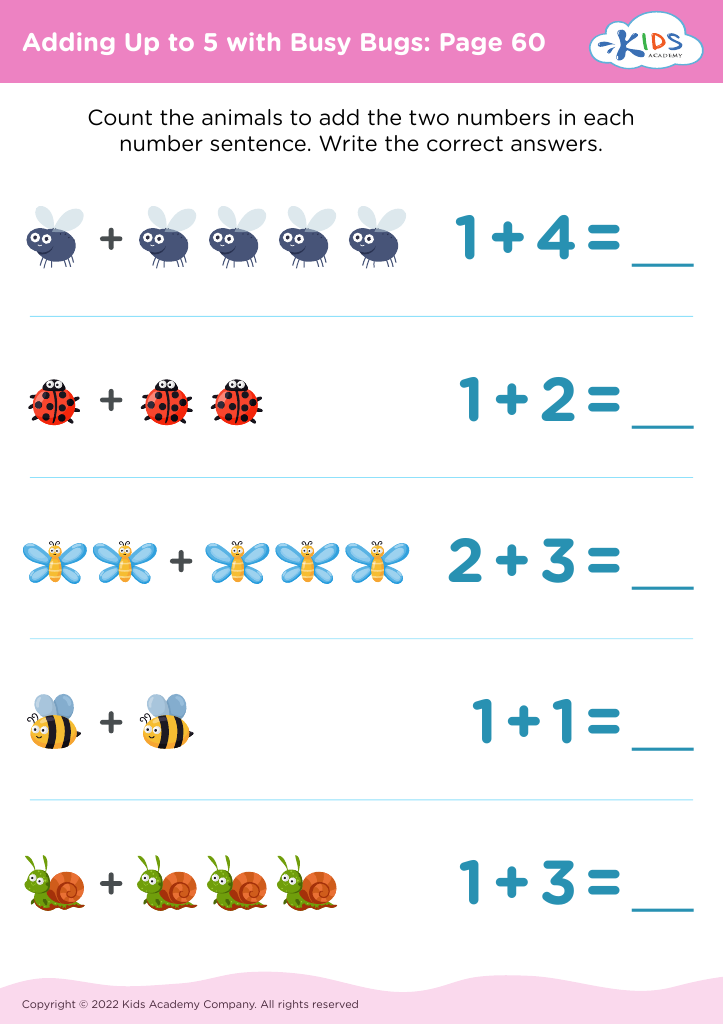
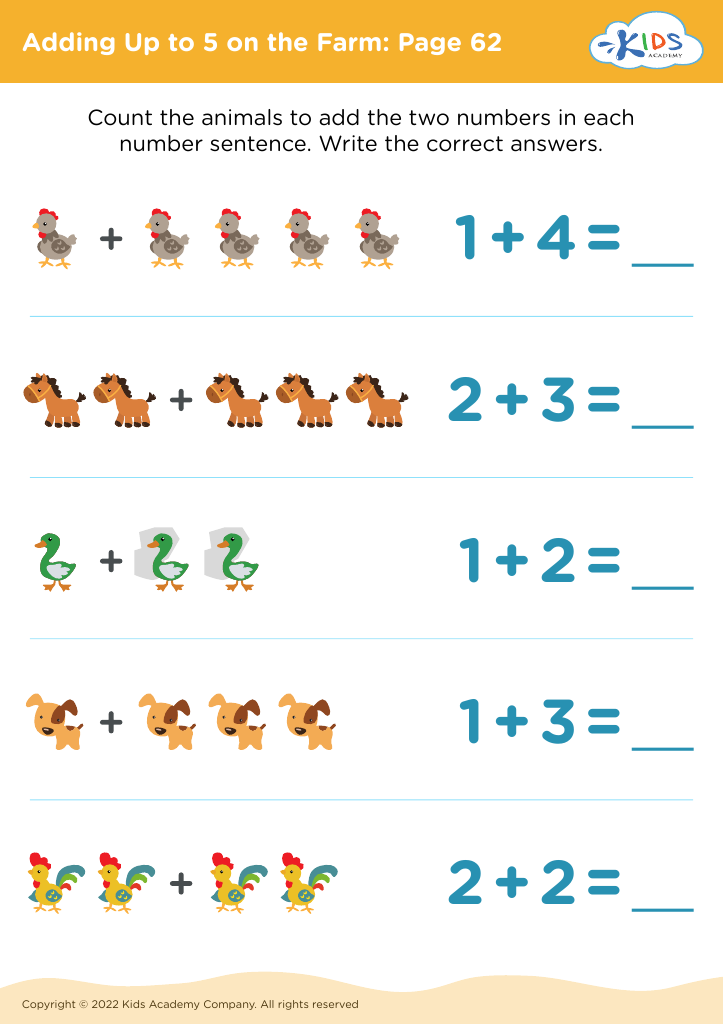
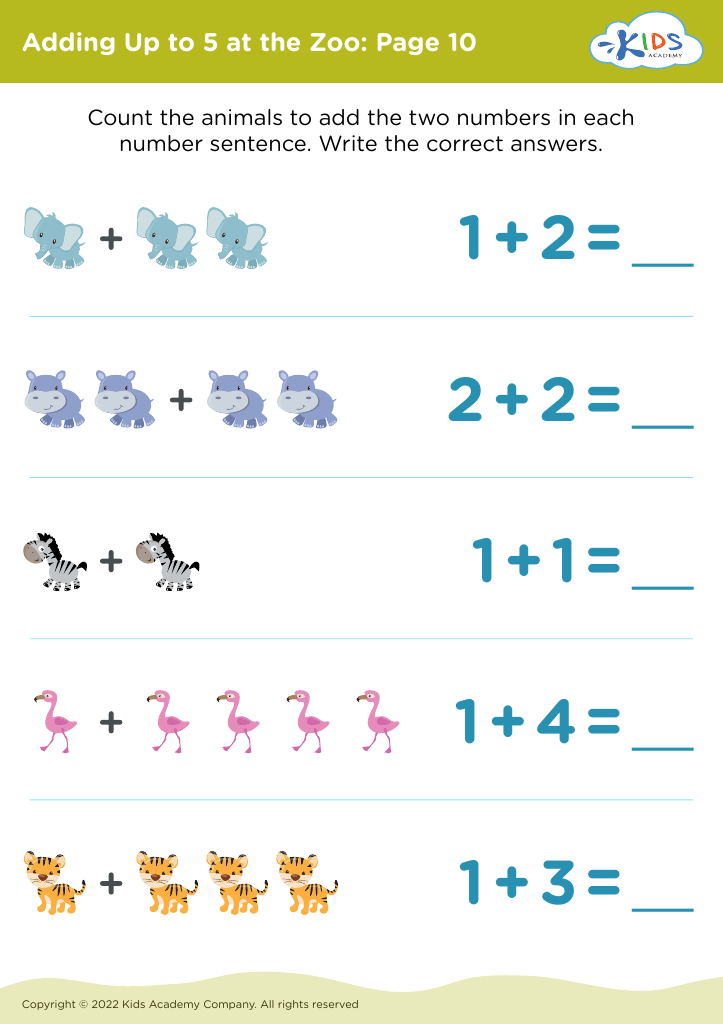
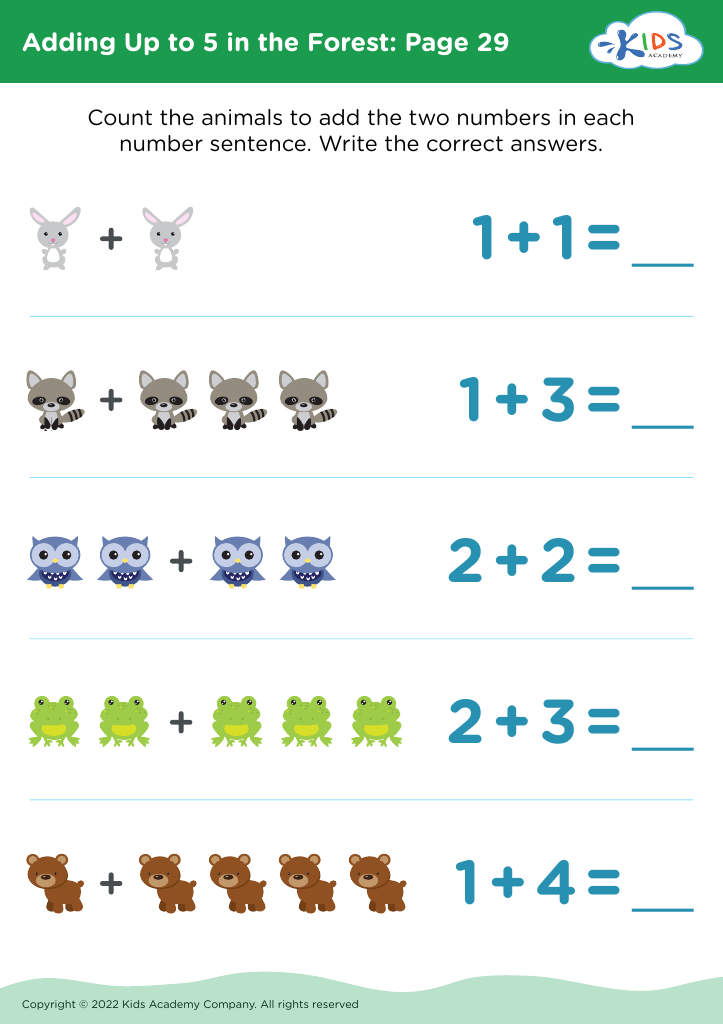








Parents and teachers should care about visual learning enhancement because it significantly bolsters student comprehension and retention, especially in subjects like mathematics. Visual learning, which involves using images, diagrams, and spatial understanding, aligns with the cognitive strengths of many young children who, developmentally, often respond more robustly to visual stimuli than text or verbal instructions alone. When it comes to addition, a cornerstone of elementary math, visual aids such as number lines, charts, and counters can concretize abstract concepts. This visual scaffolding transforms numbers and operations from abstract symbols into tangible, relatable ideas.
Moreover, visual tools foster a more engaging and interactive learning environment. Children are naturally curious and visually-oriented; when addition problems are presented with colorful manipulative or intriguing graphics, it captures their interest and participation more effectively than traditional rote techniques.
Additionally, enhanced visual learning supports diverse learners, including those with learning differences. Visual aids provide multiple representation nodes, catering to varied learning styles and offering alternative pathways to grasp and master addition. Therefore, integrating visual learning strategies in teaching addition not only equips all students with a strong mathematical foundation but also instills a love for learning through active, enjoyable participation. This nurtures confident, competent learners equipped for future academic challenges.








