Visual learning reinforcement Addition Worksheets
6 filtered results
-
From - To
Boost your child's math skills with our Visual Learning Reinforcement Addition Worksheets! Designed for early learners, these engaging worksheets utilize vibrant visuals and interactive elements to reinforce addition concepts. By combining visual aids with hands-on practice, children can enhance their understanding of numbers and improve their calculation abilities. Our carefully crafted worksheets cater to different learning styles, making arithmetic fun and accessible for all students. With a variety of exercises to choose from, your child will enjoy practicing addition while building confidence in their mathematical skills. Explore our Visual Learning Reinforcement Addition Worksheets and pave the way for success in math today!
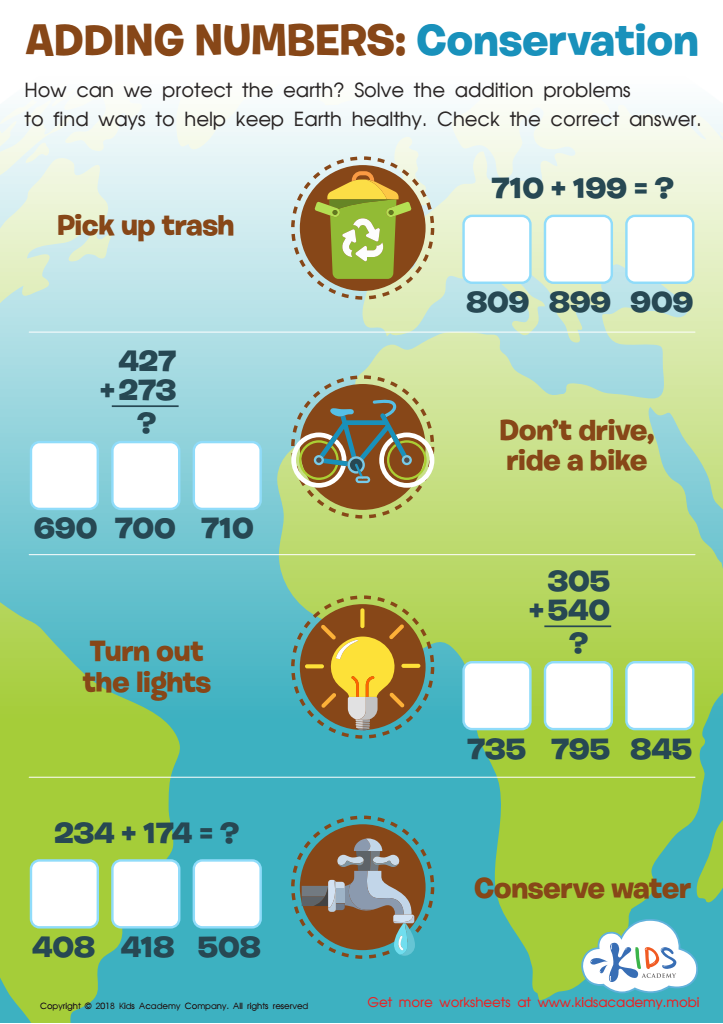
Adding Numbers: Conservation Worksheet
 Assign to My Students
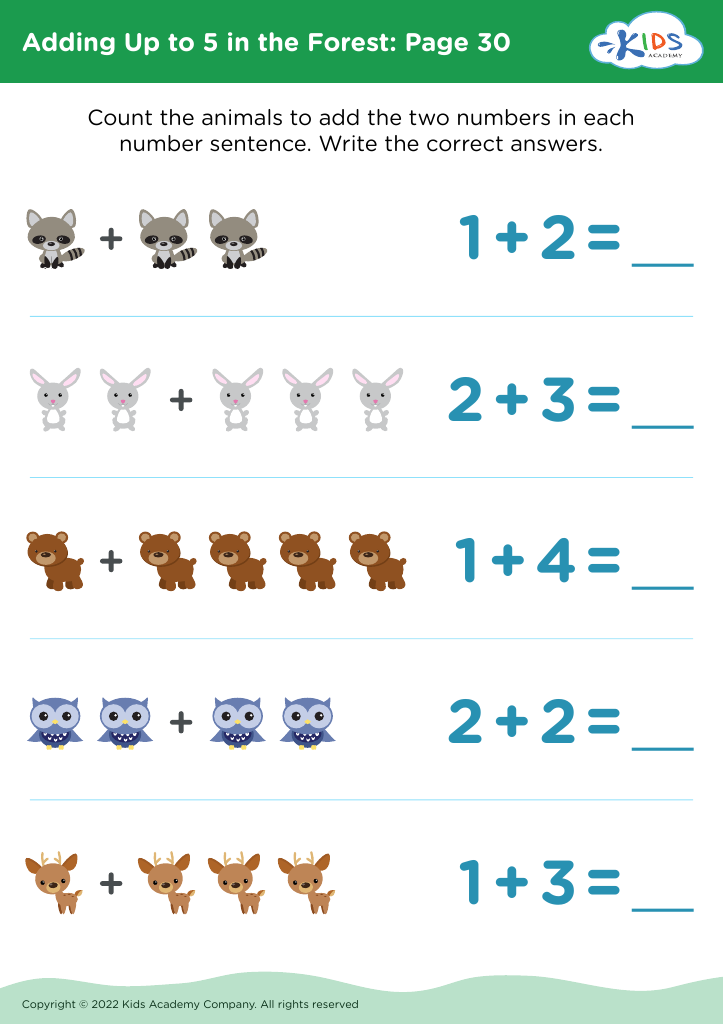
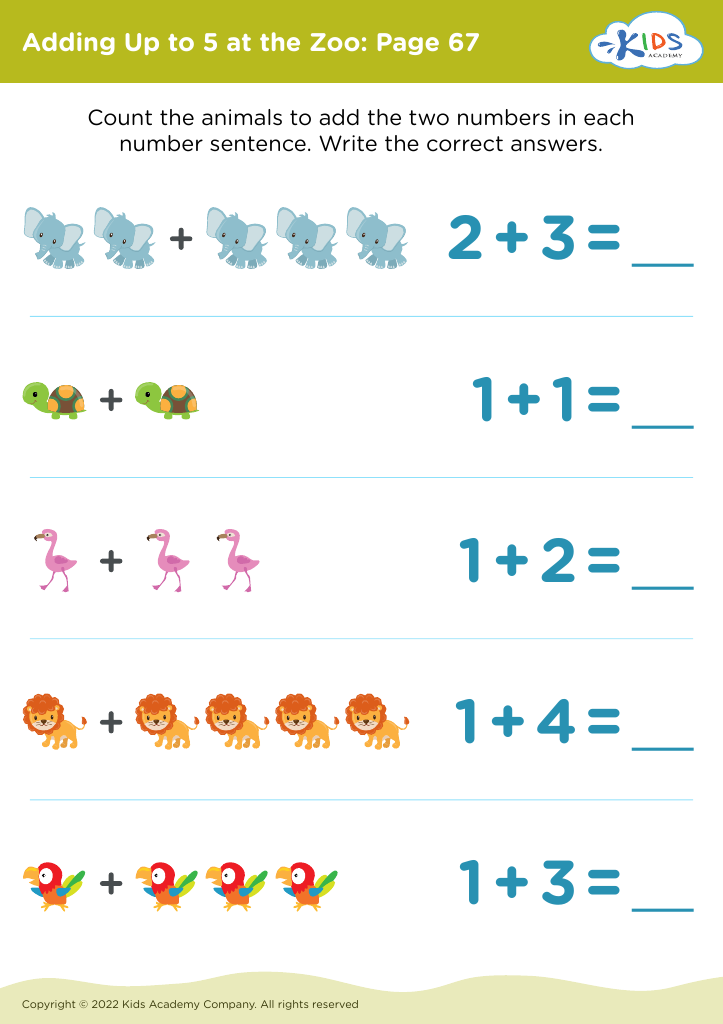








Visual learning reinforcement in the context of addition is crucial for parents and teachers as it enhances a child's understanding and retention of mathematical concepts. Visual aids, such as number lines, counters, or diagrams, provide concrete representations of abstract ideas, making them easier for young learners to grasp. By incorporating visual strategies, children can see relationships and patterns, helping them to understand the ‘why’ behind addition rather than just memorizing facts.
Additionally, visual learning caters to various learning styles. Some children may struggle with traditional teaching methods that rely heavily on auditory instruction. By employing visual reinforcement, educators can ensure that they meet the diverse needs of all students, leading to a more inclusive classroom environment.
Furthermore, using visual aids can make learning more engaging and fun. Children are more likely to participate and stay motivated when they can interact with colorful, dynamic materials. This playful approach can foster a positive attitude toward math, reducing anxiety associated with the subject.
In summary, visual learning reinforcement in addition is essential because it enhances comprehension, accommodates different learning styles, and promotes an enjoyable learning experience, ultimately contributing to a child's success in mathematics.








