Historical Knowledge Arrays Worksheets
4 filtered results
-
From - To
Explore our "Historical Knowledge Arrays Worksheets" collection, designed to engage young learners in history through fun, interactive activities. These worksheets help students connect mathematical concepts of arrays with historical events and figures, promoting deep learning in a creative manner. By integrating history and math, children develop their critical thinking skills while enhancing their understanding of both subjects. Our diverse range of activities caters to varying learning styles, ensuring that every child finds something enjoyable. Perfect for classroom use or at-home learning, these worksheets make history come alive, sparking curiosity and a love for learning in your students. Start exploring today!
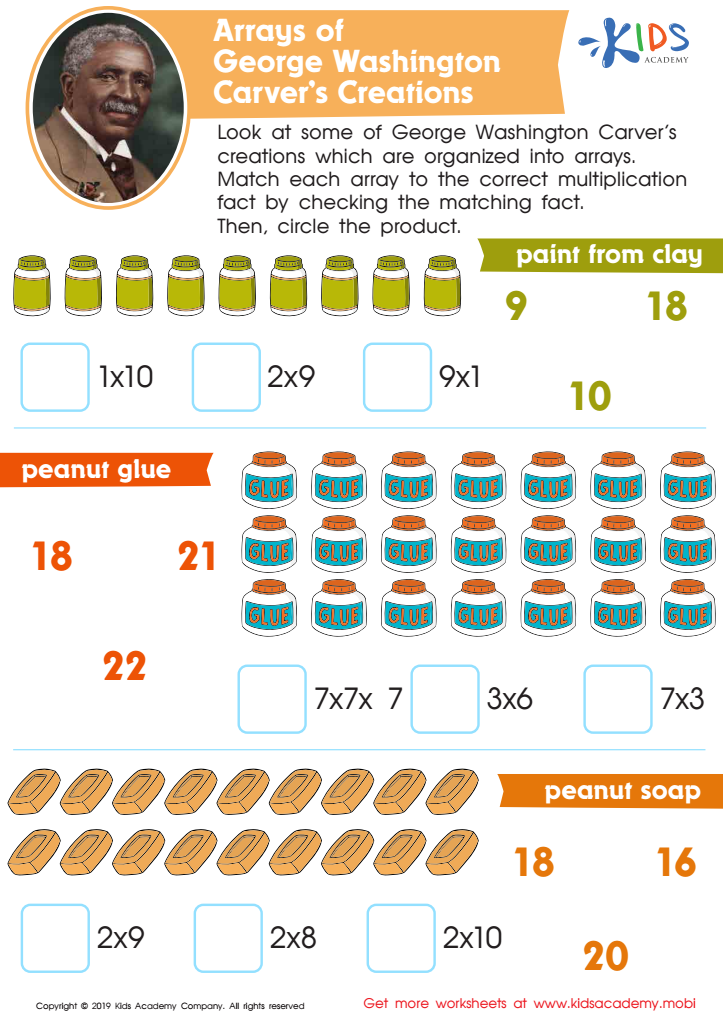
Arrays of George Washington Carver’s Creations Worksheet
 Assign to My Students
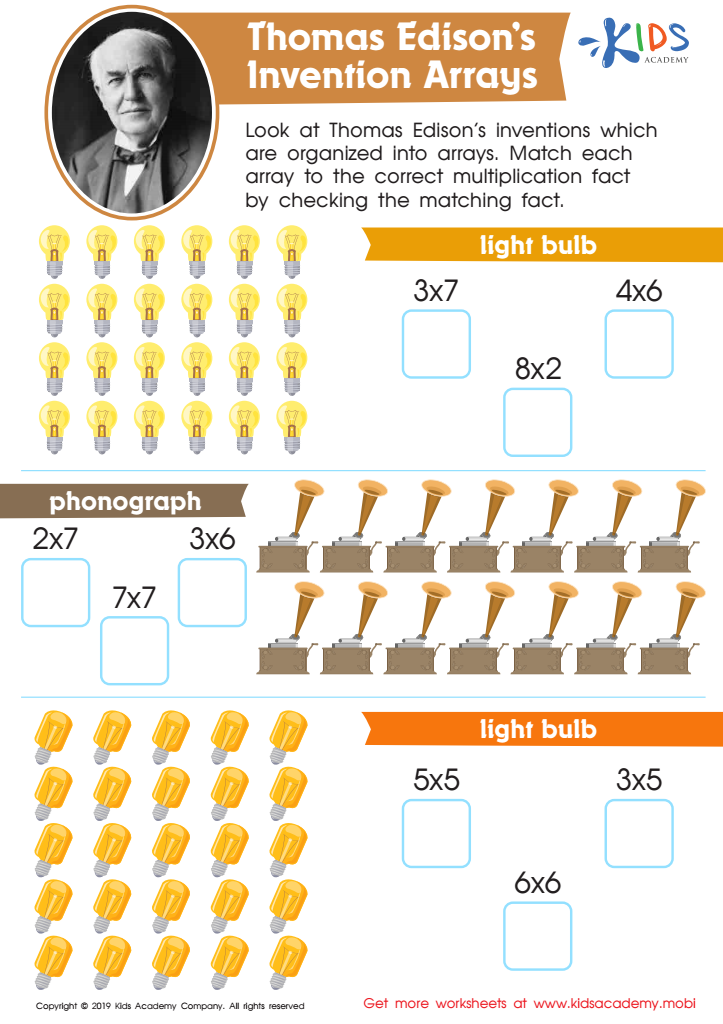
Thomas Edison’s Invention Arrays Worksheet
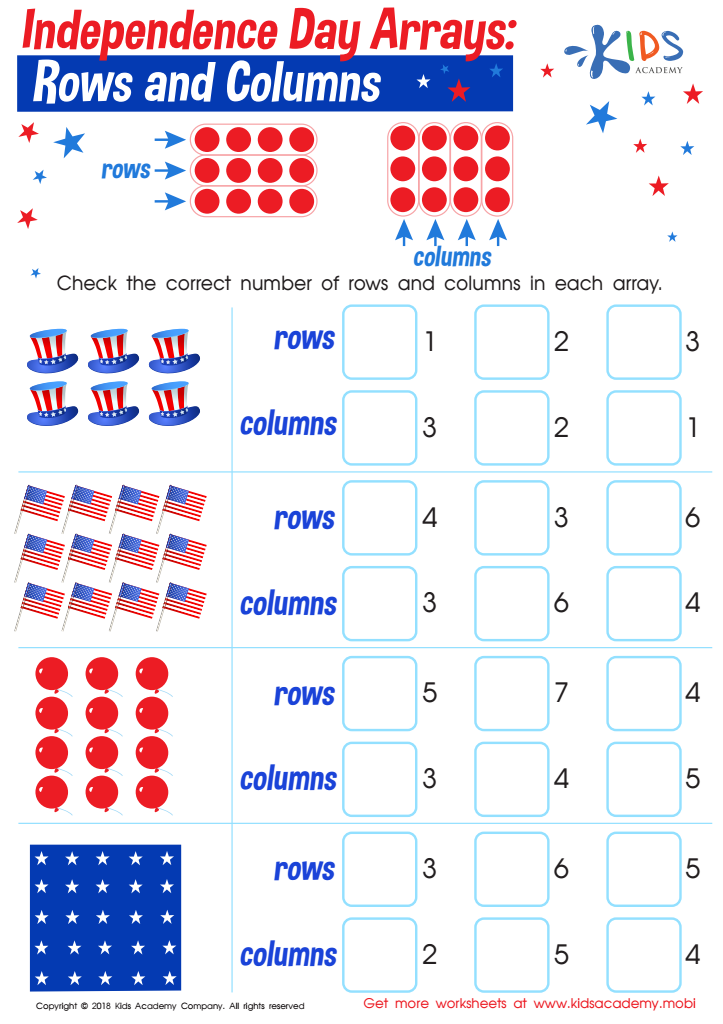
Independence Day Arrays: Rows and Columns Worksheet
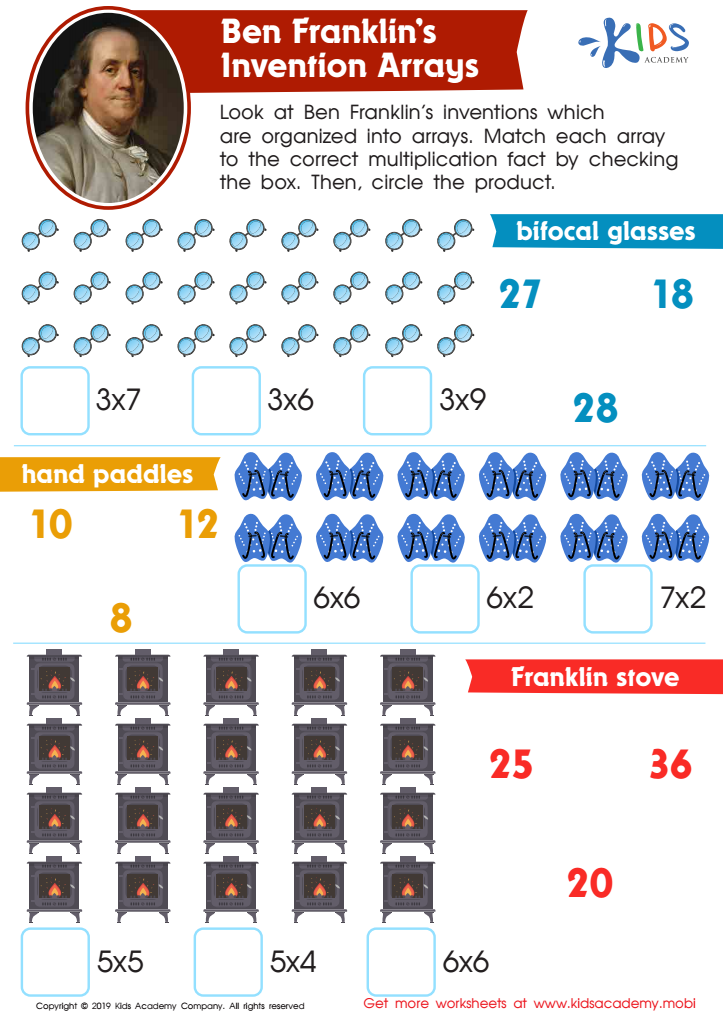
Ben Franklin’s Invention Arrays Worksheet








Historical Knowledge Arrays (HKAs) are crucial tools for both parents and teachers, offering structured frameworks that detail the interconnectivity of historical events, concepts, and themes. Understanding these arrays can significantly enhance a child's historical awareness, intellectual curiosity, and analytical thinking skills.
For parents, HKAs provide insight into what their children are learning, allowing for more meaningful discussions at home. This engagement can strengthen family bonds and instill a shared value for education. Moreover, HKAs help parents recognize the importance of history in understanding contemporary issues, enabling them to guide their children in becoming informed citizens.
Teachers play a pivotal role in facilitating comprehension through HKAs. By utilizing these frameworks, educators can create a more cohesive curriculum that illustrates the relationships among historical events, promoting deeper cognitive skills among students. HKAs encourage critical thinking, as learners analyze cause-and-effect relationships and identify patterns over time. This can foster responsible citizenship and thoughtful engagement with today's global challenges.
In summary, both parents and teachers should embrace Historical Knowledge Arrays as vital educational tools, enriching children's understanding of history while enhancing their ability to think critically about the present and future.








