Reading comprehension Arrays Worksheets
5 filtered results
-
From - To
Enhance your child's reading comprehension skills with our engaging Reading Comprehension Arrays Worksheets! Designed for young learners, these worksheets incorporate colorful arrays to make understanding text elements fun and interactive. Students will practice interpreting information through various exercises, strengthening their ability to analyze stories and identify key details. Our worksheets support a collaborative learning environment, encouraging kids to discuss their thoughts and findings. Perfect for both classroom use and at-home practice, these resources ensure your child develops essential literacy skills while having fun. Explore our collection today and watch your child's reading comprehension soar!
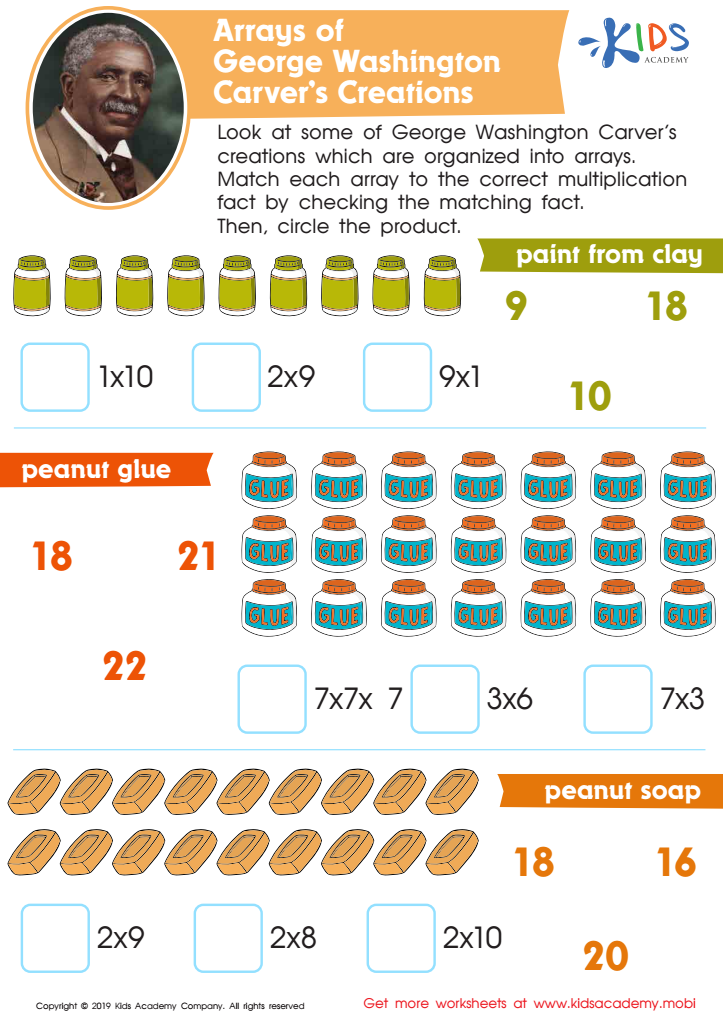
Arrays of George Washington Carver’s Creations Worksheet
 Assign to My Students
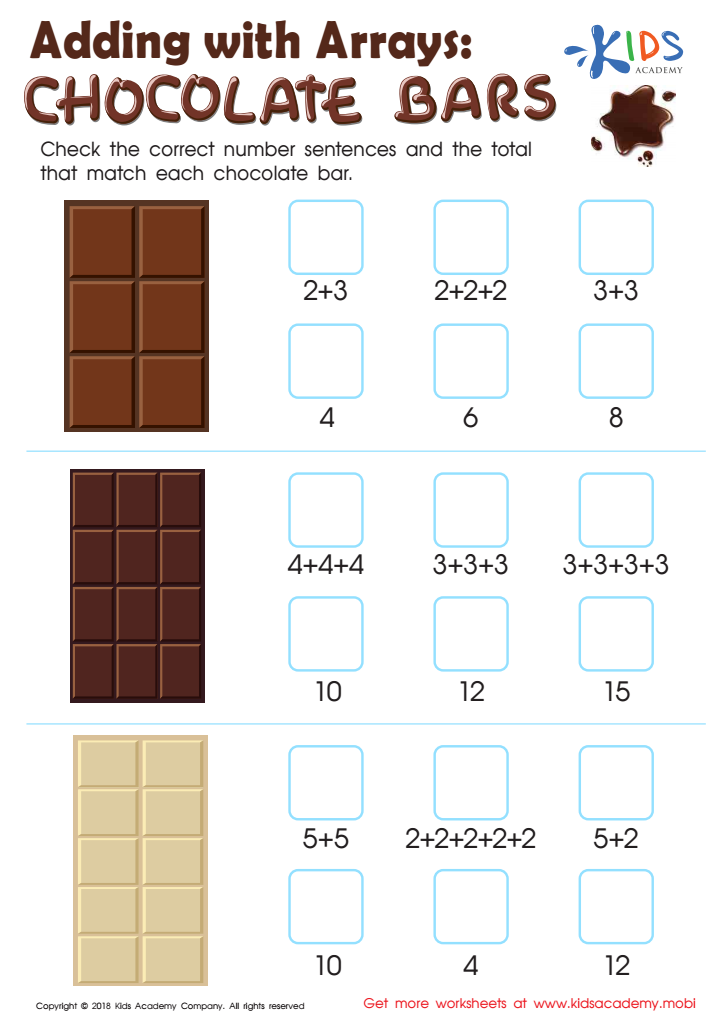
Adding with Arrays: Chocolate Bars Worksheet
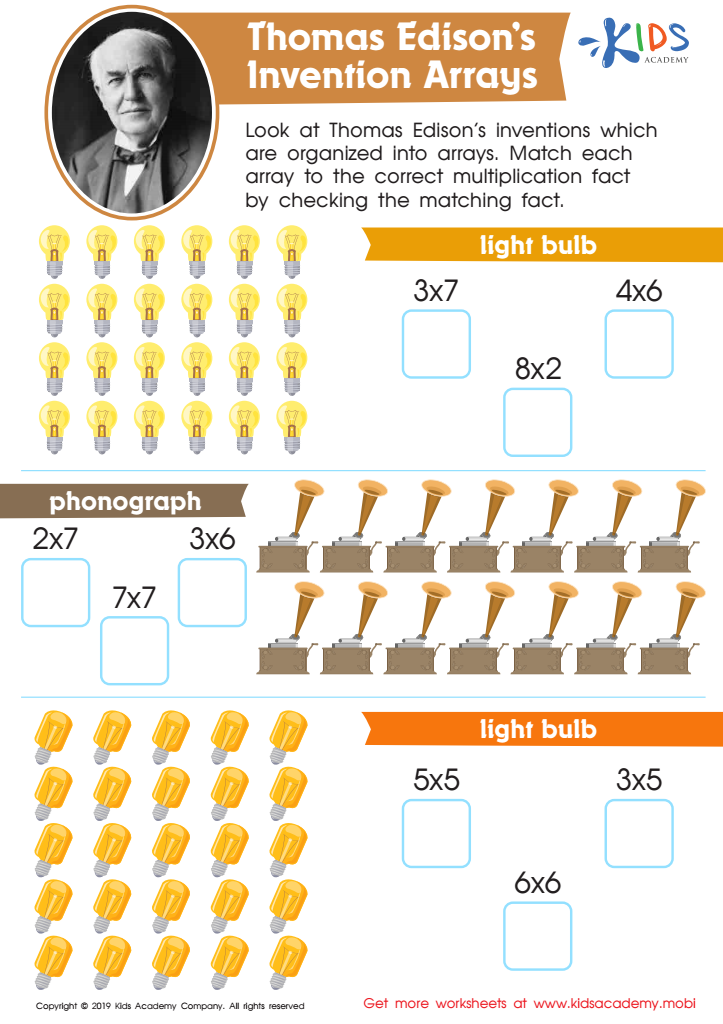
Thomas Edison’s Invention Arrays Worksheet
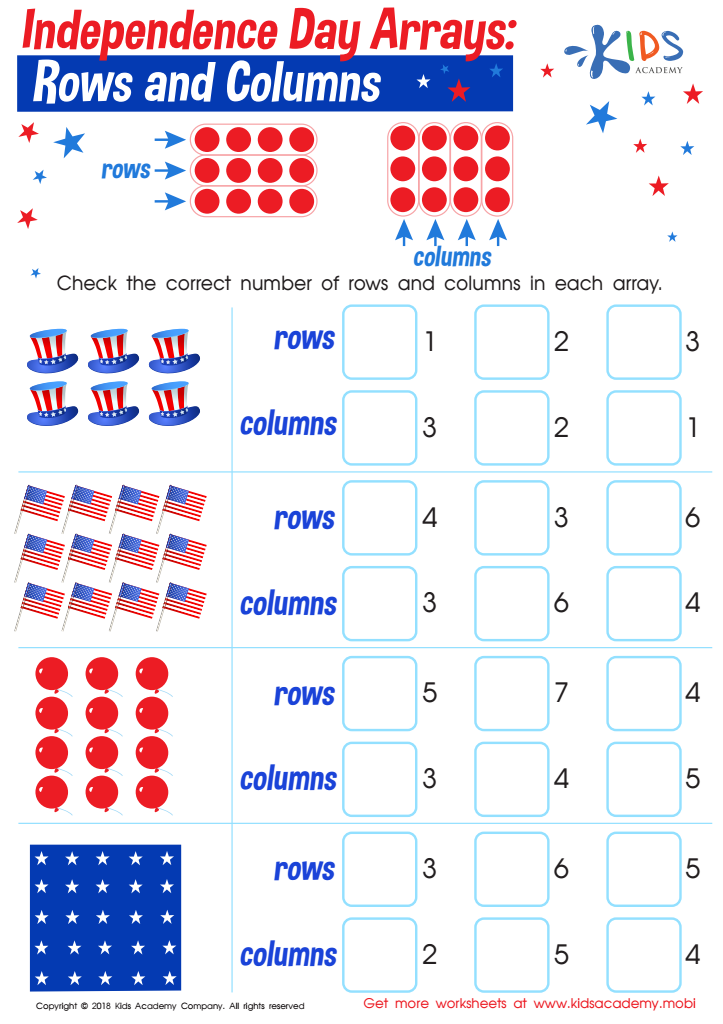
Independence Day Arrays: Rows and Columns Worksheet
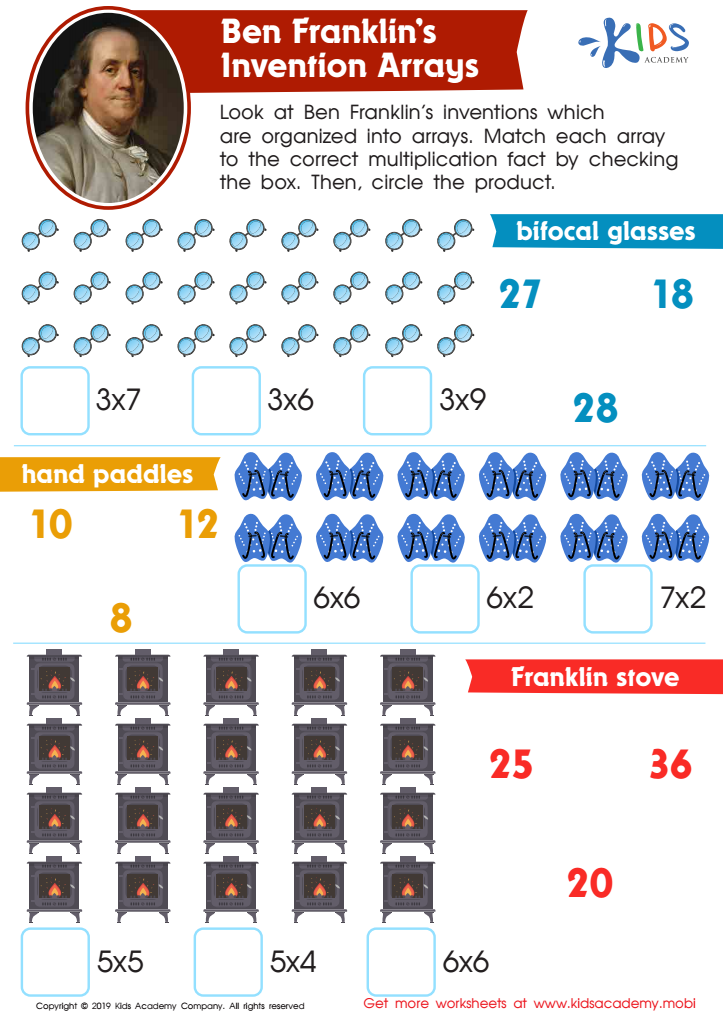
Ben Franklin’s Invention Arrays Worksheet








Reading comprehension arrays are valuable tools for both parents and teachers because they offer a structured way to enhance children's understanding of texts. These arrays visually map out the relationships among key elements of a story, such as characters, settings, and plots, making it easier for children to grasp complex narratives. By breaking down the components of a text, children can hone their analytical skills, fostering a deeper and more nuanced engagement with reading.
Moreover, strong reading comprehension skills are crucial for academic success across subjects. When children understand what they read, they are better equipped to participate in discussions, complete assignments, and apply critical thinking in various contexts. This proficiency also builds their confidence in literacy, encouraging a lifelong love of reading.
Involving parents in this process can further reinforce comprehension at home. Parents can use these tools to support their child's reading habits, leading to enriching conversations and shared learning experiences. Ultimately, prioritizing reading comprehension arrays cultivates essential cognitive and social skills, preparing children for future challenges both in and out of the classroom. For these reasons, parents and teachers should actively engage with reading comprehension methodologies to support children’s literacy development.








