Comparing Fractions Fractions of Shapes Worksheets
3 filtered results
-
From - To
Unlock your child's understanding of fractions with our "Comparing Fractions of Shapes" worksheets! Designed for early learners, these engaging resources help students visually understand and compare fractions through colorful shapes. Each worksheet includes a variety of exercises that promote critical thinking and contextual learning, ensuring children grasp the concept of fractions effectively. As they work with shapes, they'll gain confidence in identifying larger and smaller fractions, enhancing their math skills in a fun and interactive way. Perfect for classroom activities or at-home practice, our worksheets align with educational standards to support your child's learning journey in mathematics. Explore the world of fractions today!
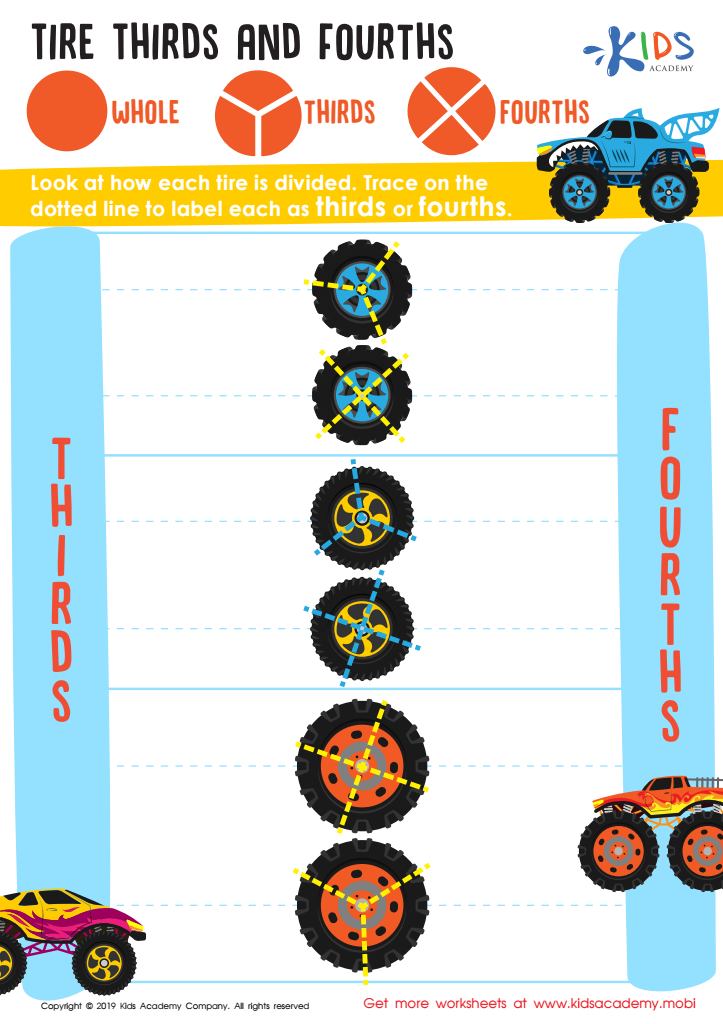
Tire Thirds and Fourths Worksheet
 Assign to My Students
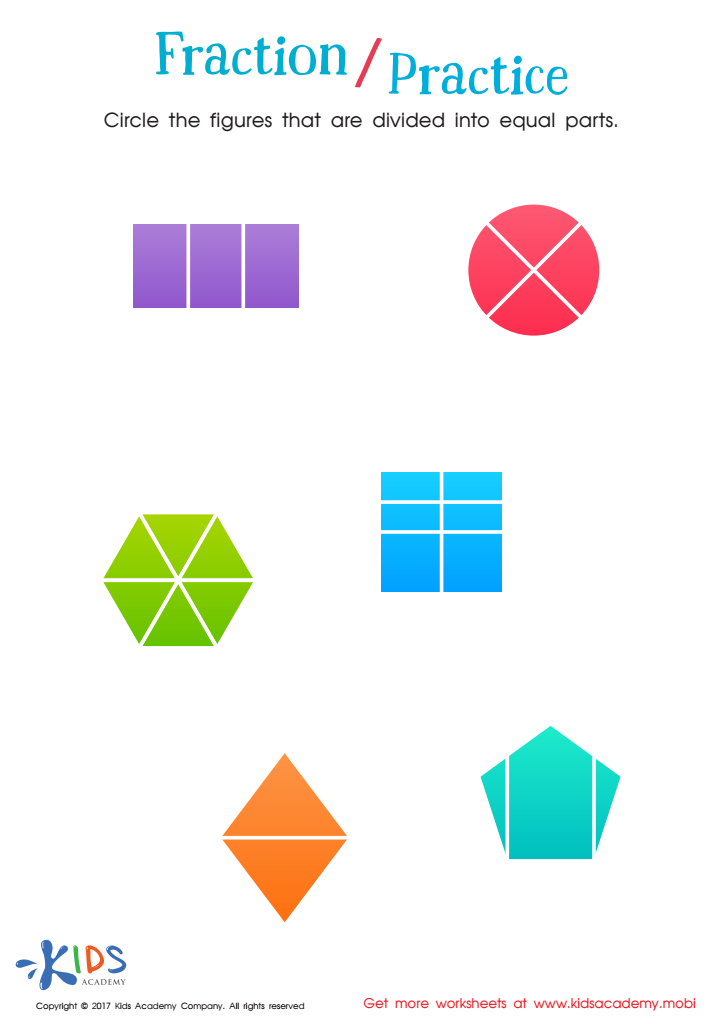
Fractions: Shapes Worksheet
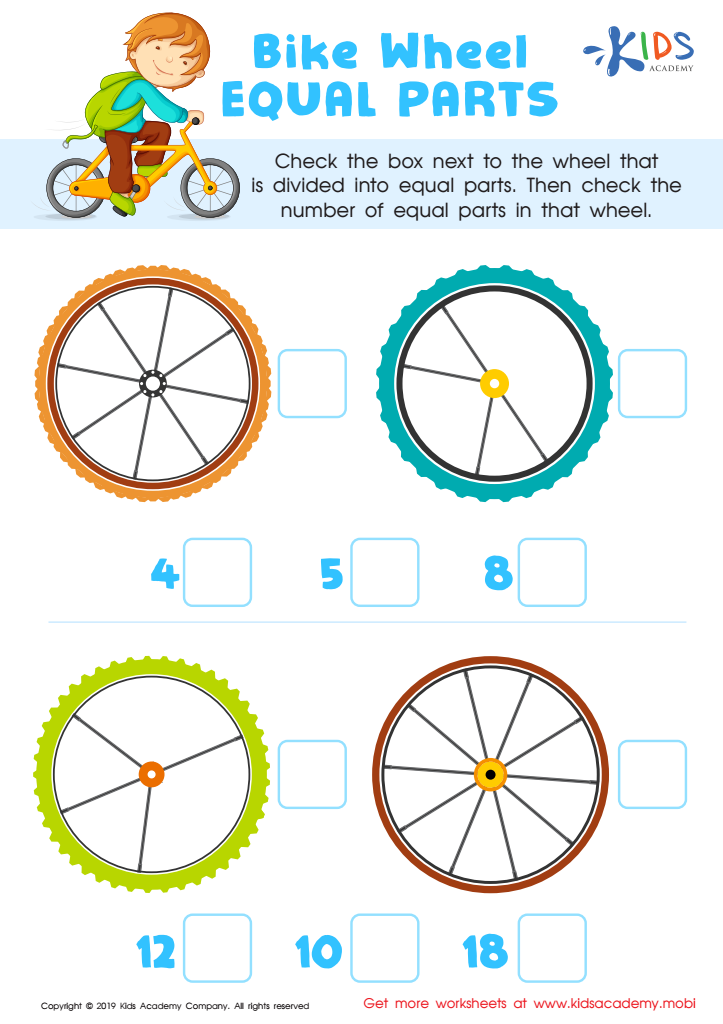
Bike Wheel Equal Parts Worksheet








Understanding and comparing fractions, especially in the context of shapes, is crucial for young learners as it lays the foundation for essential mathematical concepts. Learning to compare fractions helps children develop numerical reasoning and enhances their problem-solving skills. It allows students to visually grasp the idea of parts of a whole, aiding their understanding of proportions, ratios, and equivalent fractions.
For parents and teachers, fostering this understanding is essential because it not only contributes to children's mathematical competence but also boosts their confidence in handling complex problems later in their education. Recognizing fractions in shapes encourages children to observe and analyze their environments, reinforcing skills like critical thinking and spatial awareness.
Additionally, using visual aids through shapes can make the learning process more engaging and enjoyable, thereby promoting active participation. This hands-on approach is particularly effective for young children who learn best through interactive and concrete experiences.
Moreover, mastery of fraction comparison is vital as it aligns with curriculum standards and prepares students for future topics in mathematics, including decimals and percentages. Supporting this learning empowers young students to become more proficient and enthusiastic learners, crucial traits for lifelong academic success.