Comparing quantities Numbers Worksheets
4 filtered results
-
From - To
Discover our engaging "Comparing Quantities Numbers Worksheets" designed to help young learners master the essential skill of comparing numbers. These worksheets feature fun and colorful graphics that make learning enjoyable while teaching children to identify larger or smaller quantities through practical exercises. Perfect for early grade classrooms or homeschooling, each worksheet promotes critical thinking and boosts confidence in mathematical skills. With a variety of activities tailored to different learning styles, your child will gain proficiency in comparing quantities, laying a solid foundation for future math concepts. Explore our resourceful collection and support your child's numerical understanding today!
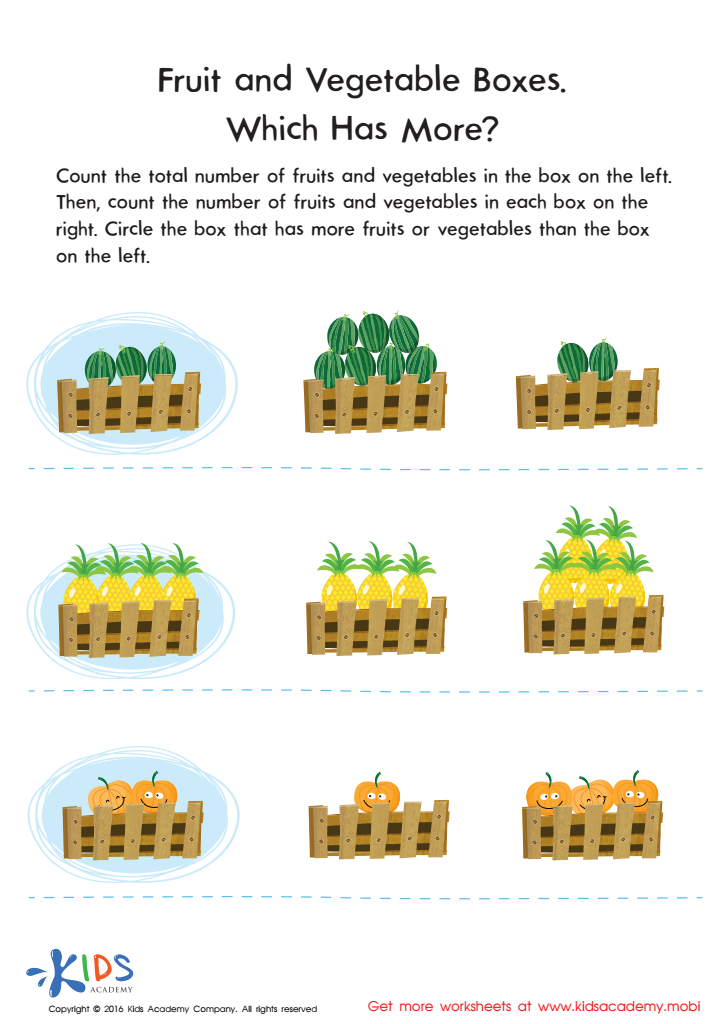
Which Has More? Size Worksheet
 Assign to My Students
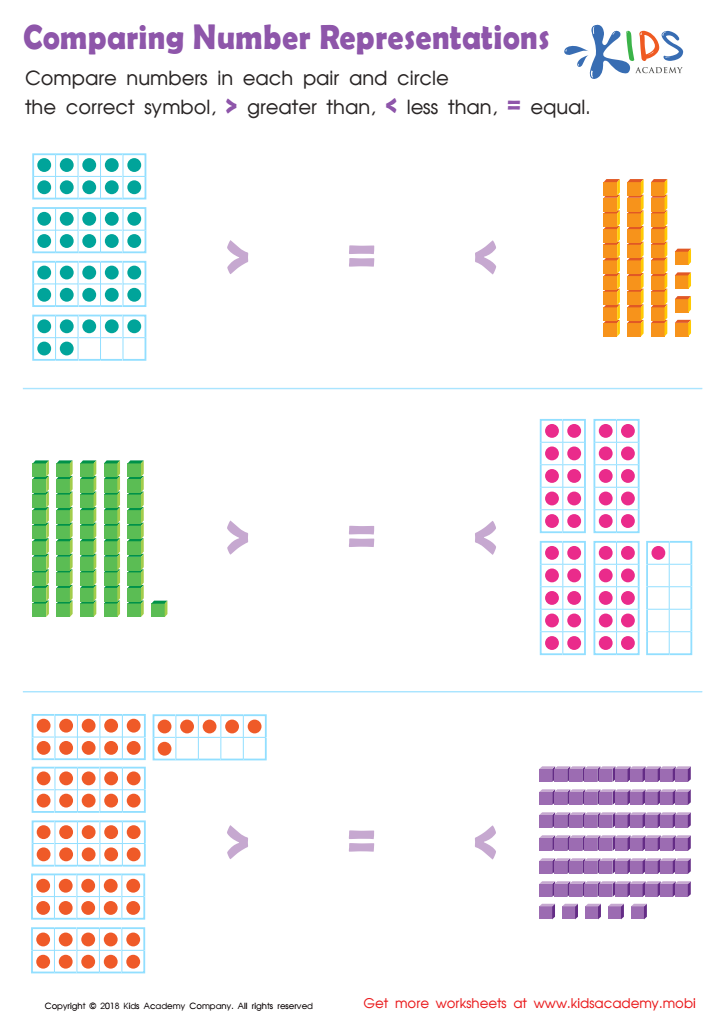
Comparing Number Representations Worksheet
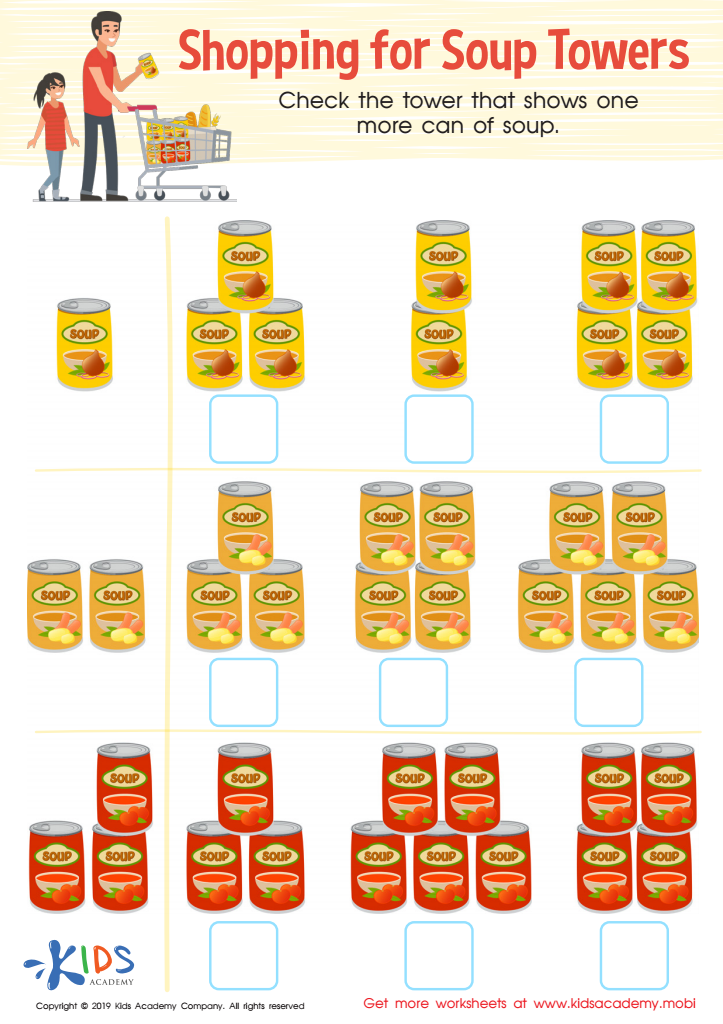
Soup Towers Worksheet
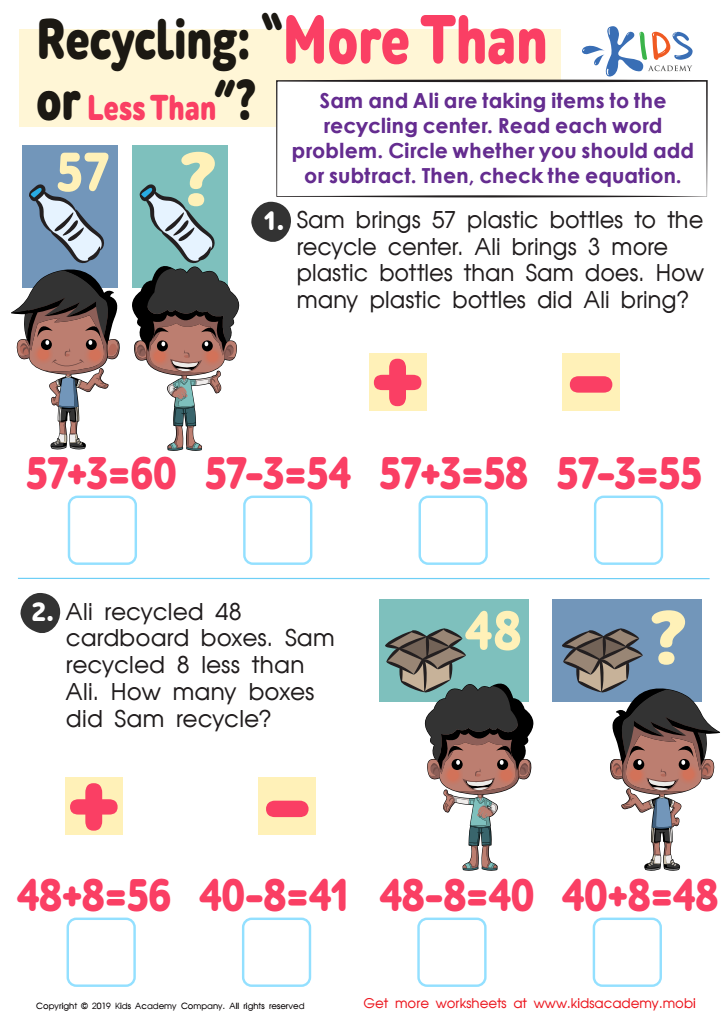
Recycling - More or Less Worksheet







Understanding how to compare quantities and numbers is a fundamental skill that lays the foundation for advanced mathematical concepts and real-life decision-making. Parents and teachers should care about this skill because it fosters critical thinking, enhances problem-solving abilities, and equips children with the reasoning skills necessary for various life situations. When children learn to compare quantities, they develop the ability to discern differences and similarities in diverse contexts, from understanding basic mathematical relationships to making informed choices in their daily lives.
Additionally, comparing quantities introduces essential concepts like greater than, less than, and equal to, which are vital for grasping more complex operations such as addition, subtraction, and eventually algebra. This benchmark in arithmetic forms the springboard for higher-order cognitive skills. Encouraging mastery in comparing quantities not only builds calculation confidence but also links mathematics to real-world applications.
Moreover, fostering an environment where curiosity about quantities and comparisons is encouraged can ignite a child’s interest in mathematics. When teachers and parents engage in activities, such as comparing heights, weights, and prices, they make mathematics tangible and applicable. Overall, promoting the ability to compare quantities can significantly enrich a child's intellectual and practical life skills.








