Sorting skills Numbers Worksheets
5 filtered results
-
From - To
Enhance your child’s early math skills with our engaging Sorting Skills Numbers Worksheets! These printable resources are designed to help young learners recognize, categorize, and sort numbers in a fun and interactive way. By distinguishing between different quantities and number types, children develop foundational math skills that promote critical thinking and problem-solving. Our worksheets include colorful visuals and hands-on activities that keep kids excited about learning. Perfect for parents and educators, these worksheets support individual learning styles and classroom instruction. With regular practice, your child will build confidence in their number recognition and sorting abilities. Start exploring today!
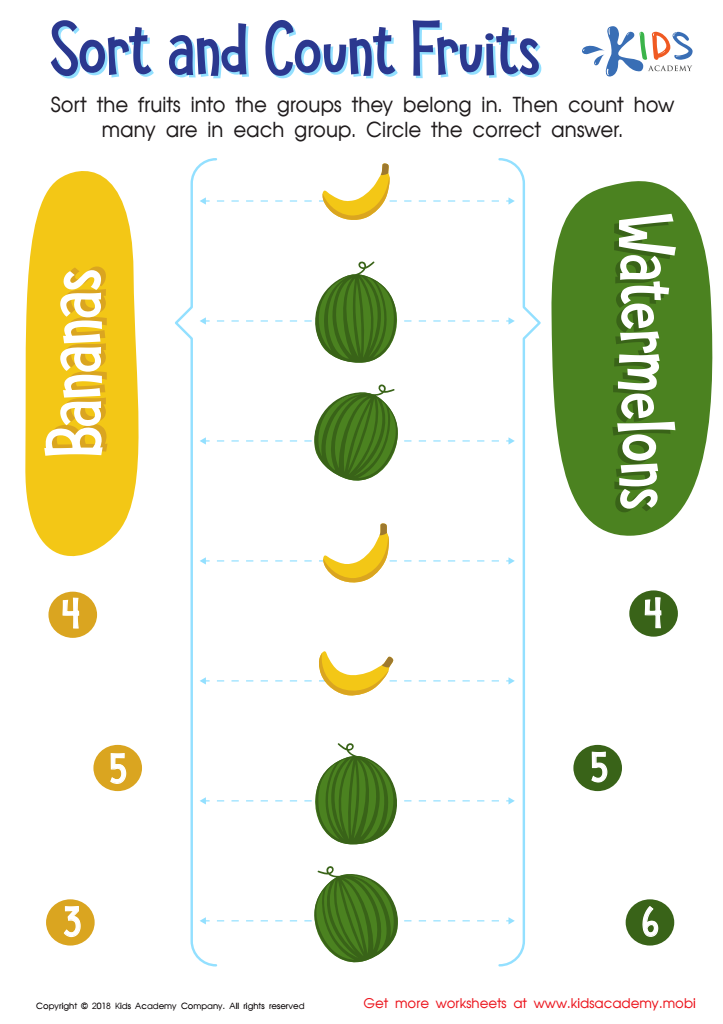
Sort and Count Fruits Worksheet
 Assign to My Students
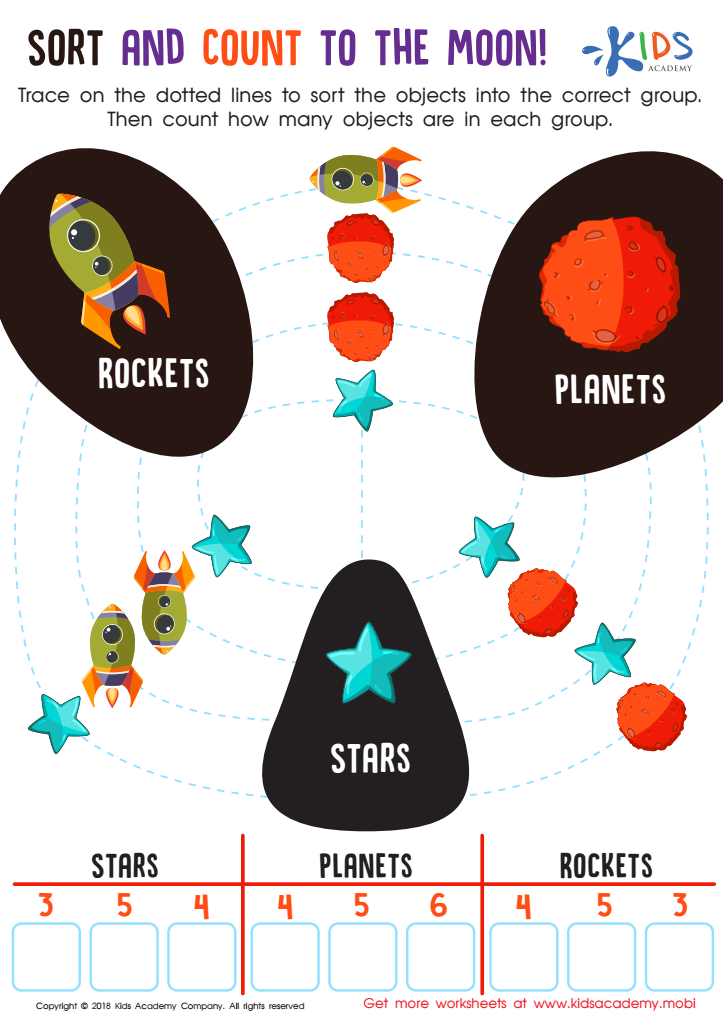
Sort and Count to the Moon Worksheet
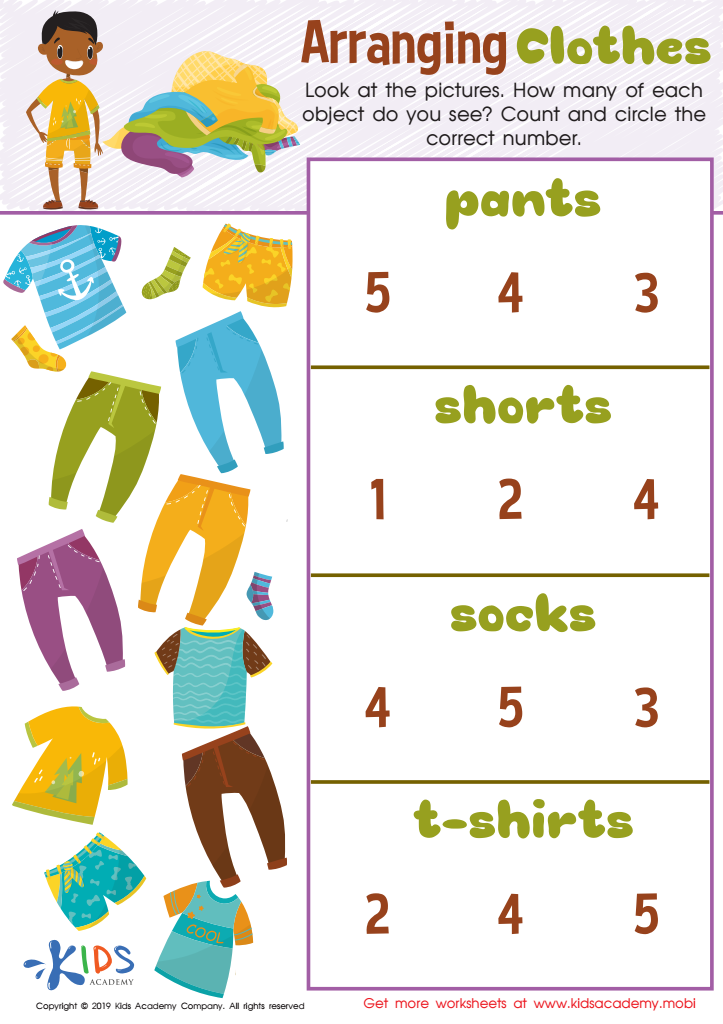
Arranging Clothes Worksheet
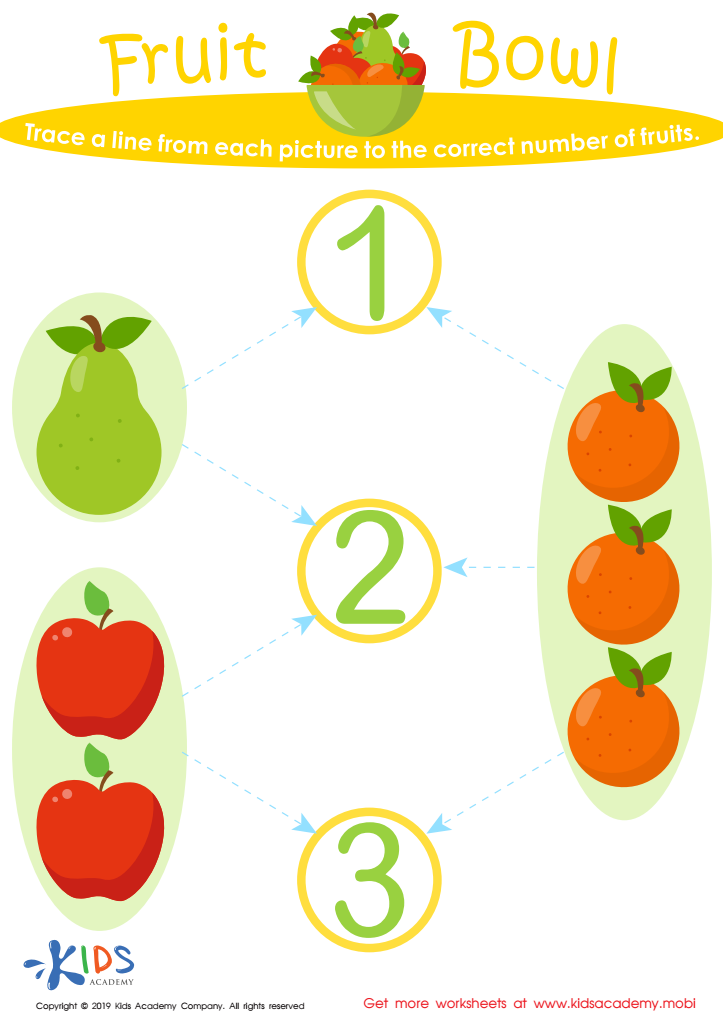
Fruit Bowl Worksheet
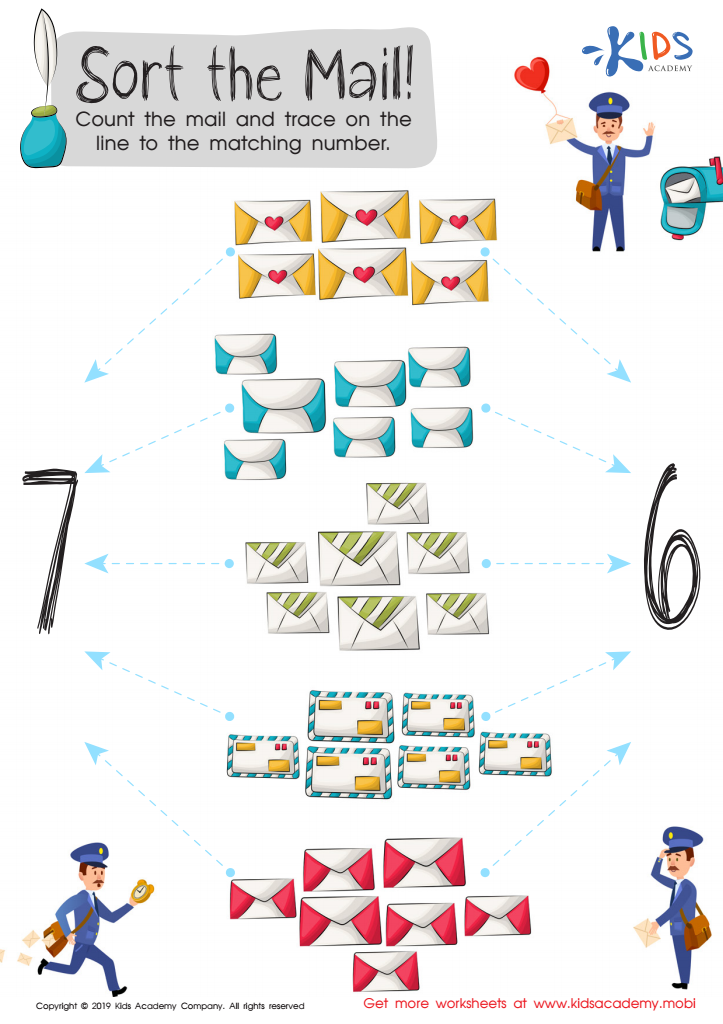
Sort the Mail Worksheet








Sorting skills are fundamental for early childhood development, especially in relation to numbers. For parents and teachers, fostering these skills is essential for several reasons.
Firstly, sorting enhances cognitive development. It helps children categorize and organize information, which lays the groundwork for problem-solving and critical thinking skills. By sorting numbers, children begin to understand numerical relationships and develop essential mathematic abilities.
Secondly, sorting builds foundational skills in mathematics. Children learn to recognize patterns and sequences, an essential part of numerical understanding. It assists them in grasping concepts of greater and lesser values, as well as performing basic operations.
Moreover, sorting skills promote social skills and cooperation when done in groups. Children learn to work collaboratively, communicate their thought processes, and respect others' viewpoints when engaging in sorting exercises.
Finally, these skills promote self-regulation and attention to detail, as children must focus on the characteristics of objects or numbers they are sorting. As they practice sorting, they develop patience and persistence, crucial traits for lifelong learning.
In summary, sorting numbers not only enhances mathematical proficiency but also nurtures cognitive and social skills, making it a key area of focus for parents and educators alike.








