Understanding graphs Numbers Worksheets
3 filtered results
-
From - To
Explore our "Understanding Graphs Numbers Worksheets" designed to enhance young learners' mathematical skills. These engaging worksheets introduce children to the basics of graphs, helping them visualize and interpret data effectively. With enjoyable exercises, kids will learn to read bar graphs, pie charts, and line graphs while developing essential critical thinking skills. Our user-friendly format encourages active participation, making math fun and accessible. Ideal for early-grade teachers and parents alike, these resources align with educational standards to support early numeracy development. Foster confidence in data literacy and enable your students to master the fundamentals of understanding graphs with our thoughtfully crafted worksheets.
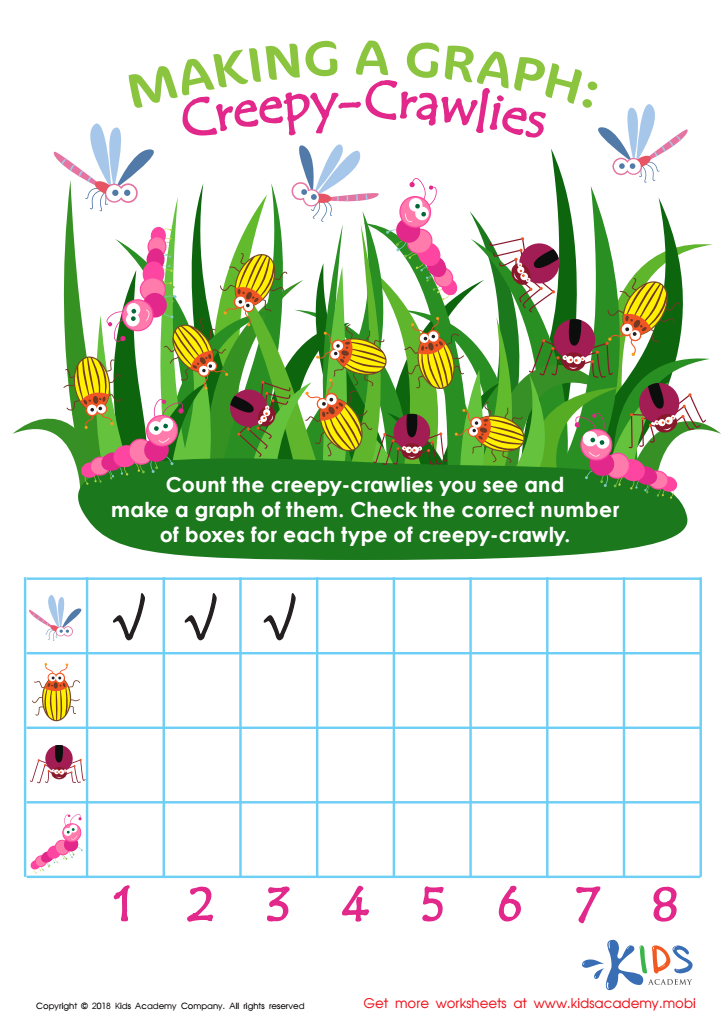
Making a Graph: Creepy Crawlies Worksheet
 Assign to My Students
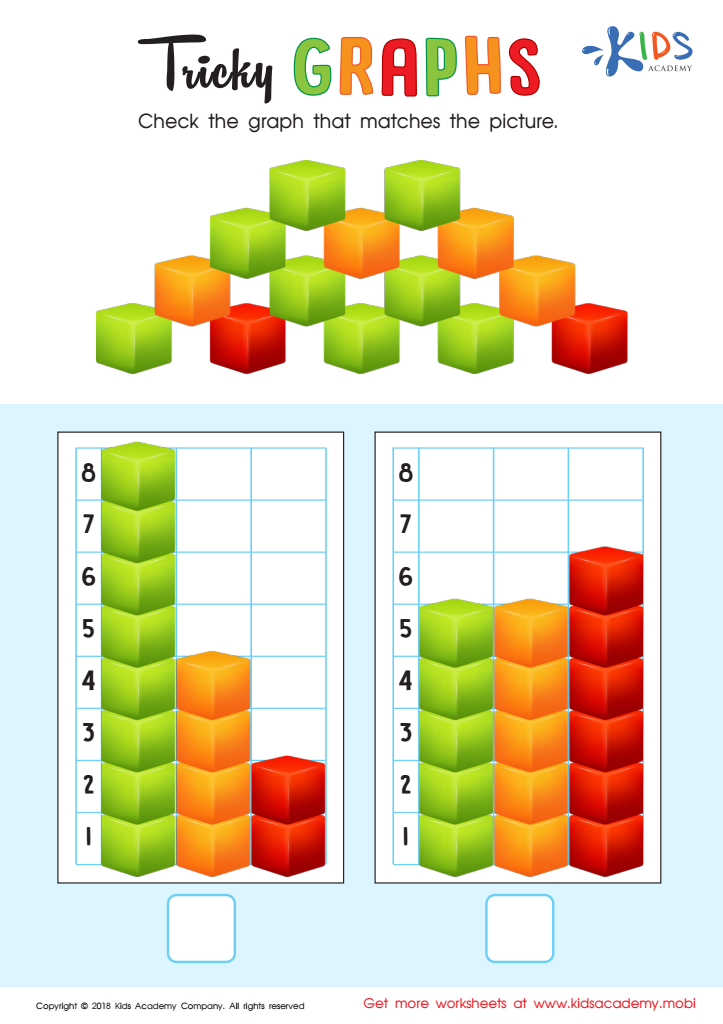
Tricky Graphs Worksheet
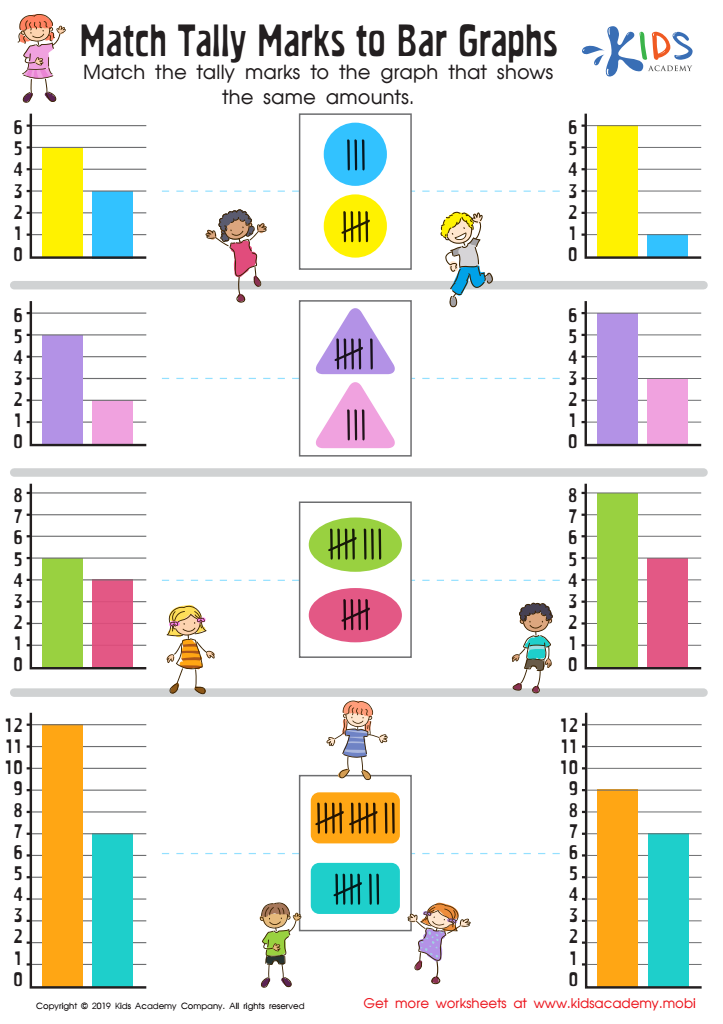
Match Tally Marks to Bar Graphs Worksheet








Understanding graphs and numbers is essential for both parents and teachers because it lays the foundation for children's critical thinking and analytical skills. In today's data-driven world, the ability to interpret graphical representations, such as charts and plots, enables children to absorb information more effectively and make informed decisions in their everyday lives.
Graphs teach students how to visualize data, recognize patterns, and draw conclusions, fostering logical reasoning. For instance, they can learn how to compare quantities, measure changes over time, or evaluate statistical information. These skills not only enhance academic achievement in subjects like mathematics and science but also contribute to overall problem-solving abilities.
Moreover, parents and teachers play a crucial role in modeling how to engage with numbers and graphs. By demonstrating enthusiasm for data literacy, they encourage children to explore, question, and critically evaluate information presented to them. This foundational knowledge can inspire curiosity and open up pathways to future opportunities in various fields, such as STEM.
To cultivate a generation of informed, analytical thinkers, it is vital for parents and teachers to prioritize understanding graphs and numbers in everyday learning, ensuring children are equipped to navigate an increasingly complex world.








