Logical reasoning development Math Worksheets
3 filtered results
-
From - To
Unlock your child’s potential with our engaging Logical Reasoning Development Math Worksheets! Designed for early learners, these worksheets foster critical thinking and problem-solving skills through fun activities. Your child will explore various concepts, such as patterns, sequences, and relationships, while practicing essential math skills. Each worksheet encourages independent thinking, allowing students to develop their logical reasoning abilities in a supportive environment. Use our printable resources to enhance classroom learning or as an enjoyable home activity. Perfect for educators and parents alike, these worksheets offer a fun way to turn logic and math into a captivating adventure for young minds!
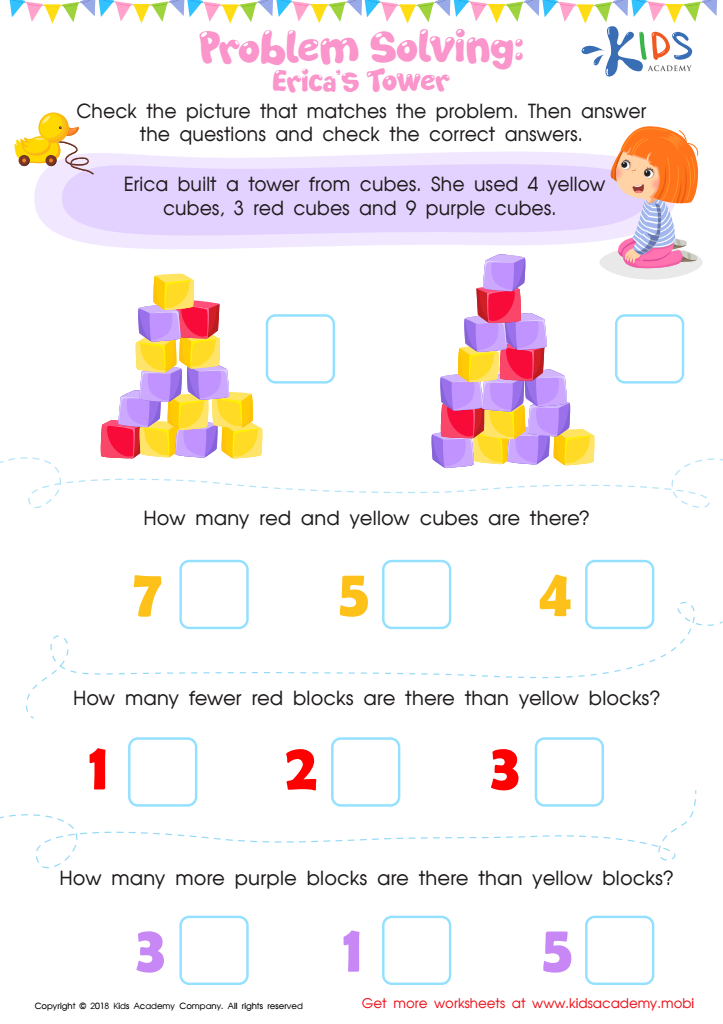
Problem Solving: Erica's Tower Worksheet
 Assign to My Students
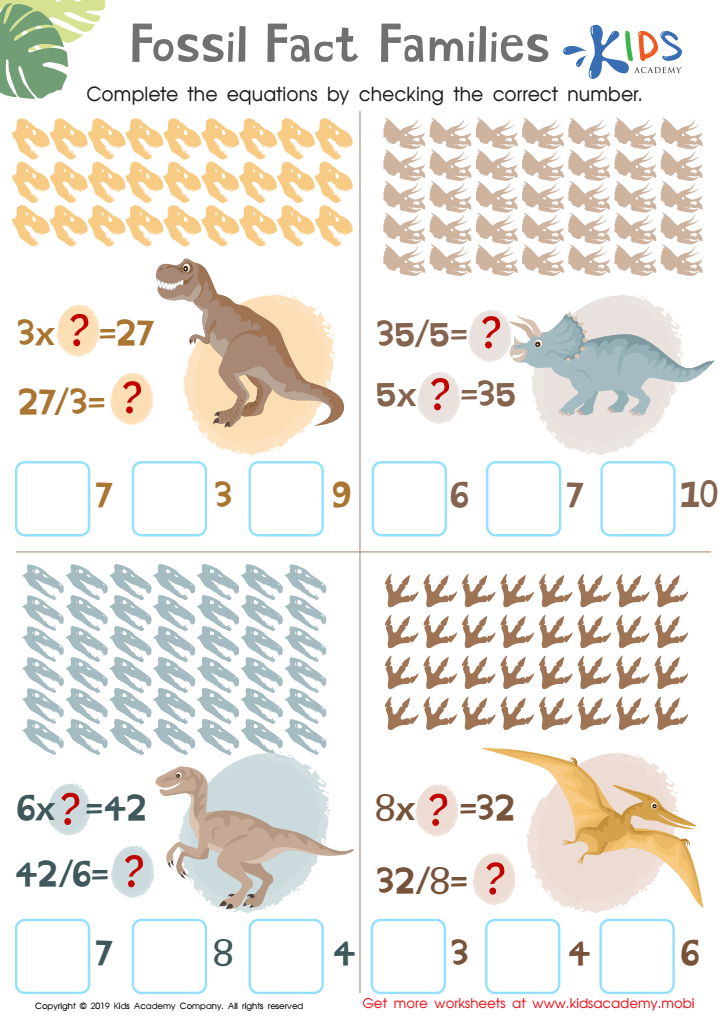
Fossil Fact Families Worksheet
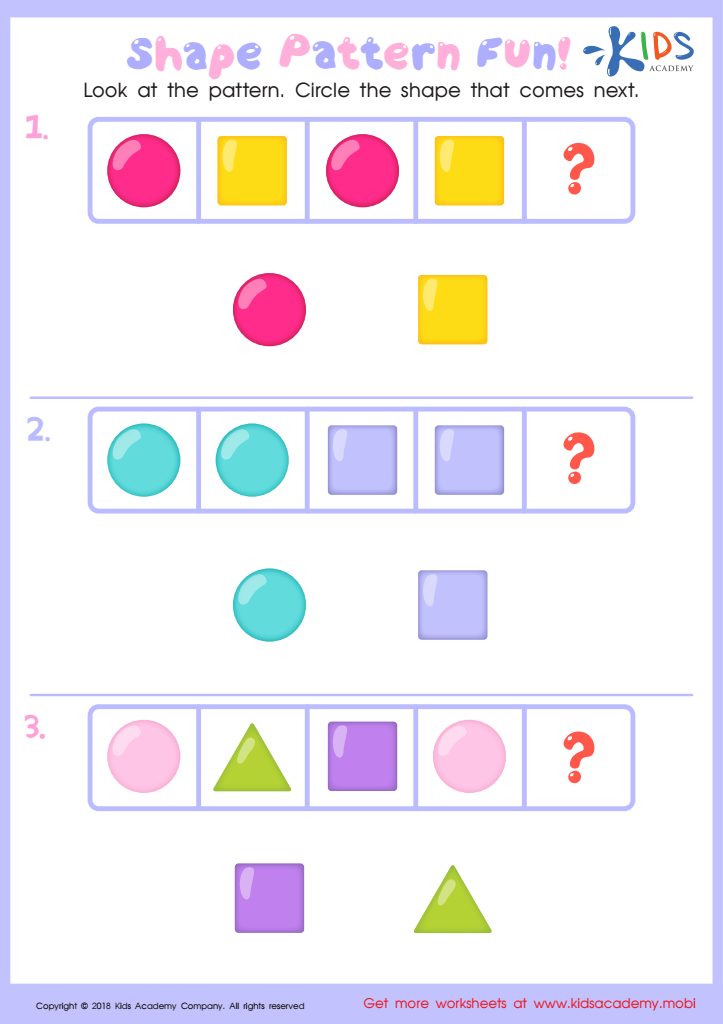
Shape Pattern Fun Worksheet




.jpg)



Logical reasoning development in math is crucial for young learners, and both parents and teachers should prioritize it for several reasons. Firstly, logical reasoning cultivates critical thinking skills that are essential for problem-solving in everyday life. Mathematics isn't just about calculations; it involves recognizing patterns, making connections, and drawing conclusions. These cognitive skills form the foundation for computational skills and are transferable across various subjects and tasks.
Secondly, fostering logical reasoning in mathematics boosts students' confidence. As children learn to approach problems systematically and find solutions, they gain assurance in their analytical abilities. This empowerment encourages a positive attitude towards learning and fosters a love for math.
Moreover, early development of logical reasoning skills can dramatically improve academic performance. Strong reasoning abilities help students grasp complex concepts more easily and facilitate a deeper understanding of math, paving their path toward higher-level mathematics and STEM fields.
Lastly, logical reasoning aligns with real-world applications. The skills cultivated in these early math experiences prepare children for future challenges, enhancing their ability to think critically and make informed decisions in life beyond the classroom. Thus, both parents and teachers play a vital role in nurturing these essential skills.








