Number pattern recognition Math Worksheets
3 filtered results
-
From - To
Discover a variety of engaging number pattern recognition math worksheets designed to enhance your child's mathematical skills! Our resources cater to early learners, focusing on identifying, understanding, and extending number patterns. These worksheets include fun activities that promote critical thinking and problem-solving abilities, ensuring children grasp key concepts while enjoying the learning process. Ideal for classroom settings or home practice, our worksheets encourage students to identify sequences, complete patterns, and develop a strong foundation in mathematics. Explore our extensive collection to help your child build confidence and enthusiasm for numbers, setting the stage for future success in mathematics!
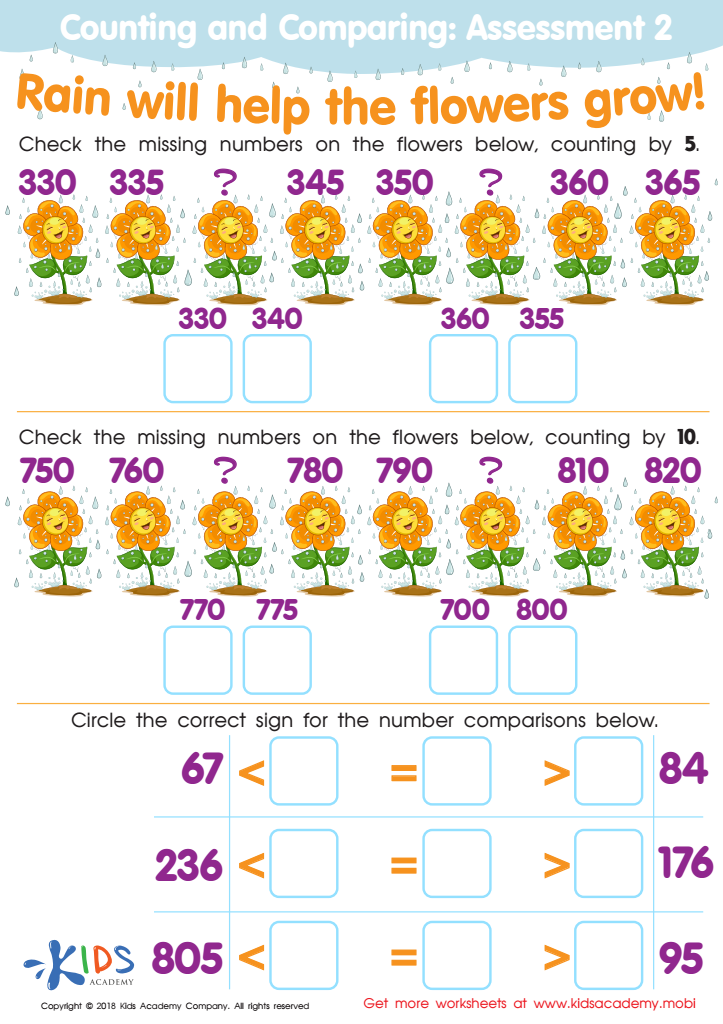
Counting and Comparing: Assessment 2 Worksheet
 Assign to My Students
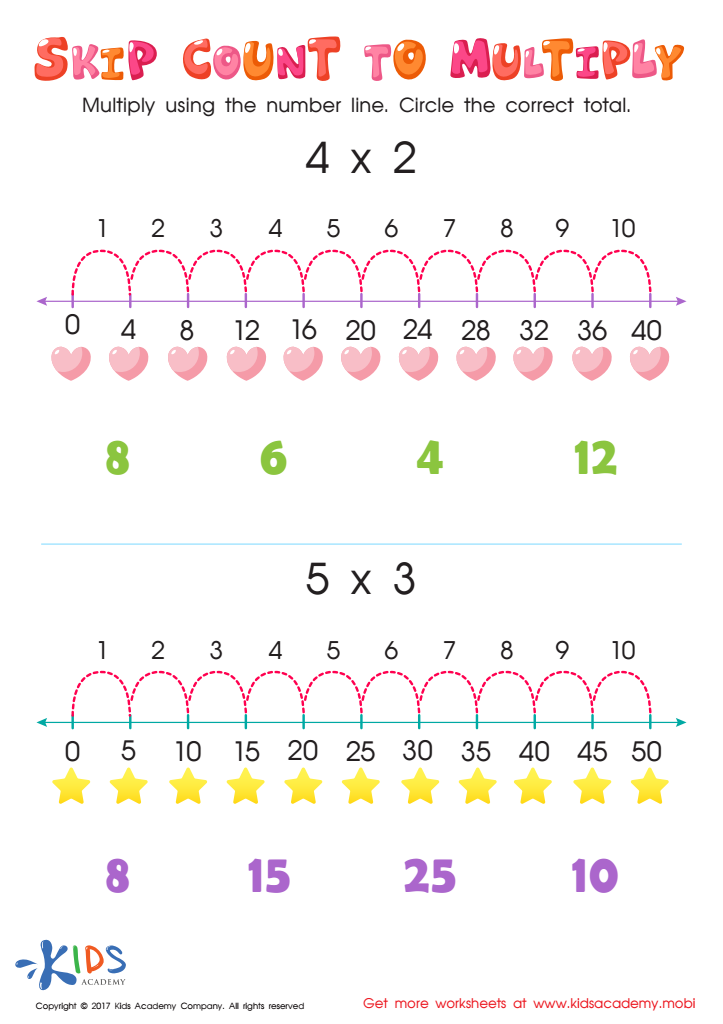
Skip Count Multiplication Worksheet
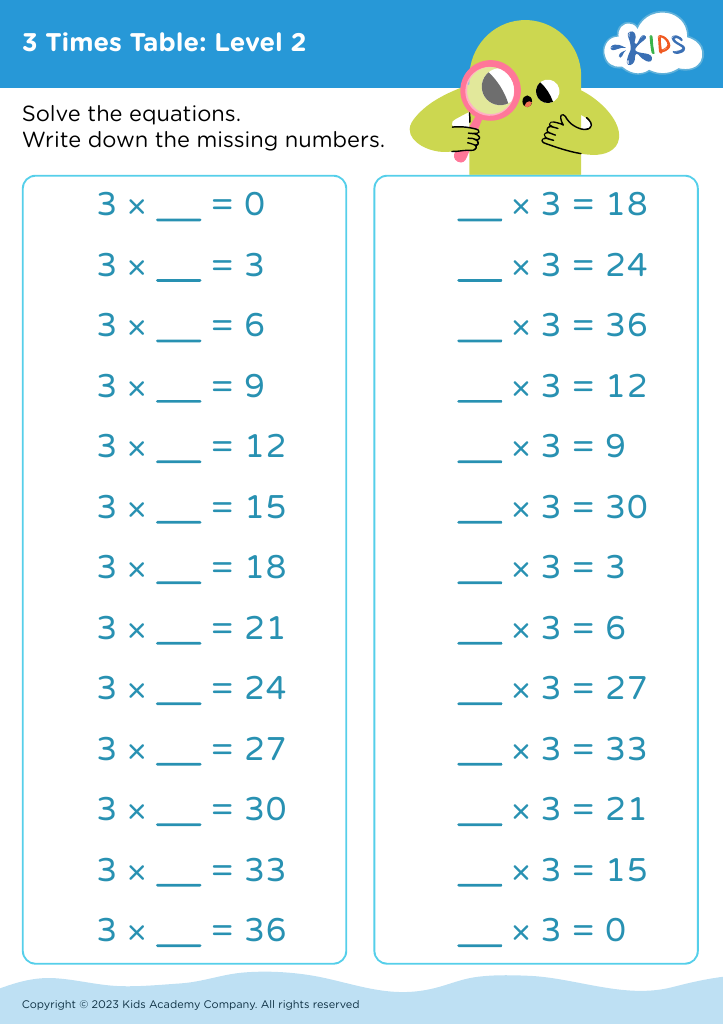






%20(1).jpg)

Number pattern recognition is a crucial component of early mathematics education, and both parents and teachers should prioritize it for several reasons. Firstly, recognizing patterns is foundational for developing mathematical reasoning. It allows children to identify relationships between numbers, which is essential for more complex operations such as addition, subtraction, multiplication, and division.
Understanding patterns enhances problem-solving skills, enabling students to predict outcomes and solve mathematical problems more efficiently. It builds confidence as children begin to see order and structure in numbers, leading to improved engagement and enthusiasm in mathematics.
Additionally, number pattern recognition lays the groundwork for advanced topics such as algebra and geometry. By fostering these skills early, educators and parents equip children with the tools necessary for future academic success.
Beyond academics, pattern recognition skills encourage critical thinking and cognitive flexibility, making them valuable in real-world applications beyond math. As children learn to recognize patterns in their environment, they develop observational skills that are useful in science and everyday problem-solving situations.
In summary, fostering number pattern recognition in young learners not only supports their mathematical growth but also contributes to their overall cognitive development, equipping them for future challenges in both academic and practical contexts.








