Number Recognition Math Worksheets - Page 34
798 filtered results
-
From - To
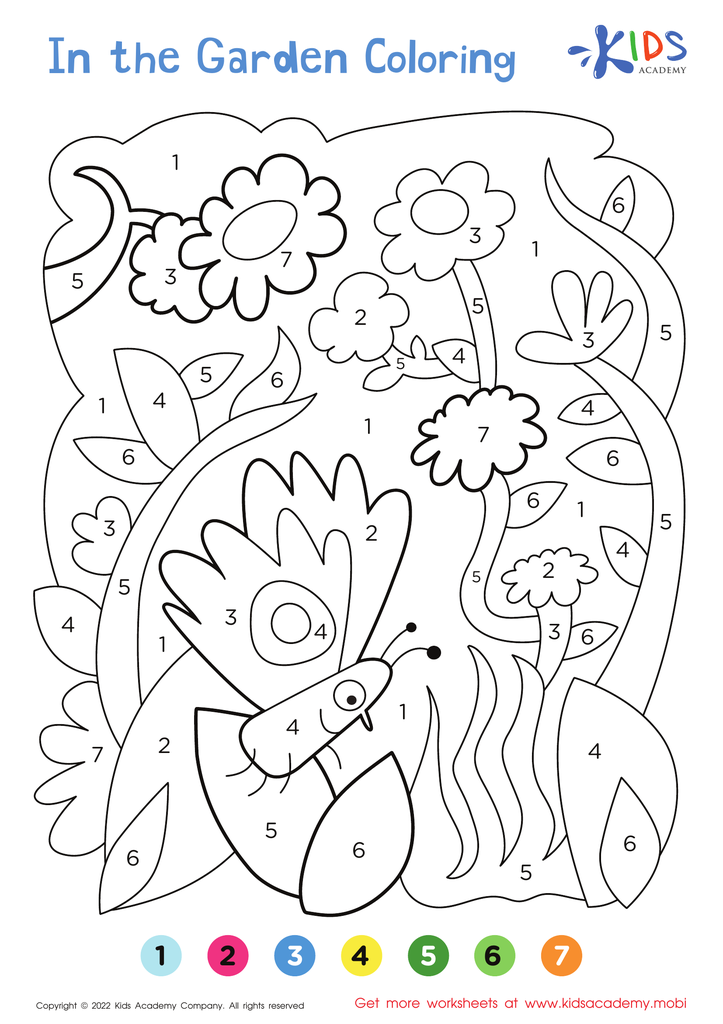
In the Garden – Coloring by Numbers








Number Recognition Math is foundational for early childhood education and plays a critical role in a child's cognitive development. For parents and teachers, ensuring that children grasp this concept is crucial for several reasons:
Firstly, number recognition is the gateway to all advanced mathematical concepts. Understanding and recognizing numbers enable children to perform basic arithmetic like addition, subtraction, and later more complex operations. Without this fundamental skill, children may struggle with more complex math problems in the future.
Secondly, Number Recognition Math aids in developing problem-solving and reasoning skills. When children recognize numbers, they can understand quantity, order, and relationships, which are essential for logical thinking. This, in turn, impacts their ability to reason through problems not just in math, but across various academic disciplines.
Thirdly, mastering number recognition bolsters a child's confidence and encourages a positive attitude towards learning. A strong foundation in math can reduce anxiety and frustration as children move on to more challenging topics, making them more resilient and well-prepared for future studies.
Finally, from a practical perspective, number recognition is used daily, whether it’s telling time, counting money, or measuring ingredients. Skills in this area foster independence and practical life problem-solving.
Therefore, a focus on number recognition benefits a child's academic journey and everyday life, making it essential for both parents and teachers to actively support this aspect of early education.








