Understanding grouping Math Worksheets
3 filtered results
-
From - To
"Understanding Grouping Math Worksheets" from Kids Academy offer a fun and educational way for young learners to master the concept of grouping. Tailored for early-grade students, these printable worksheets focus on fundamental skills necessary for future math success. Children will engage in activities that help them recognize patterns, sort items, and develop critical thinking. Packed with colorful visuals and engaging exercises, these worksheets will guide your child through the basics of grouping, enhancing their ability to organize and categorize efficiently. Ideal for both classroom and home use, they offer a solid foundation that eases children into more advanced mathematical concepts.
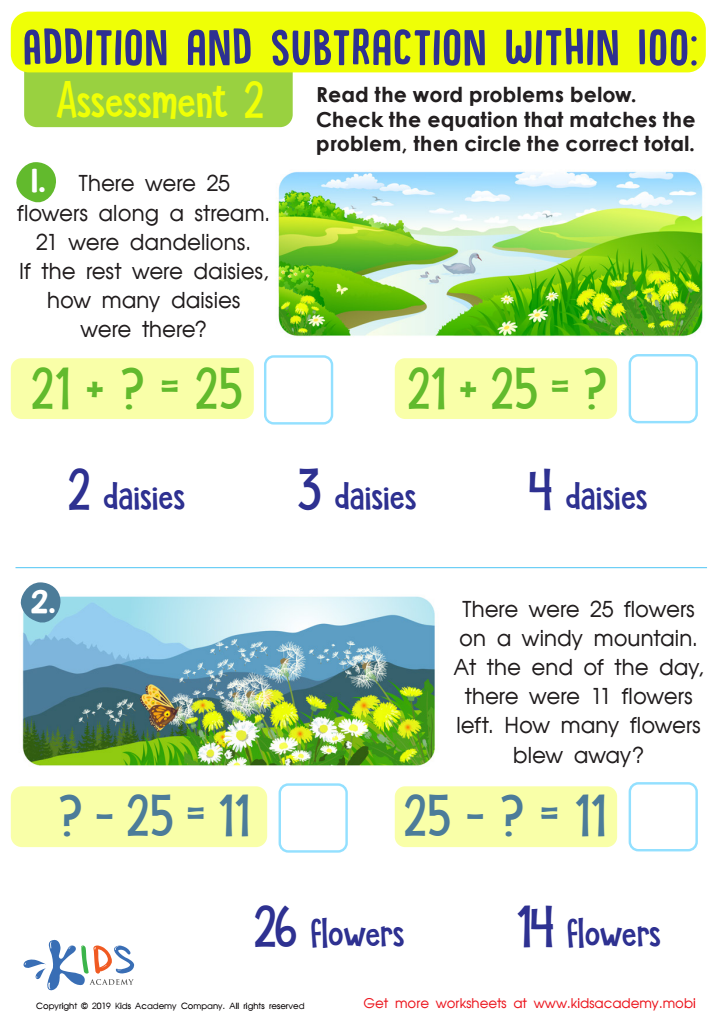
Assessment 2 Math Worksheet
 Assign to My Students
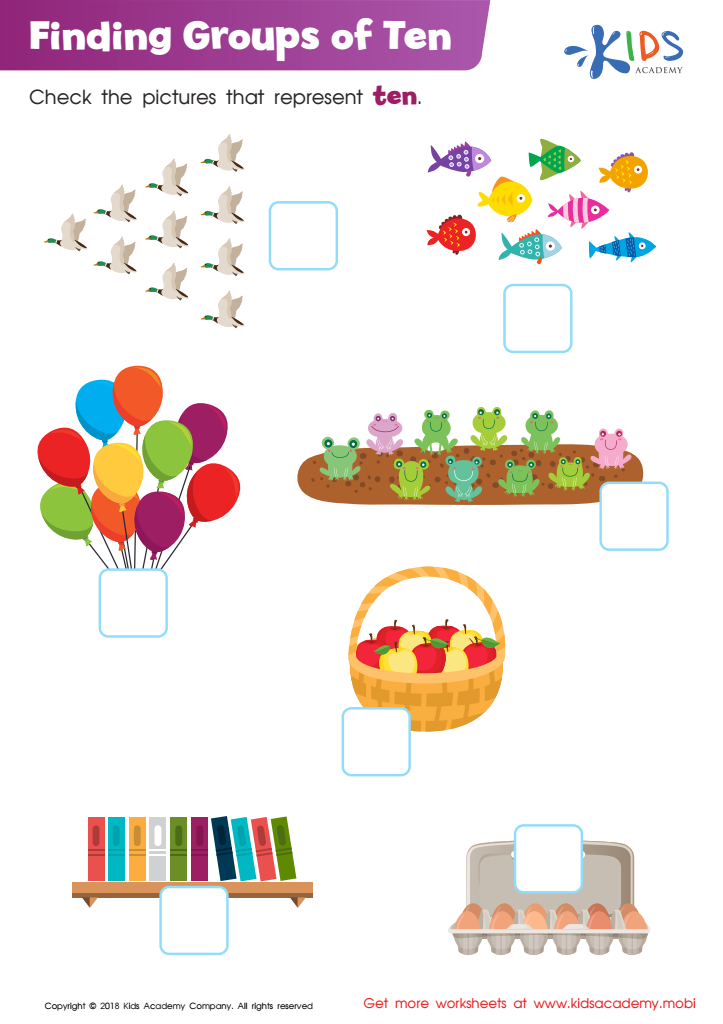
Finding Groups of Ten Worksheet
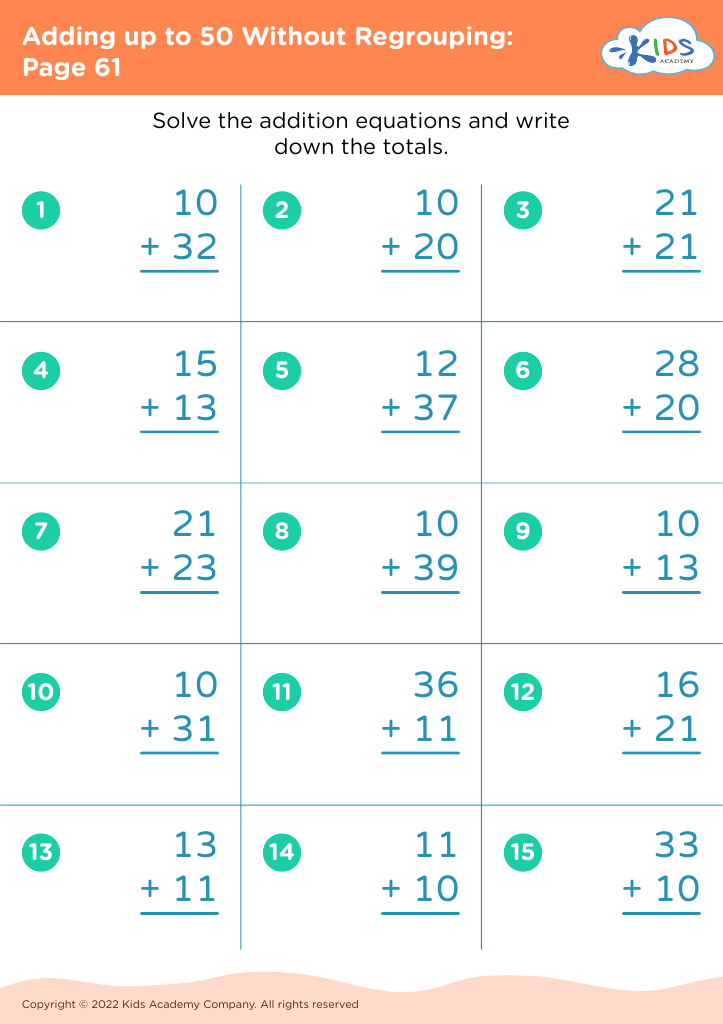







Understanding grouping in math is crucial for young learners, and thus, it's vital for parents and teachers to care about this foundational concept. Grouping, also known as place value or number grouping, helps children comprehend how numbers are constructed, enabling them to perform basic arithmetic operations more effectively. By grasping the idea that numbers can be broken down into units, tens, hundreds, etc., kids can more easily transition to complex mathematics.
When children understand grouping, they develop better problem-solving skills and numerical fluency. For instance, in addition and subtraction, recognizing that 15 is 10 + 5 or 2 + 8 will help them solve problems faster. Grouping also lays the groundwork for understanding multiplication and division, as these operations are essentially about managing groups of numbers.
Parents and teachers should emphasize grouping because it boosts confidence and reduces math anxiety. Children who master this concept early are more likely to enjoy math and perform better academically. Activities such as using blocks, beads, or drawing visuals can make learning grouping both interactive and fun. By fostering a solid early understanding, parents and teachers pave the way for a child’s lifelong numeracy skills, essential not just for school but for everyday life.








