Understanding mass Math Worksheets
3 filtered results
-
From - To
Understanding Mass Math Worksheets are designed to help young learners grasp the concept of weight and mass through engaging activities and practical exercises. Each worksheet is crafted to build foundational math skills by comparing, measuring, and estimating the mass of various objects. Ideal for grades K-3, these printable resources make complex ideas accessible and entertaining. With colorful illustrations and step-by-step instructions, students can easily master essential math concepts at their own pace. Perfect for classrooms and homeschool settings, these worksheets encourage critical thinking and hands-on learning to make math fun and relatable for kids.
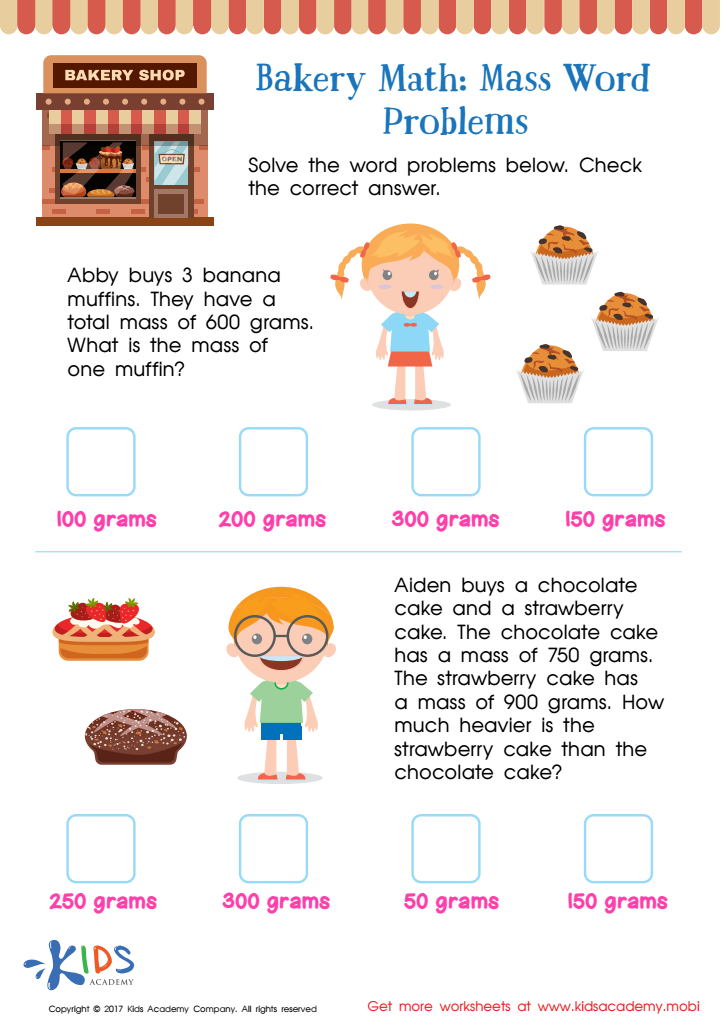
Mass Word Problems Worksheet
 Assign to My Students
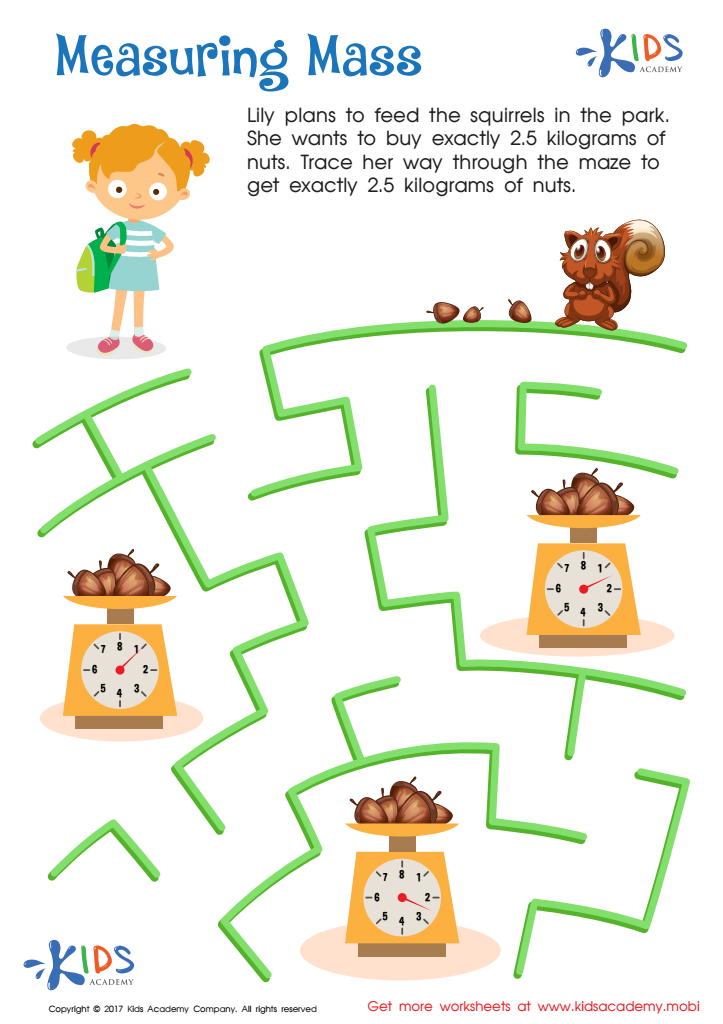
Measuring Mass Worksheet
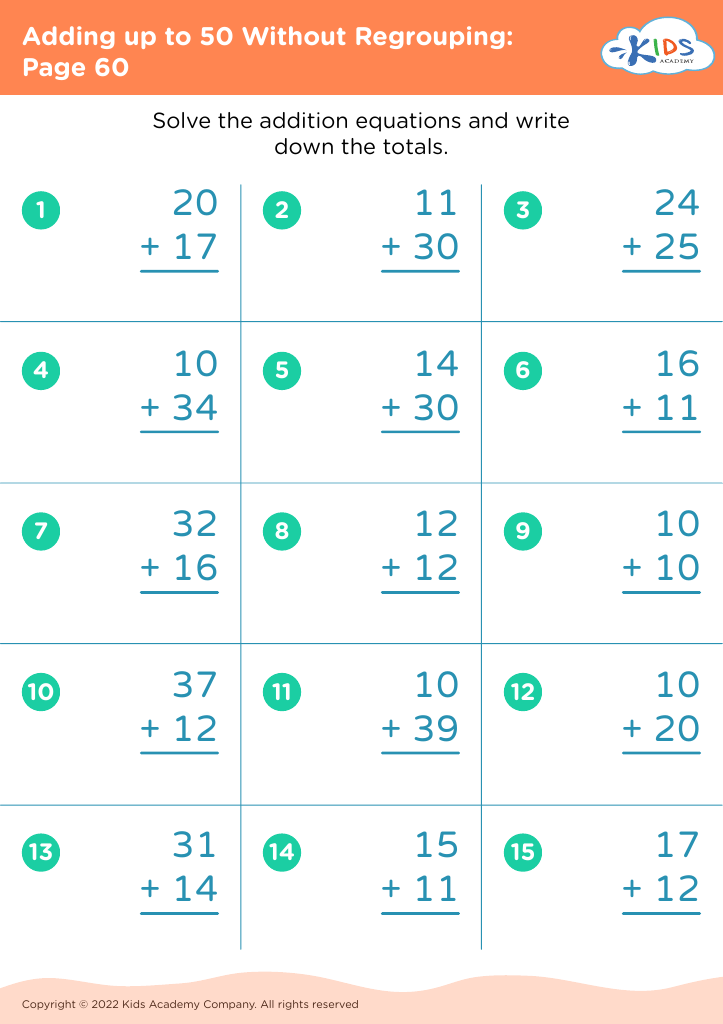



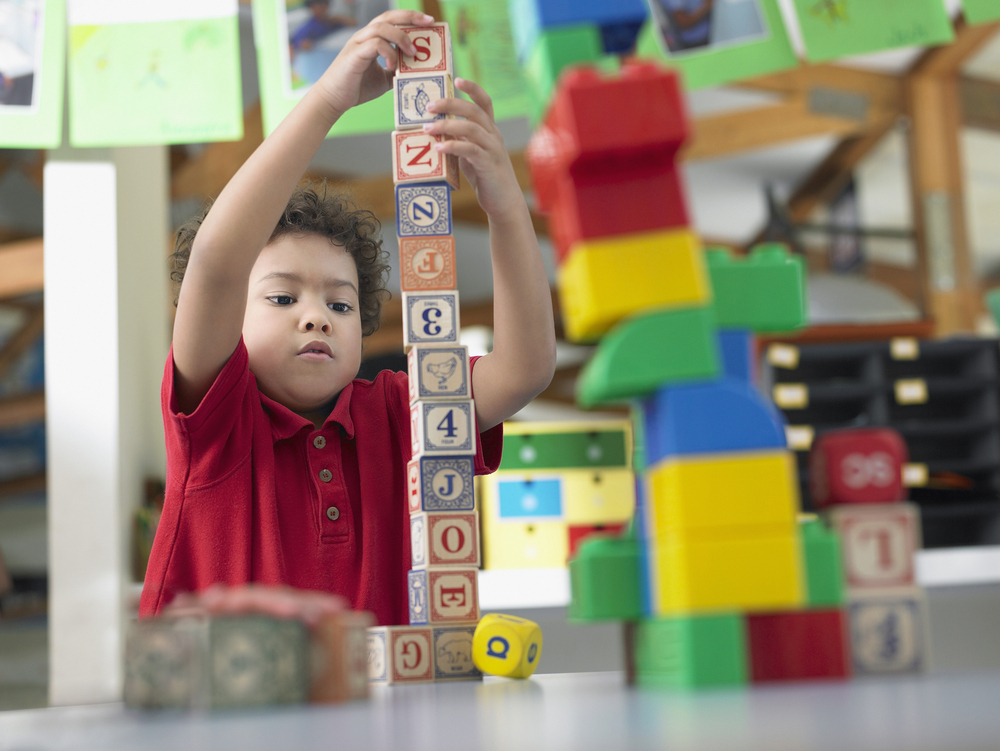




Understanding math, particularly the concept of mass, is essential for young learners because it forms the foundation for a wide range of skills and knowledge that are important in everyday life and future education. Mass, being a fundamental property of matter, introduces children to the idea of measuring and comparing objects, which is a critical component of scientific thinking. By grasping the concept of mass, children begin to develop analytical skills and the ability to solve problems, skills they will depend on not only in further science and math education but also in everyday decision-making.
For parents and teachers, fostering an early understanding of mass helps in nurturing a child's curiosity and love for learning. When children understand this concept, they are more likely to engage in questioning and exploring their physical environment - whether they are measuring ingredients in the kitchen with a parent or solving puzzles in the classroom. This foundation in math boosts their confidence and prepares them for more complex topics in subjects such as physics, chemistry, and engineering.
Moreover, teaching children about mass provides a platform to reinforce other key math concepts like addition, subtraction, and data interpretation. This holistic approach ensures that children develop well-rounded cognitive abilities, equipping them with essential life skills for the future.








