Understanding number relationships Math Worksheets
9 filtered results
-
From - To
Explore our engaging "Understanding Number Relationships" math worksheets designed to help young learners grasp essential math concepts. These resources provide comprehensive exercises that enhance students' ability to identify, compare, and relate numbers through fun activities and visual aids. Our worksheets focus on crucial skills like greater-than/less-than comparisons, number sequencing, and recognizing patterns, fostering critical thinking and problem-solving abilities. Ideal for early grade teachers, parents, and homeschooling, these worksheets ensure mastery of foundational math skills, setting children on a solid pathway to future success in mathematics. Download your worksheets today and empower your child’s numerical understanding with interactive learning!
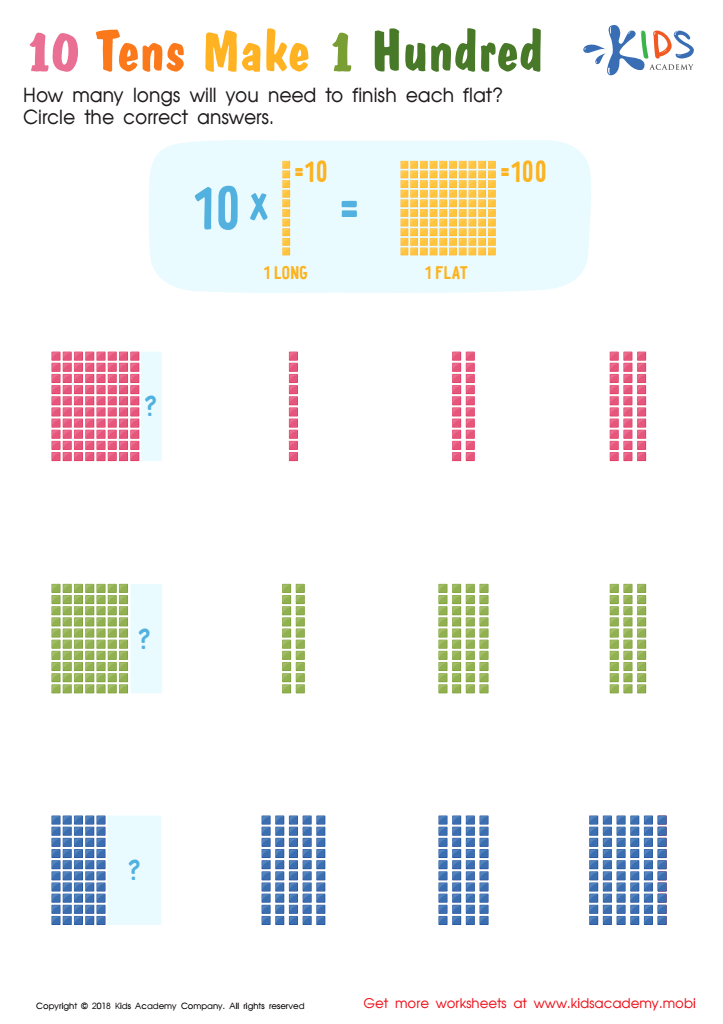
10 Tens Make 1 Hundred Worksheet
 Assign to My Students
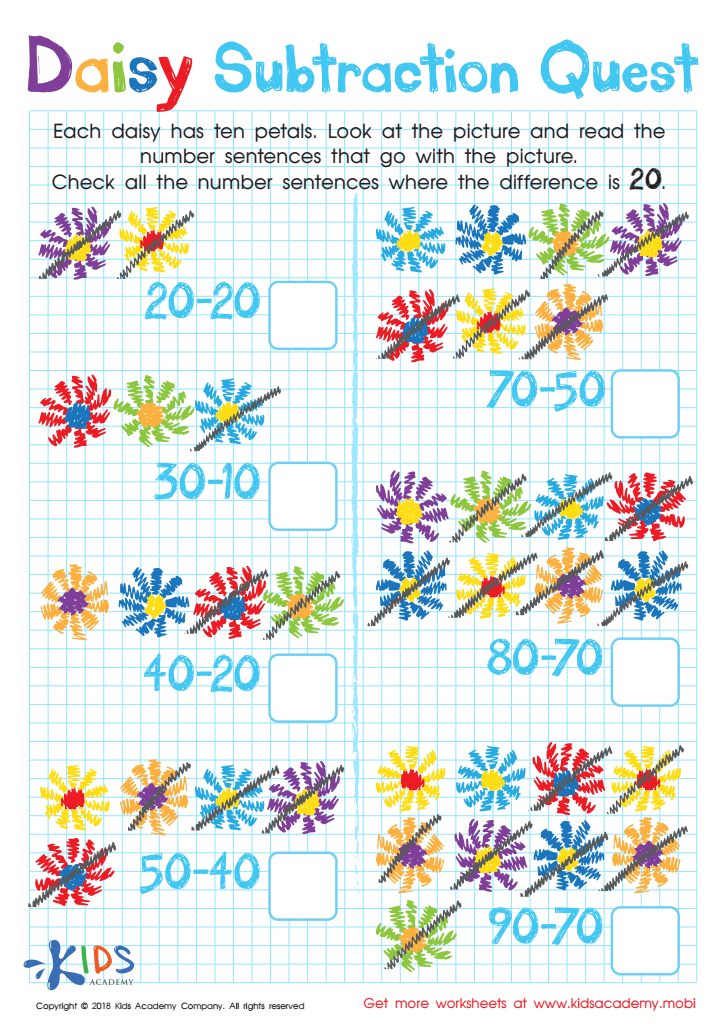
Daisy Subtraction Quest Worksheet
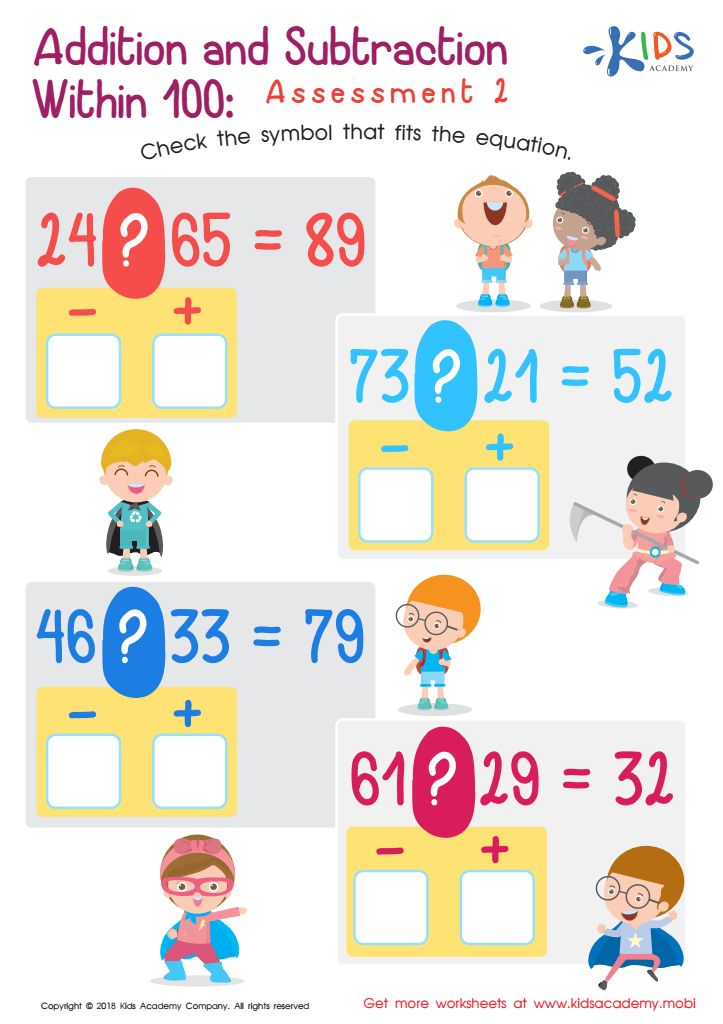
Addition and Subtraction Within 1: Assessment 2 Worksheet
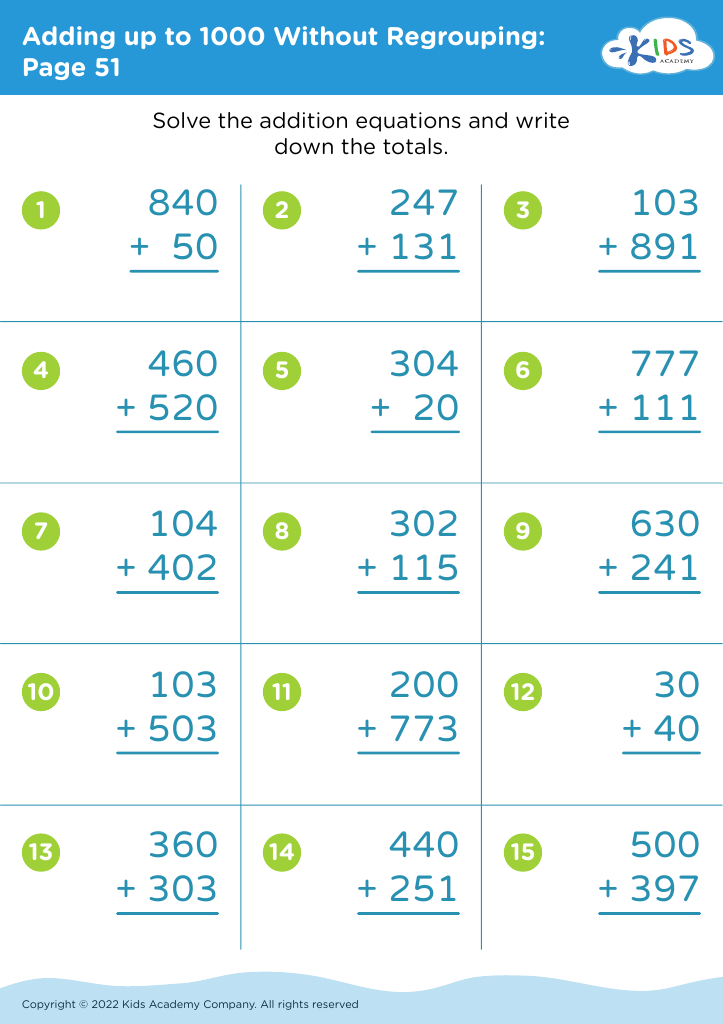
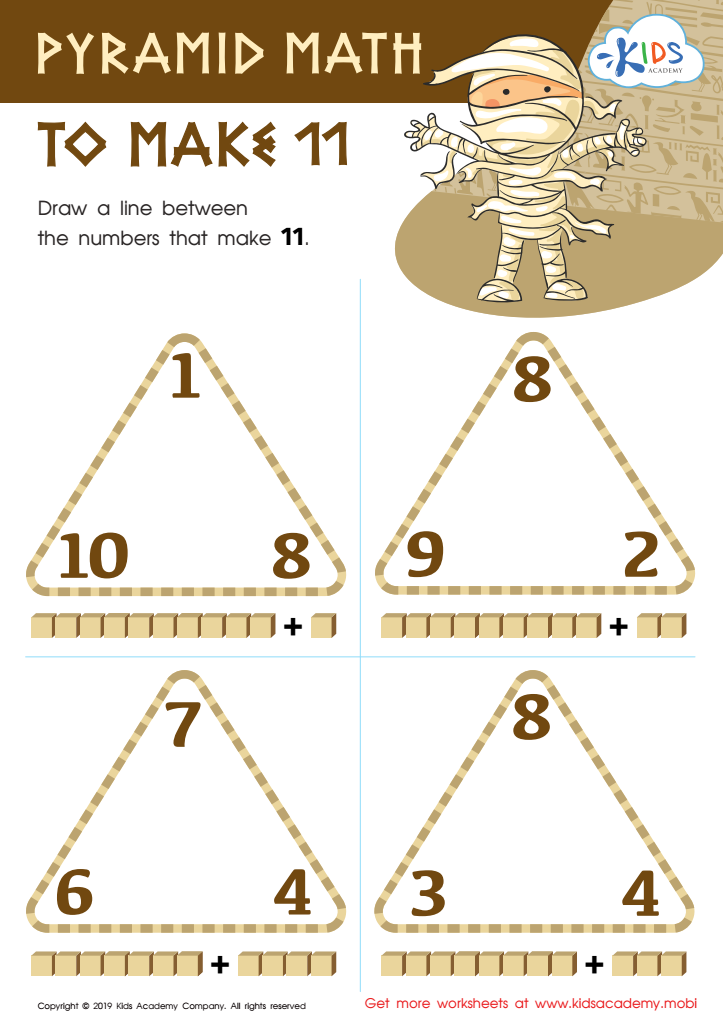
Pyramid Math to Make 11 Worksheet
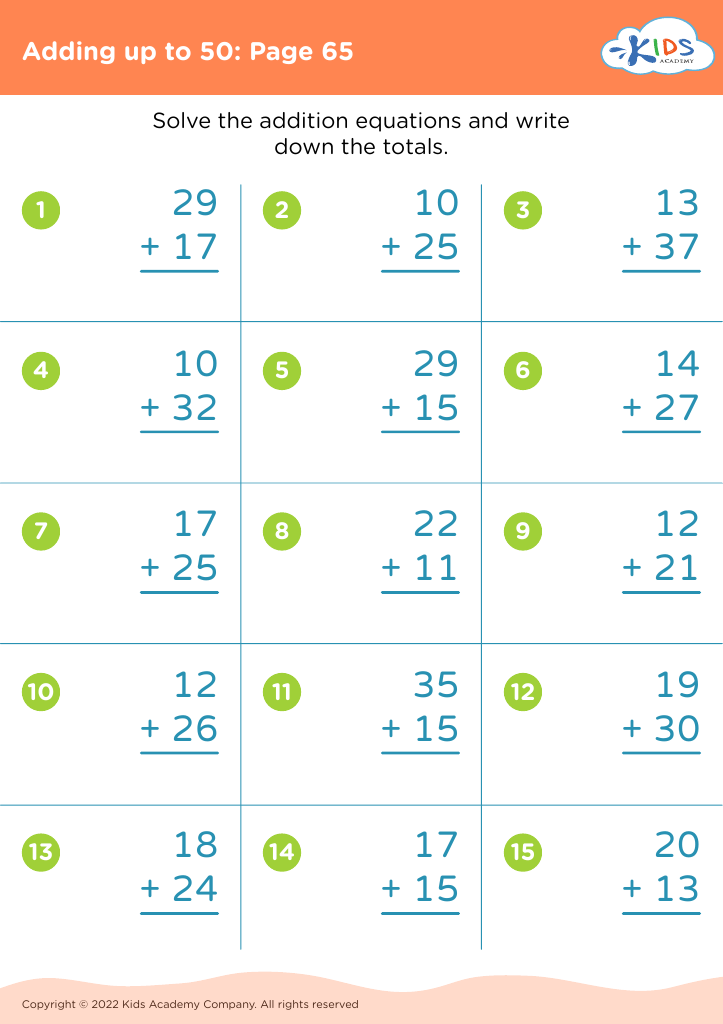








Understanding number relationships is crucial for both parents and teachers as it forms the foundation for a child's mathematical thinking. When young learners grasp how numbers interact, they develop critical skills such as addition, subtraction, multiplication, and division with greater ease and confidence. A solid comprehension of number relationships allows children to see patterns and make connections between different mathematical concepts, which enhances problem-solving abilities and encourages a more profound understanding of mathematical operations.
Moreover, this understanding fosters a growth mindset, empowering children to approach complex problems with resilience. Early mastery of number relationships can prevent math anxiety, equipping students with the skills necessary for future academic success. For parents, engaging in activities that strengthen number sense, like counting games or everyday math scenarios, shows support for their child’s education and reinforces the idea that math is not just a subject but a vital life tool. For teachers, emphasizing number relationships in their curriculum ensures that students build a strong foundation that will help them tackle more advanced mathematical concepts in the future. Together, parents and teachers can cultivate a positive and proactive learning environment that elevates children's success in mathematics and beyond.








