Understanding sizes Math Worksheets
4 filtered results
-
From - To
Welcome to our "Understanding Sizes" Math Worksheets! Designed for young learners, these engaging resources help children grasp the concept of size comparisons. Through fun activities, kids will explore big vs. small, tall vs. short, and more. Our worksheets incorporate vibrant visuals and practical exercises that make learning about sizes enjoyable and interactive. Perfect for home or classroom use, these worksheets encourage critical thinking and boost mathematical skills. Whether you're preparing for assessments or seeking supplemental practice, our "Understanding Sizes" worksheets are a valuable addition to your educational toolkit. Start your child's journey to mathematical confidence today!
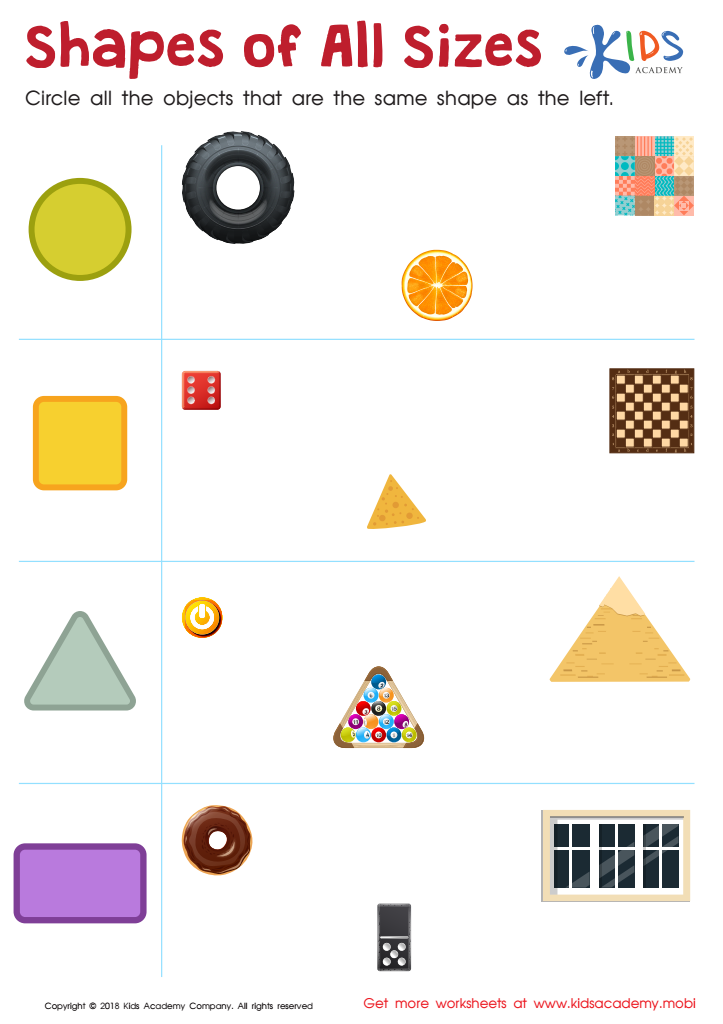
Shapes of All Sizes Worksheet
 Assign to My Students
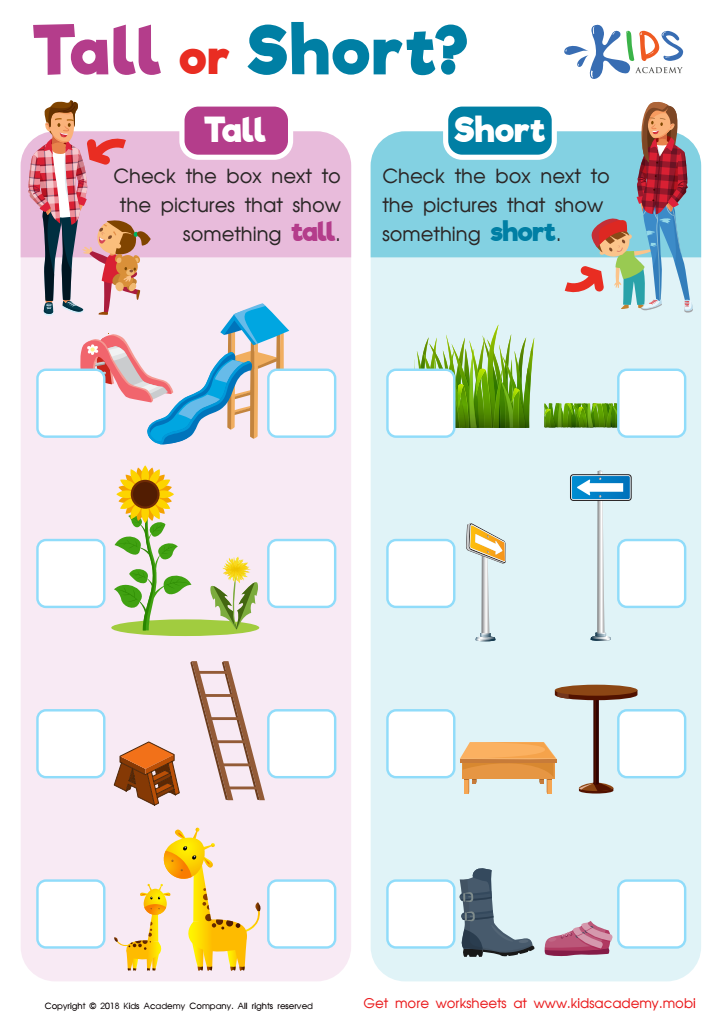
Tall or Short? Worksheet
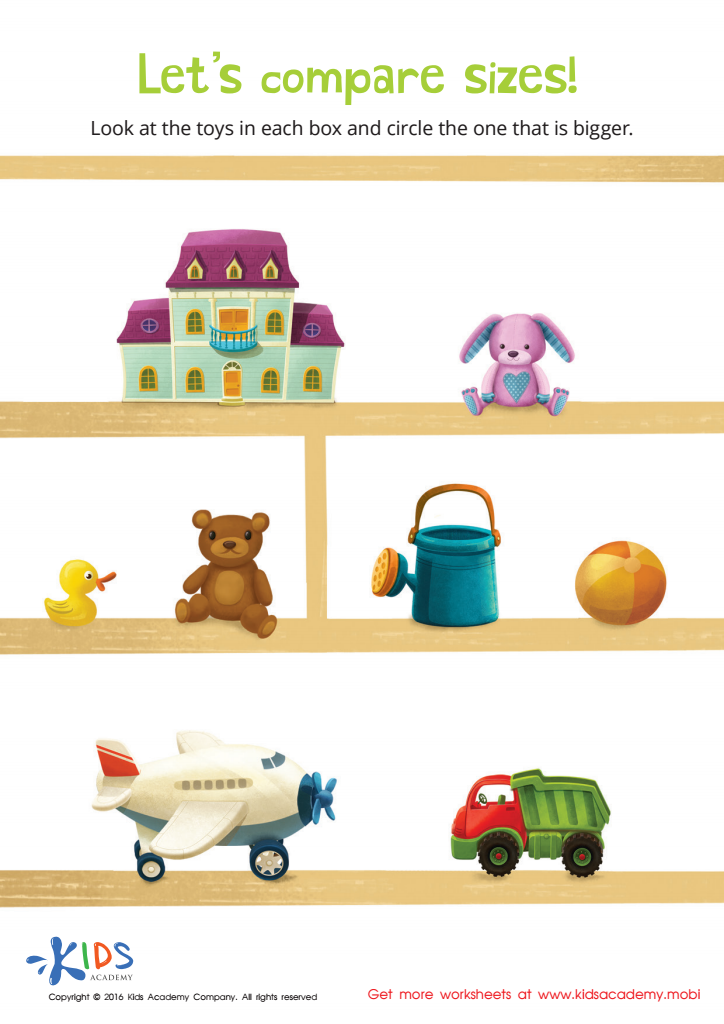
Classifying by Size Sorting Worksheet
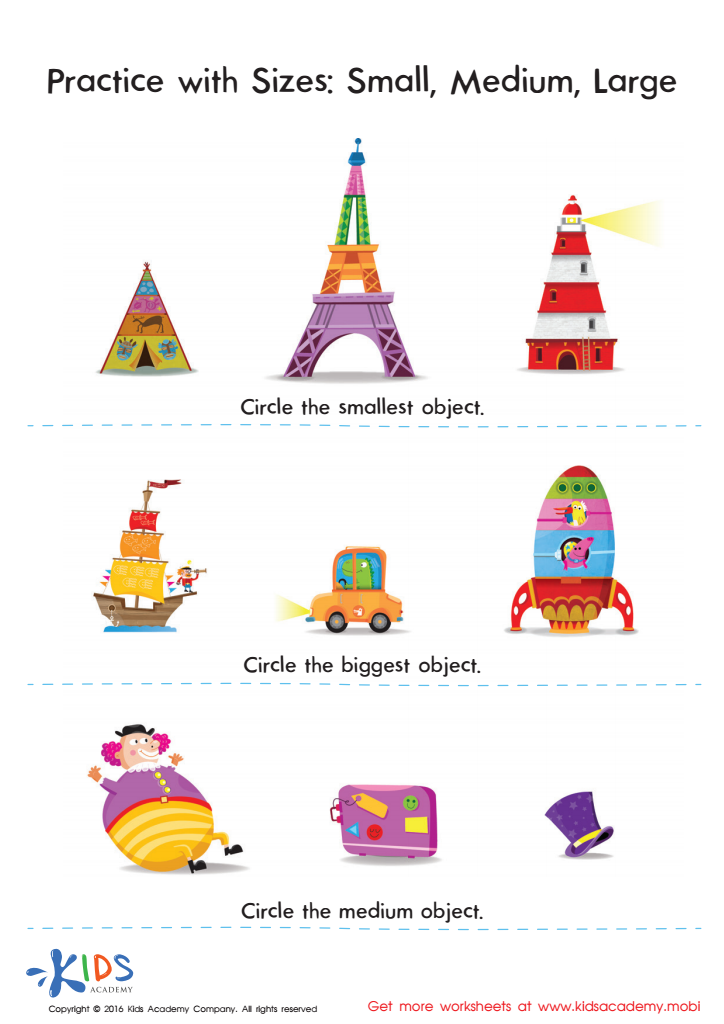








Understanding sizes in math is crucial for early learners, and both parents and teachers play a vital role in this foundational aspect of education. Recognizing and comparing sizes helps children develop their spatial awareness and critical thinking skills. It lays the groundwork for more complex mathematical concepts such as measurement, geometry, and data analysis, which they will encounter later in their schooling.
When children understand sizes, they can effectively solve real-world problems, like estimating quantities or understanding proportions, thus enhancing their everyday decision-making abilities. This knowledge also fosters independence, as children begin to apply their understanding when organizing their possessions, sharing resources, or even cooking with simple measurements.
Moreover, addressing size concepts often enhances language development, as children learn new vocabulary related to dimensions, comparisons, and categories. Engaging in activities that explore sizes—like sorting objects, storytelling, and imaginative play—creates opportunities for social learning and collaboration among peers.
Parents and teachers should care about teaching size understanding as it nurtures a solid mathematical foundation, instills confidence in young learners, and encourages a lifelong appreciation for math. Cultivating this early knowledge empowers children to navigate and interpret the world around them effectively.








