Understanding times tables Math Worksheets
6 filtered results
-
From - To
Discover the power of multiplication with our "Understanding Times Tables Math Worksheets." Designed for young learners, these engaging worksheets help students grasp the fundamentals of times tables, foundational for their math journey. Through fun, interactive exercises, children can enhance their multiplication skills, build confidence, and improve overall mathematical fluency. Each worksheet offers a variety of problems tailored for different learning levels, ensuring that every child can progress at their own pace. With our user-friendly format, students will find joy in practicing math! Perfect for classroom use or at-home learning, our resources transform multiplication practice into an exciting adventure. Start multiplying today!
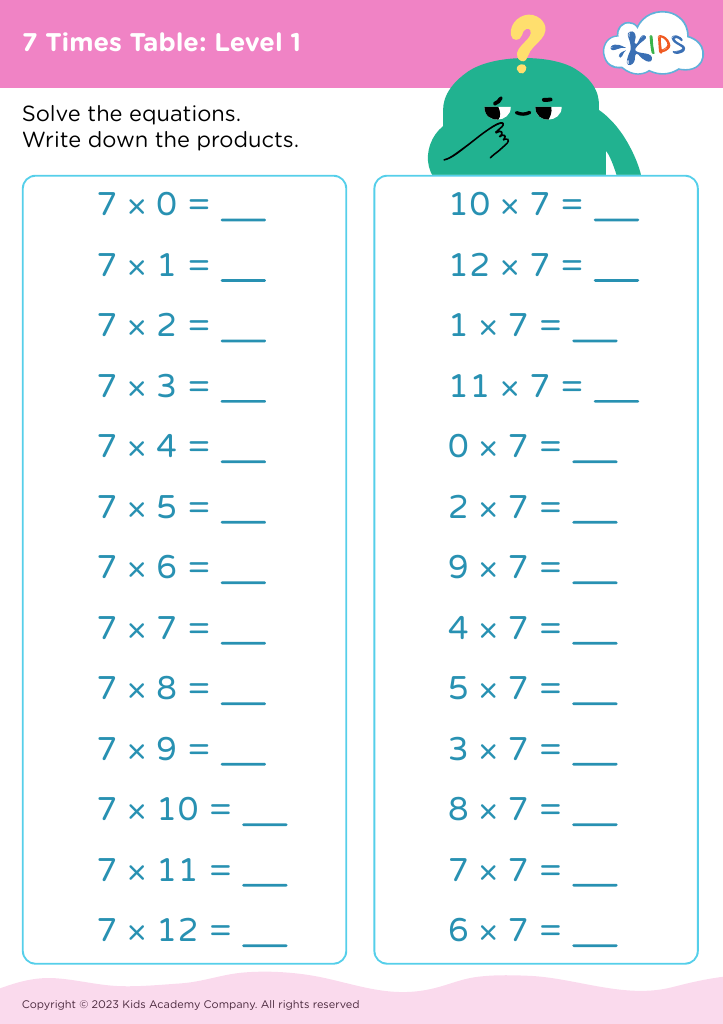
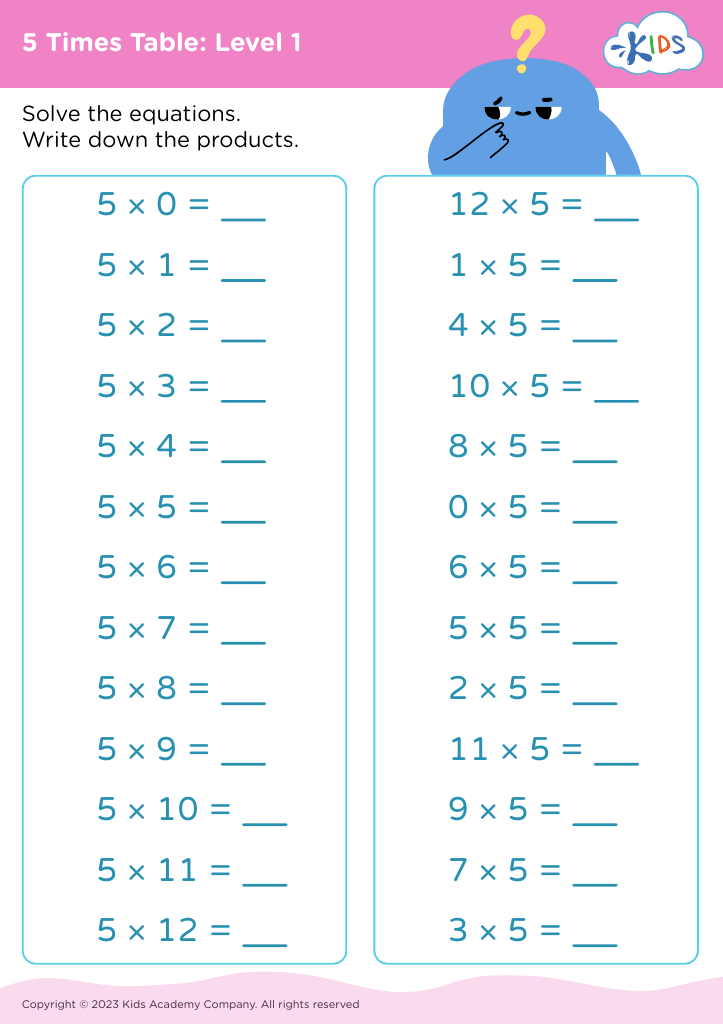
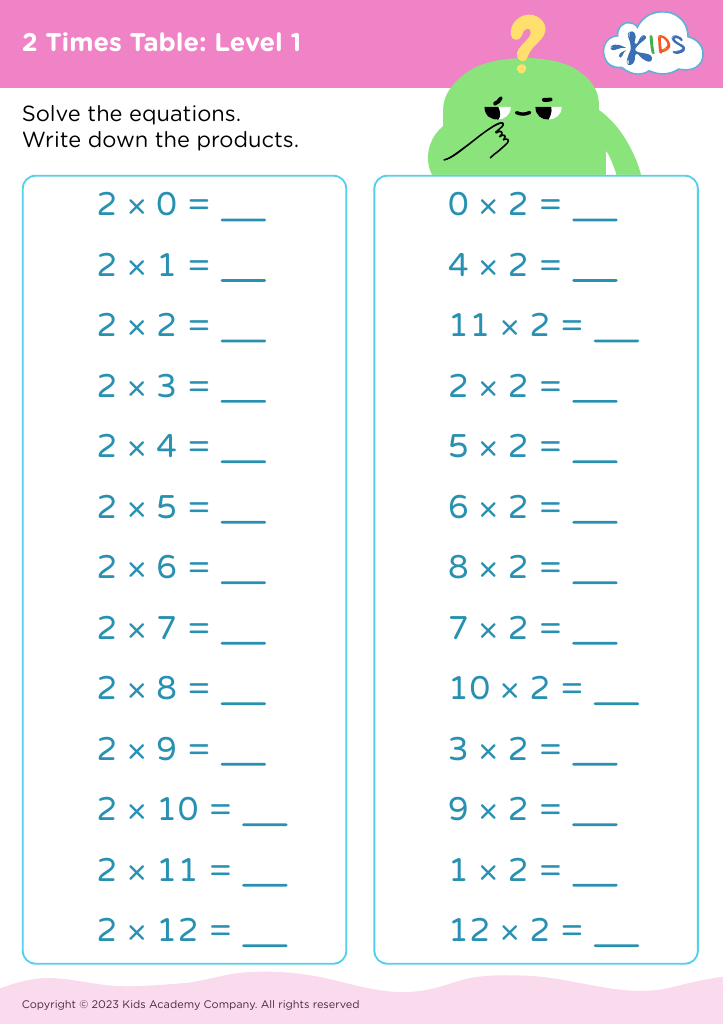
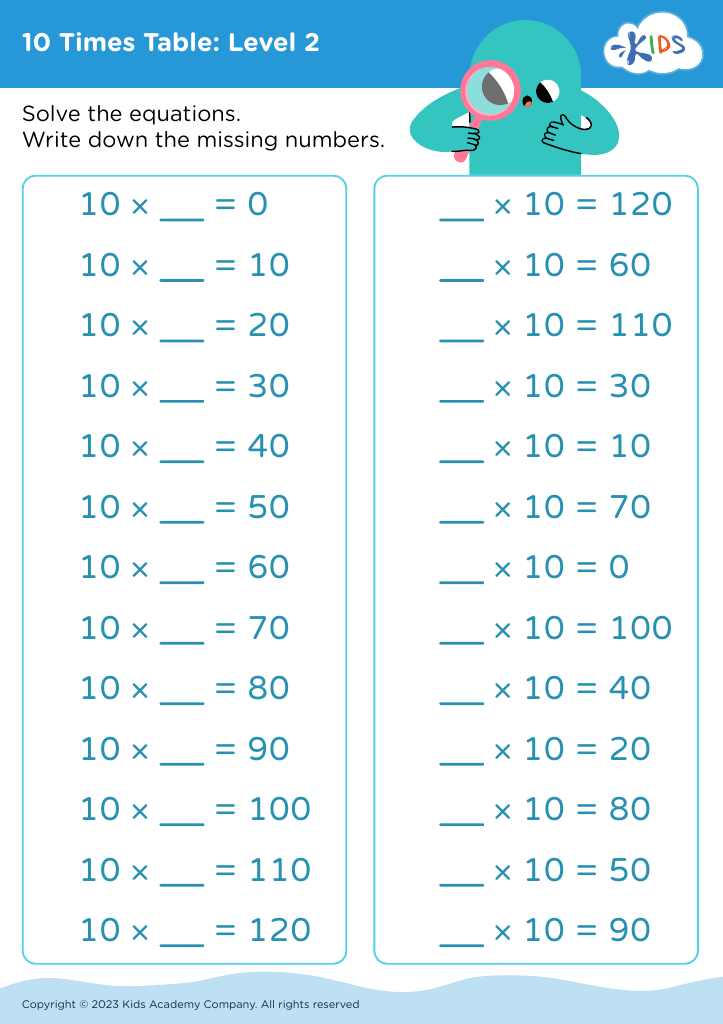
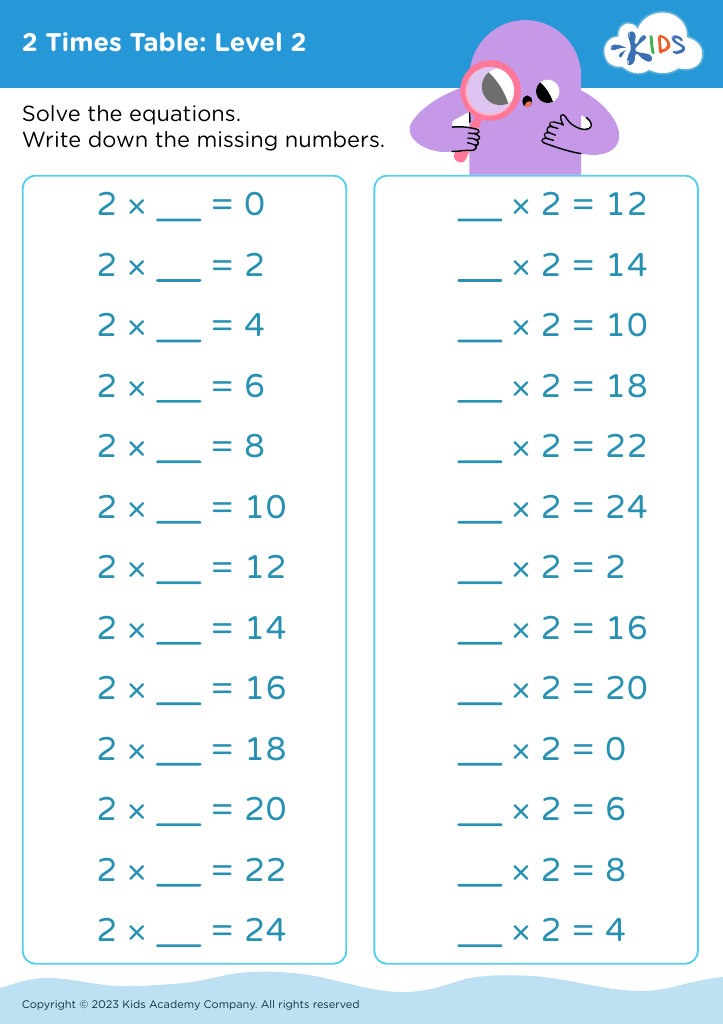
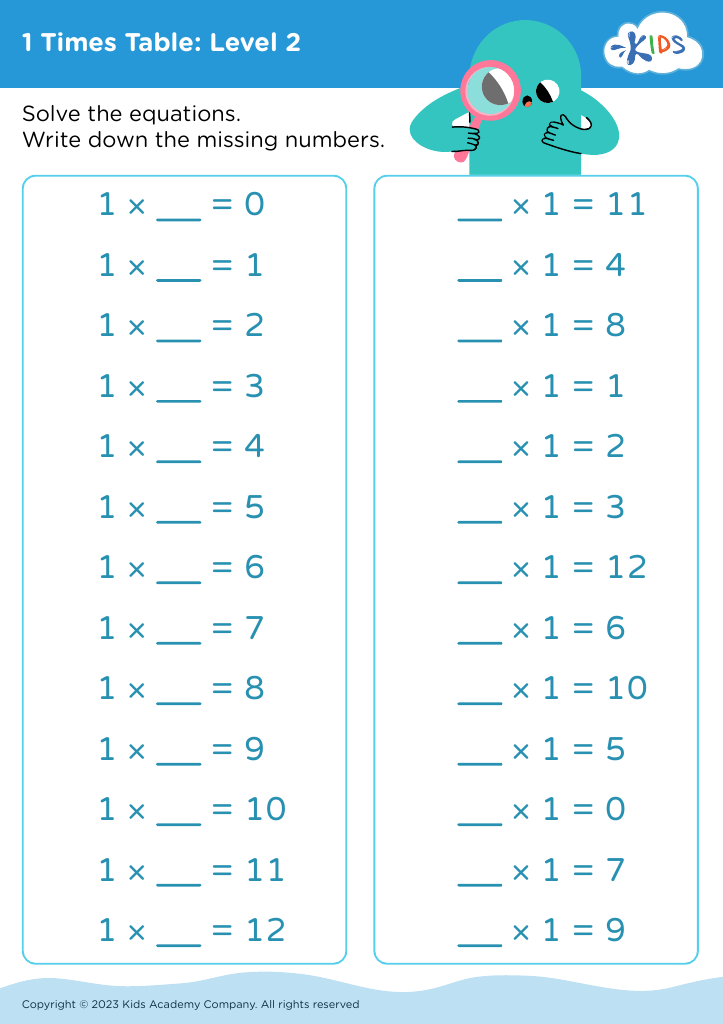








Understanding times tables is crucial for both parents and teachers as it serves as the foundation for a child's mathematical competence. Mastering multiplication enables students to solve complex problems later in their education, leading to greater success in subjects like algebra and geometry. When children grasp the concept of multiplication, they can quickly compute answers, boosting their confidence in math-related tasks and assessments.
Additionally, multiplication skills enhance critical thinking and problem-solving abilities. These skills not only are essential for formal education but also provide practical tools for everyday life, including budgeting, cooking, and time management. With these capabilities, students can approach challenges more systematically and logically.
Moreover, fostering a strong understanding of times tables can lead to improved academic engagement. When children not only memorize but understand multiplication, they are more likely to develop a positive attitude toward math. This promotes lifelong learning and curiosity.
Ultimately, both parents and educators can create supportive environments and employ various teaching methods—like games, songs, and visual aids—to inspire children to grasp these concepts. By prioritizing times tables, they can set a solid groundwork for a child’s academic journey and overall lifelong skills.








