Visual discrimination skills Math Worksheets
4 filtered results
-
From - To
Enhance your child's visual discrimination skills with our engaging Math Worksheets! Designed for early learners, these worksheets focus on helping students identify differences and similarities among various shapes, patterns, and numbers. By practicing visual discrimination, children improve their observation abilities, critical for solving math problems and understanding fundamental concepts. Our printable worksheets are visually appealing and age-appropriate, making learning enjoyable and effective. Perfect for home or classroom use, these resources will help your child build a strong foundation in math while developing essential skills for future success. Explore our collection today and make learning fun and interactive!
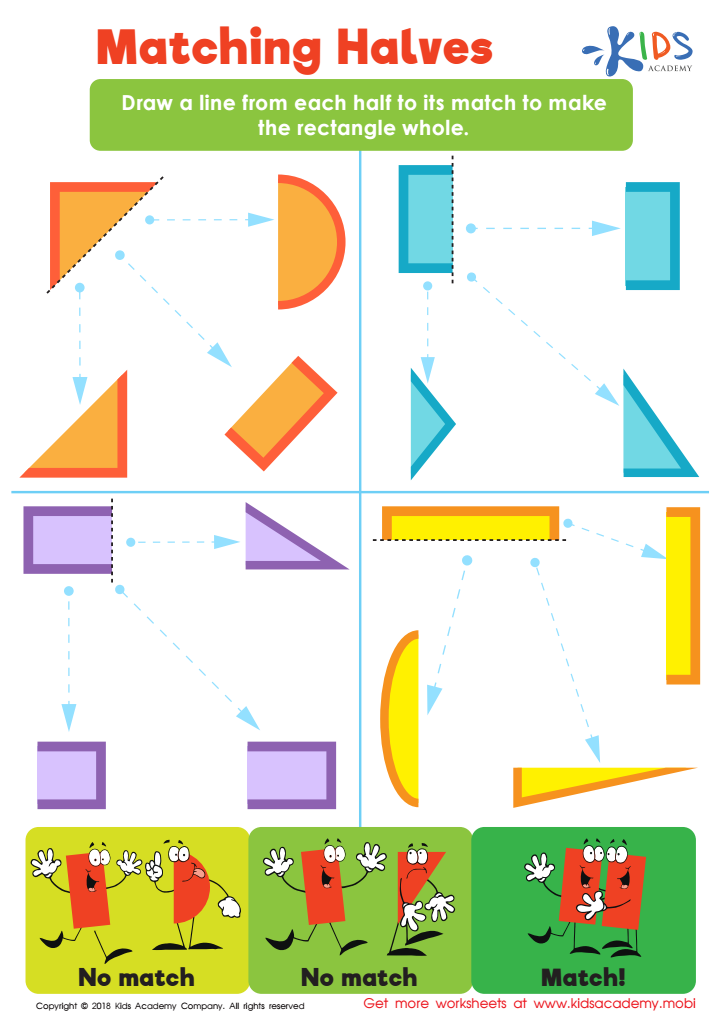
Matching Halves Worksheet
 Assign to My Students
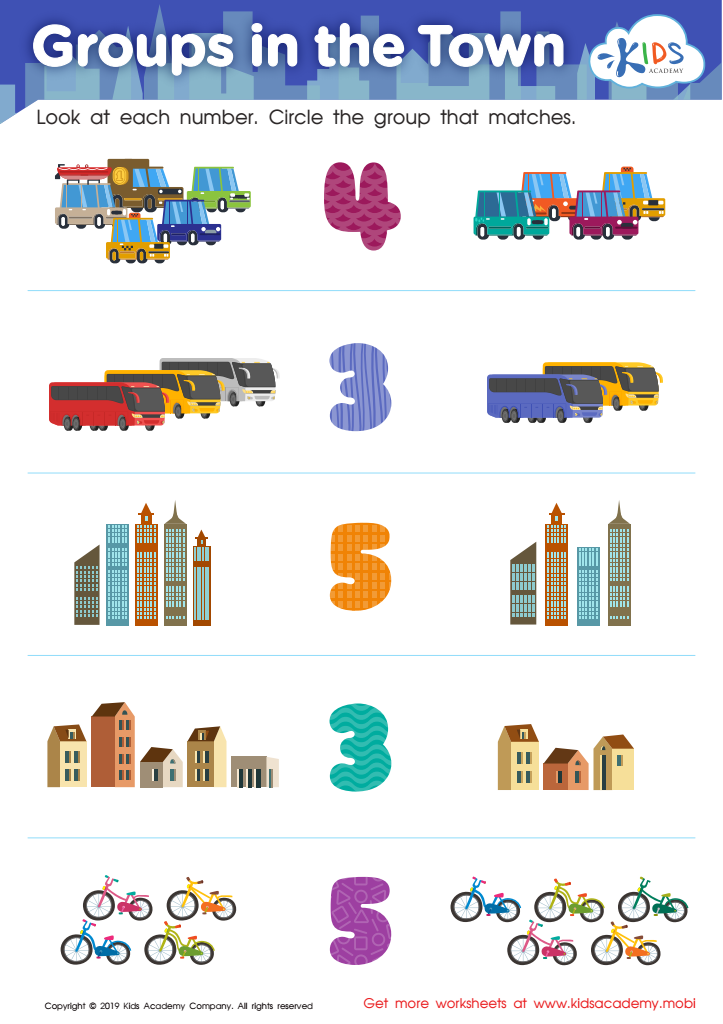
Groups in the Town Worksheet
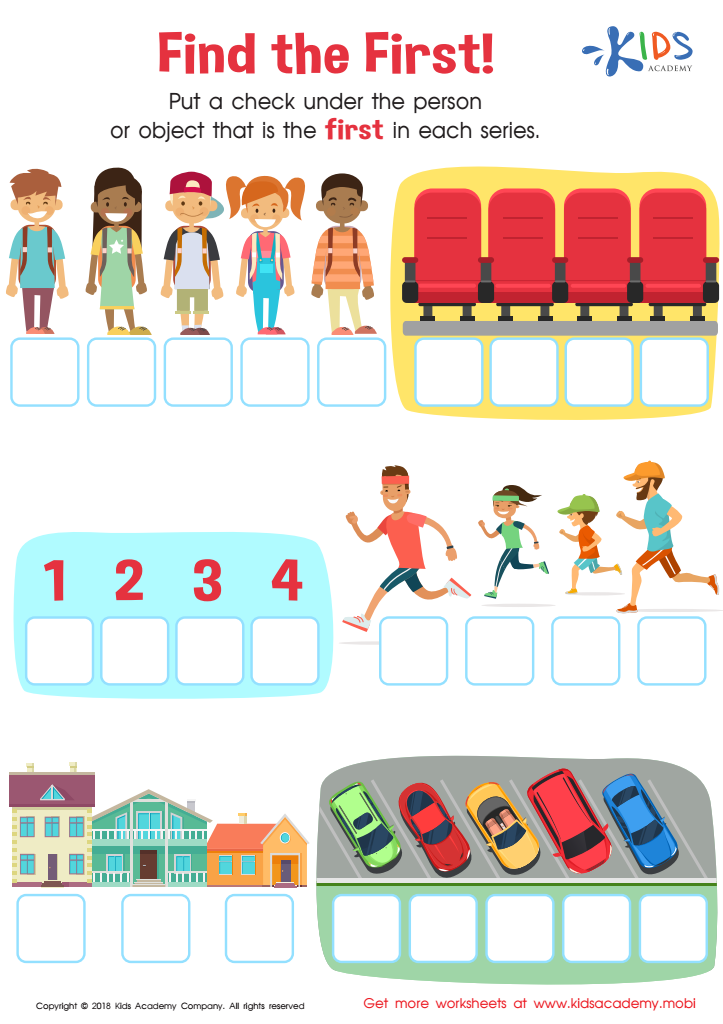
Find the First! Worksheet






.jpg)
Visual discrimination skills are essential for young learners, particularly in mathematics. These skills enable children to notice similarities and differences in shapes, patterns, and quantities, which are foundational to understanding mathematical concepts. When children can accurately discern visual details, they become adept at recognizing numbers, grasping geometry, and interpreting graphs—skills vital for mathematical success.
For parents and teachers, fostering these skills is crucial as they encourage the development of problem-solving abilities and critical thinking. Visually discriminating between numbers, like 6 and 9, helps prevent confusion during early arithmetic. Recognizing patterns, shapes, and spatial relationships lays the groundwork for concepts like measurement, symmetry, and basic operations.
Moreover, improved visual discrimination fosters greater confidence in students, allowing them to engage more enthusiastically with math. Parents can support this by incorporating activities that enhance these skills at home, such as puzzles and sorting games. Teachers can implement targeted strategies in the classroom to strengthen these attributes.
In summary, visual discrimination skills are not just important; they are a key indicator of future success in math. Nurturing these skills with the right support from parents and teachers can lead to a lifetime appreciation and comprehension of mathematics.








