
Basic measurement concepts Measurement Worksheets
7 filtered results
Difficulty Level
Grade
Age
-
From - To
Subject
Activity
Standards
Our Basic Measurement Concepts Worksheets offer engaging activities to help young learners grasp fundamental measurement skills. Designed for early learners, these worksheets incorporate fun and interactive tasks focusing on comparing lengths, weights, and capacities using everyday objects. With vibrant illustrations and simple exercises, children can easily understand and apply basic measurement concepts in real-life scenarios. Ideal for both classroom and home use, our printable resources support the development of critical thinking and problem-solving skills. Visit our page to give your child a strong foundation in measurement while having fun through hands-on learning.
Favorites
With answer key
Interactive
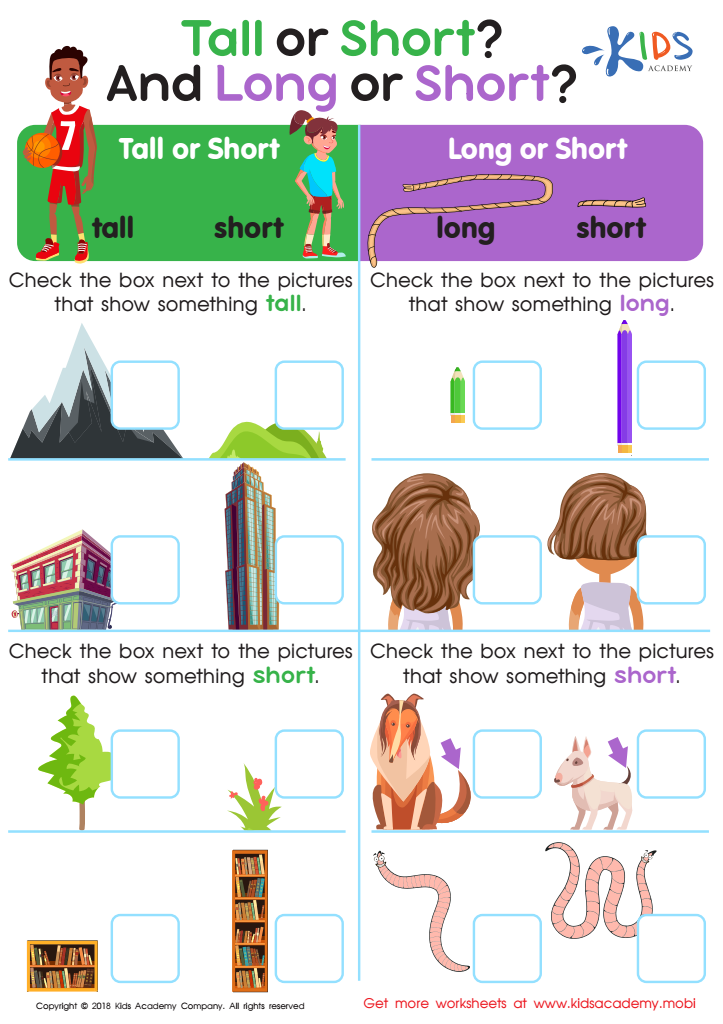
Tall or Short and Long or Short? Worksheet
This worksheet is fun and helpful for kids to understand the difference between height and length. With pictures of familiar objects, they can compare and choose the box with the right answer. This helps them gain skills and a better foundation for future measuring.
 Assign to My Students
Tall or Short and Long or Short? Worksheet
Worksheet
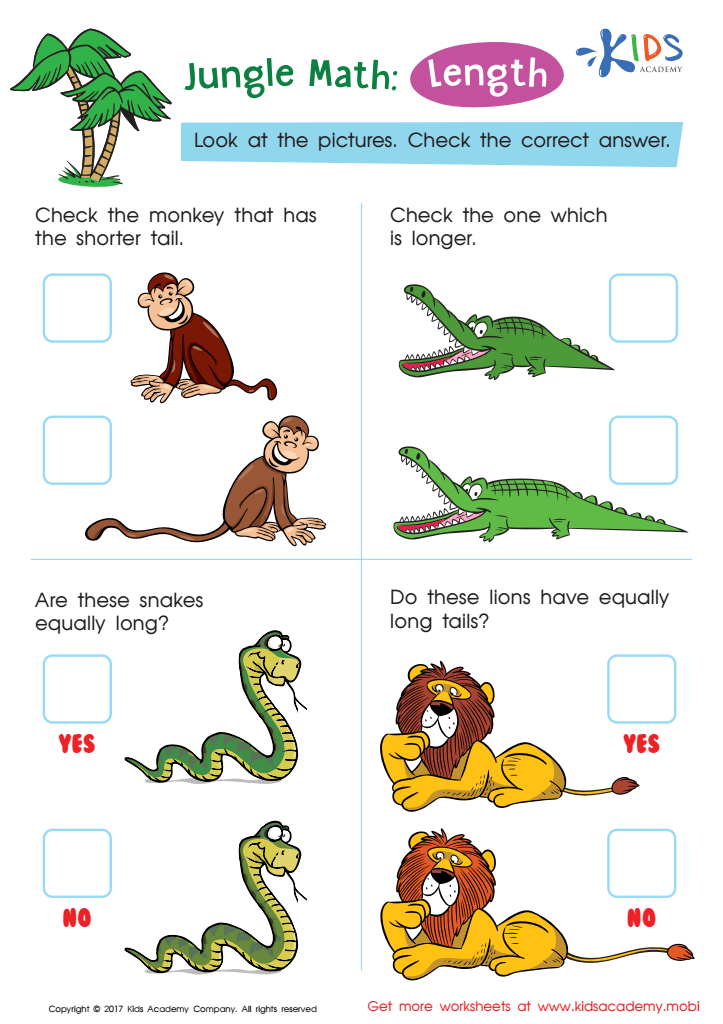
Which One Is Longer - Length Worksheet
Let's go to the jungle - kids get excited to practice math with animal-filled worksheets! This one is sure to have your pupil mastering length in no time.
Which One Is Longer - Length Worksheet
Worksheet
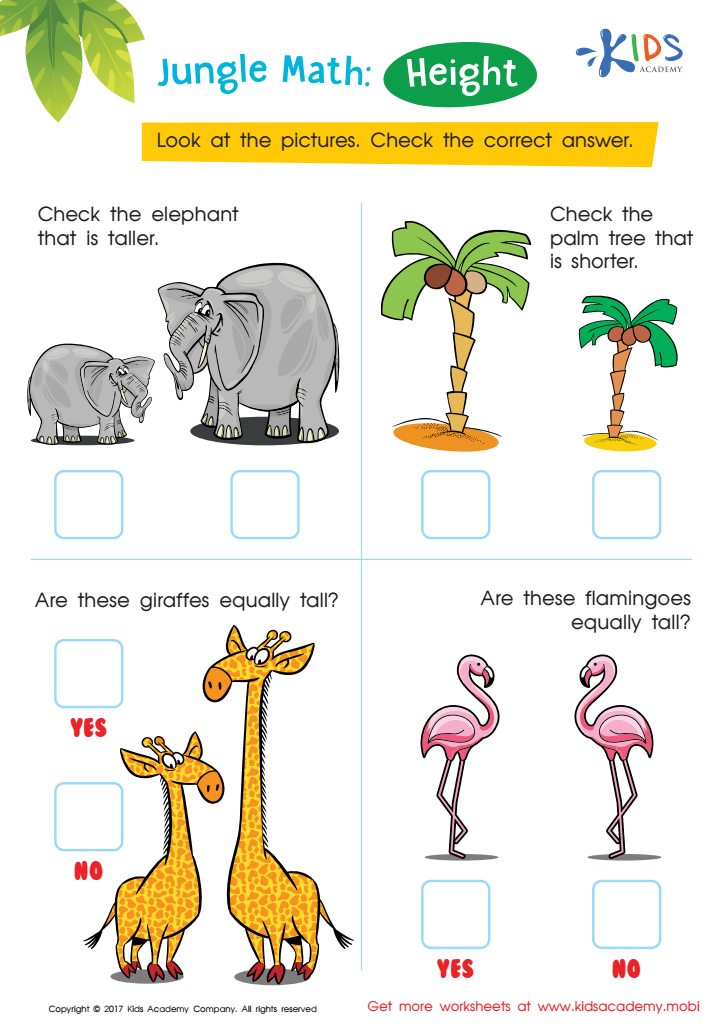
Which Is Taller Worksheet
Help your kindergartner learn about height with this fun worksheet! They'll love comparing zoo animals and deciding which are taller, shorter, or equal. It's a great way to practice math and have fun!
Which Is Taller Worksheet
Worksheet
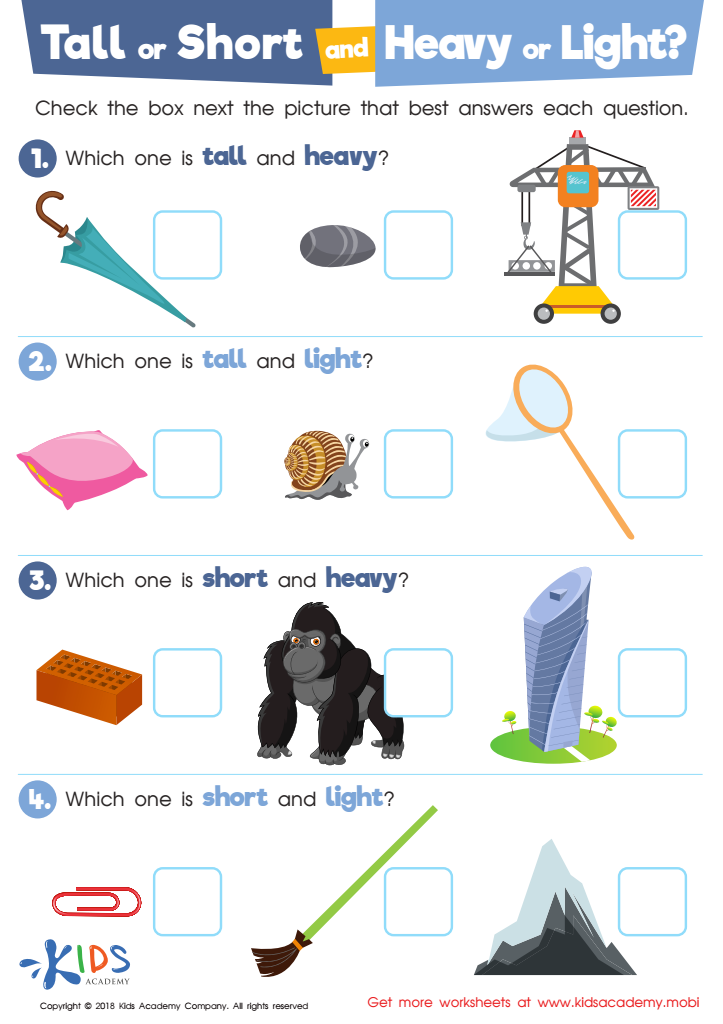
Tall or Short and Heavy or Light? Worksheet
Young children can find basic measurement concepts tricky. This PDF introduces them to the appropriate vocabulary for describing heavy, light, tall and short items, by using familiar pictures. It helps them accurately select which items fit each category.
Tall or Short and Heavy or Light? Worksheet
Worksheet
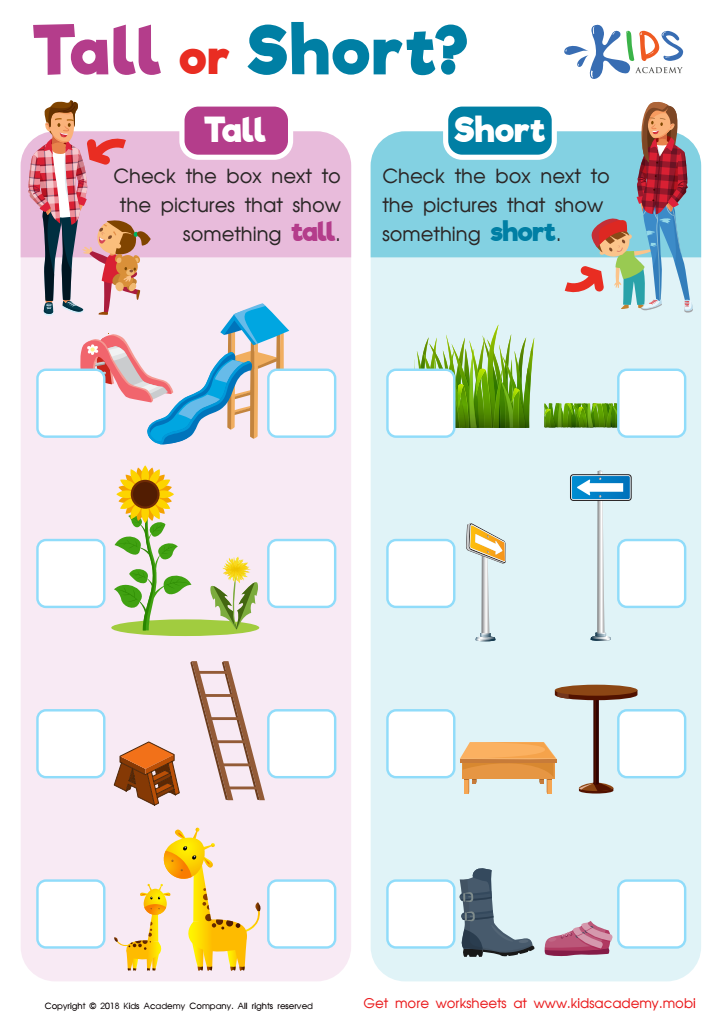
Tall or Short? Worksheet
Comparing tall and short objects is an early math skill. Our free worksheet uses fun colors and pictures to help kids practice. This will give them a head start for higher-level measurement skills, and they'll remember tangible objects for comparison.
Tall or Short? Worksheet
Worksheet
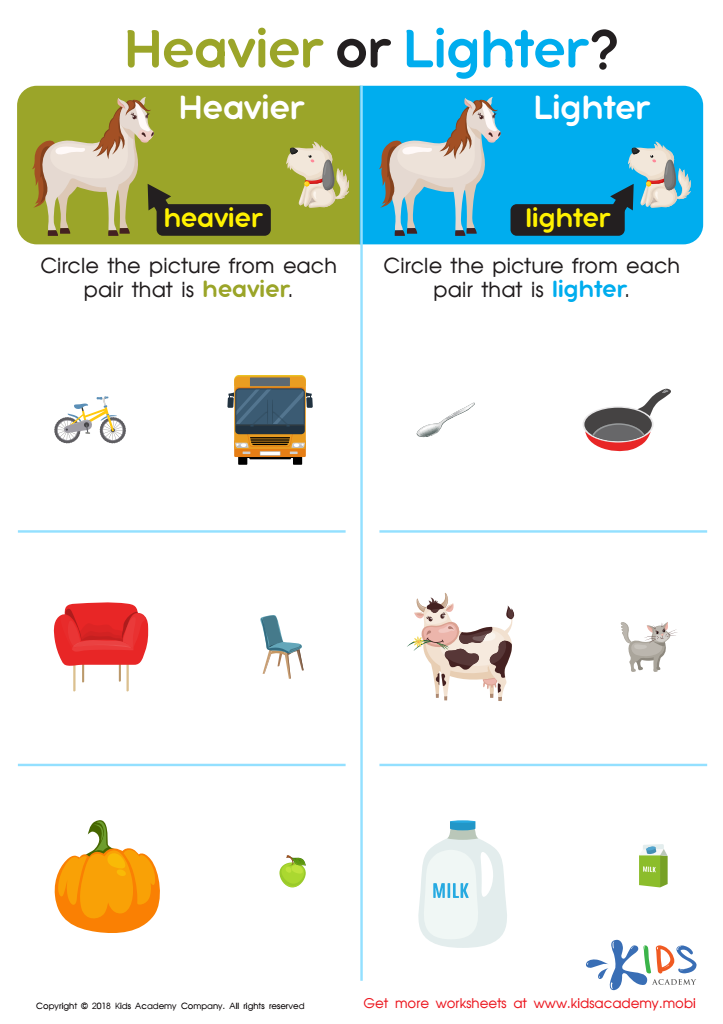
Heavier or Lighter? Worksheet
This PDF provides children an opportunity to practice concepts of heavier and lighter with familiar pictures. They must use fine-motor skills to circle the heavier or lighter item in each pair. Picture clues help build a foundation for future, harder concepts. Kids will love this fun worksheet!
Heavier or Lighter? Worksheet
Worksheet
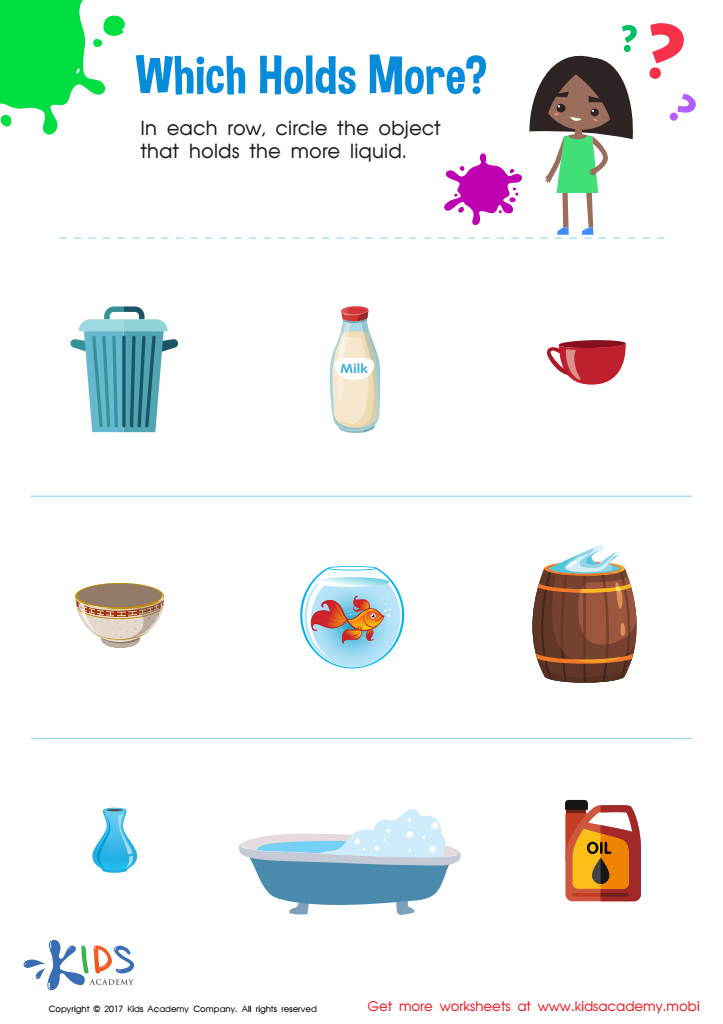
Which Holds More: Capacity Worksheet
Kids learn volume with containers of different capacities, such as mugs and barrels, and understand which can hold more liquid. A fun and interactive way to teach essential math concepts.
Which Holds More: Capacity Worksheet
Worksheet
Join Kids Academy for Free
Who is primarily going to use this learning content?








Basic measurement concepts are fundamental to a child's educational foundation and everyday life. Understanding measurements such as length, weight, volume, and time helps children make sense of the world around them, fostering practical life skills and logical thinking. For instance, when baking cookies, knowing how to measure ingredients ensures the right mixture, teaching precision and following instructions, while practical application reinforces learning.
From a cognitive perspective, mastering measurement concepts aids in the development of critical thinking and problem-solving abilities. Engaging with measurements introduces early mathematical concepts in a tangible way, making abstract ideas more accessible. This groundwork is crucial for future learning in more complex STEM (Science, Technology, Engineering, and Mathematics) fields.
Moreover, measurement activities promote fine motor skills as children use rulers, measuring cups, and scales. It also encourages collaborative learning and communication when children work together on group projects, enhancing their social skills.
Lastly, understanding measurements aligns with real-world functionality, such as telling time, planning trips, and even understanding health-related topics like nutrition and medication dosage. Thus, parents and teachers supporting basic measurement concepts equip children with essential tools for academic success, day-to-day tasks, and lifelong learning, nurturing well-rounded, capable individuals.








