Comparing objects Measurement Worksheets
3 filtered results
-
From - To
Our "Comparing Objects Measurement Worksheets" for kids are designed to enhance your child's understanding of basic measurement concepts. These engaging, printable worksheets help children develop essential skills by comparing the length, height, and size of different objects. Ideal for early learners, they make math fun and interactive. By using visuals and practical exercises, these worksheets encourage critical thinking and observation, allowing kids to easily grasp the concept of measurement. Perfect for classroom use or at-home practice, our comparing objects measurement worksheets are a valuable tool in fostering foundational math skills and boosting confidence in young learners.
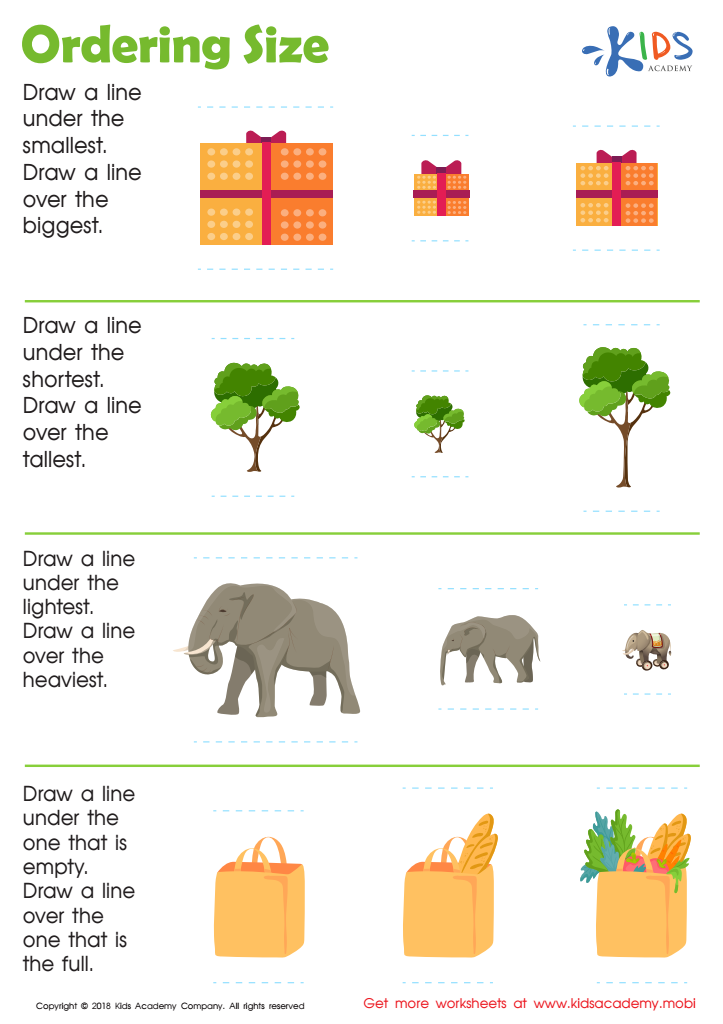
Ordering Size Worksheet
 Assign to My Students
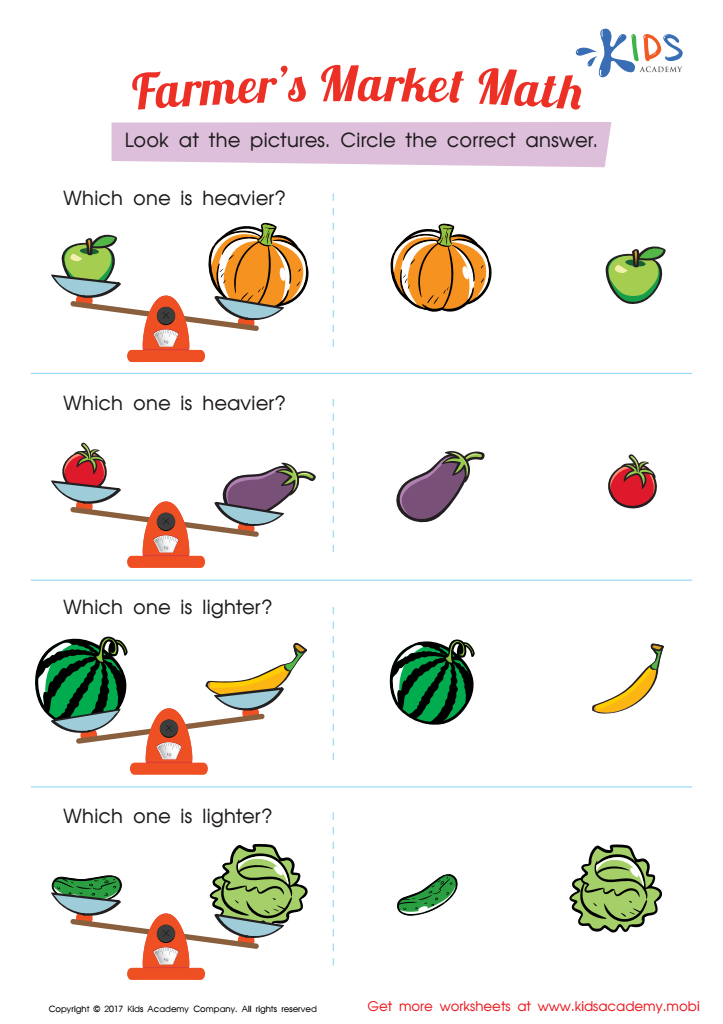
Which One Is Heavier Worksheet
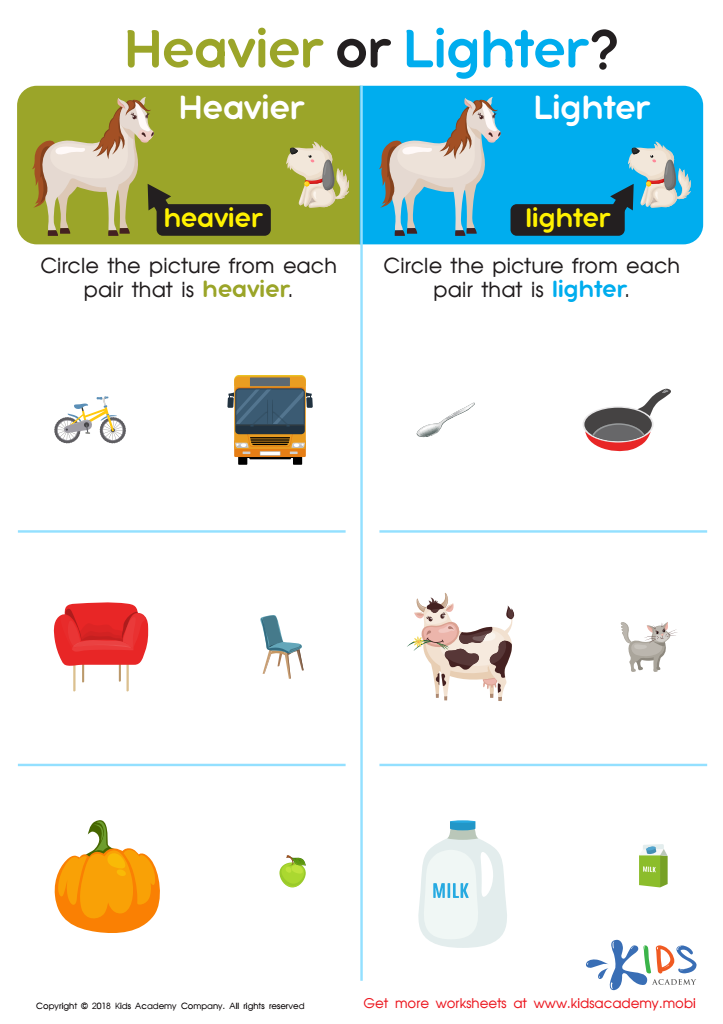
Heavier or Lighter? Worksheet








Parents and teachers should care about teaching children how to compare objects by measurement because it is foundational to their overall cognitive and practical development. Measurement comparison helps kids understand the world around them through quantifiable details such as length, weight, and volume. These skills sharpen critical thinking and reasoning, which are essential for problem-solving and day-to-day decision-making.
Introducing measurement comparison at an early age fosters an intuitive grasp of mathematics. It helps children make sense of basic math concepts like greater than, less than, and equal to, thereby laying the groundwork for more advanced mathematical learning. Knowing how to measure and compare encourages a child's natural curiosity, prompting questions and explorations like "Which object is heavier?" or "How many of these small items fit into this big box?"
Moreover, these skills have practical applications beyond academics. In real life, children use these concepts for tasks such as sharing toys fairly, filling a container with liquid, or arranging furniture in a specific space. When parents and teachers support learning through practical and playful activities, children develop confidence and competence. Fostering these skills early in life sets a robust groundwork for academic and personal success, making it an essential aspect of early education.








