Sorting skills Numbers 0–10 Worksheets
3 filtered results
-
From - To
Enhance your child's sorting skills with our engaging "Sorting Skills Numbers 0-10 Worksheets." Designed for early learners, these worksheets provide interactive activities that help children develop critical sorting abilities while recognizing numbers from 0 to 10. Through fun and colorful exercises, kids will classify objects by number, shape, and size, fostering essential cognitive and fine motor skills. Perfect for home or classroom use, these worksheets support number recognition and promote mathematical thinking in a playful way. Empower your child's learning journey today by downloading our user-friendly worksheets and watch them thrive as they master the art of sorting!
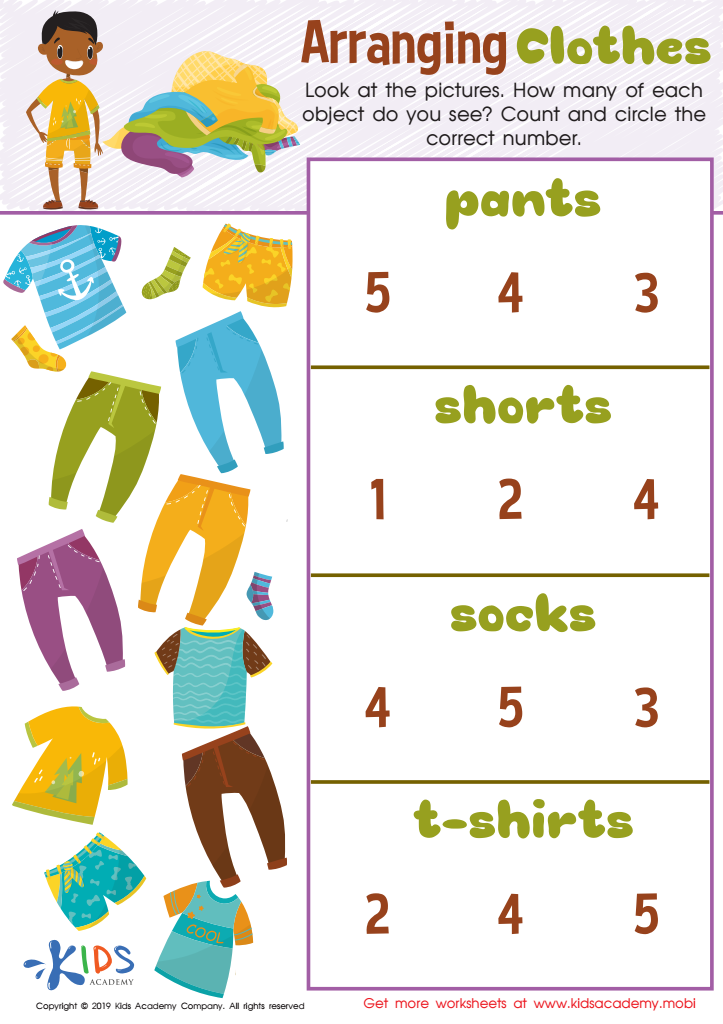
Arranging Clothes Worksheet
 Assign to My Students
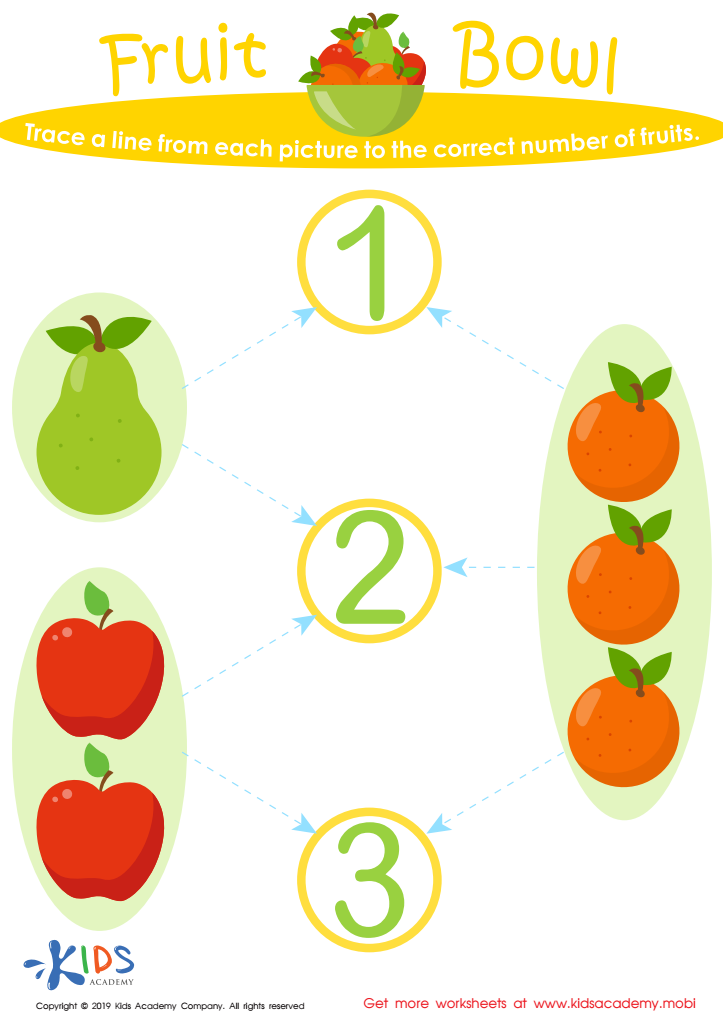
Fruit Bowl Worksheet
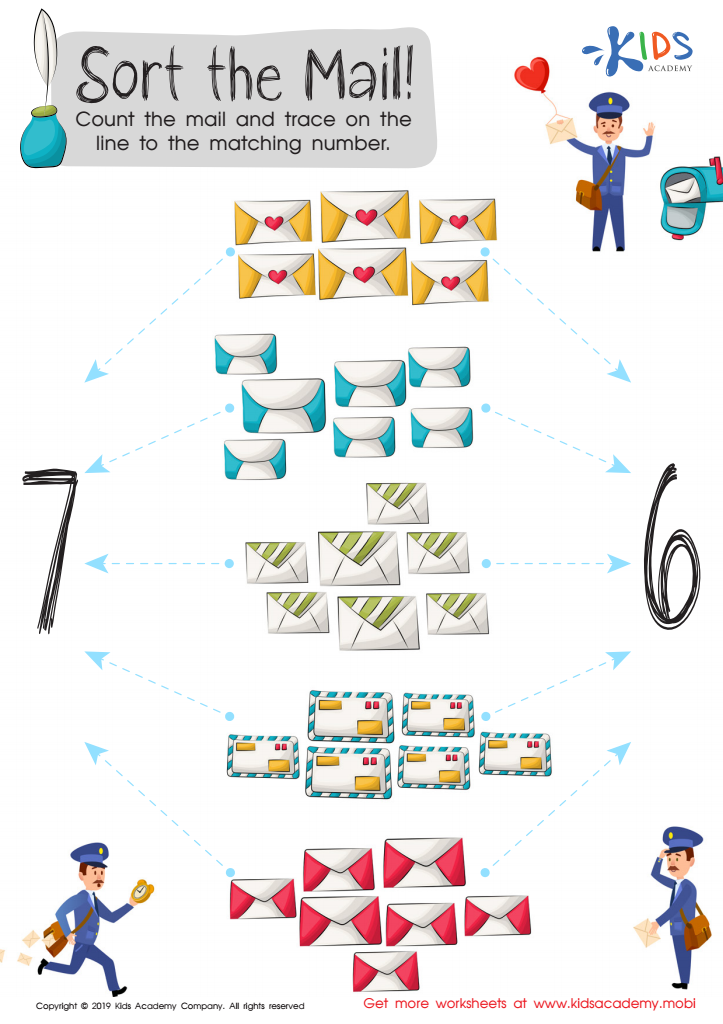
Sort the Mail Worksheet








Sorting skills for numbers 0–10 are foundational for early math development, making it essential for parents and teachers to emphasize these skills. Firstly, sorting enhances a child's understanding of basic mathematical concepts, like classification and organization. When children sort numbers, they begin to recognize quantities, develop number sense, and learn how to arrange data meaningfully.
Moreover, sorting encourages critical thinking and problem-solving abilities. As children assess different numbers and their relationships, they practice cognitive skills that benefit them in more advanced mathematics later on. Sorting also promotes fine motor skills and hand-eye coordination when physical manipulatives are used, such as blocks or cards with numbers.
In addition to the academic advantages, sorting activities create engaging learning experiences that foster communication skills. As children explain their sorting choices, they enhance their vocabulary and ability to express mathematical ideas. This interaction between parents, teachers, and children can further deepen understanding and make learning enjoyable.
Ultimately, nurturing sorting skills lays the groundwork for higher-order thinking and mathematical proficiency, enabling children to tackle more complex concepts as they grow. Parents and teachers who prioritize these skills help set students up for a strong foundation in mathematics, benefiting their overall academic journey.








