Understanding skip-counting Numbers up to 100 Worksheets
3 filtered results
-
From - To
Discover a fun and engaging way to help young learners master skip-counting with our "Understanding Skip-Counting Numbers up to 100 Worksheets." These educational worksheets are designed to make learning simple and enjoyable, aiding in the development of crucial math skills. Kids will explore numbers through fun activities that involve counting by 2s, 5s, and 10s, enhancing their arithmetic fluency and number sense. Perfect for classroom use or at-home practice, our worksheets support foundational math learning and Foster confidence. Encourage your students to build strong counting abilities and improve their overall math proficiency effortlessly.
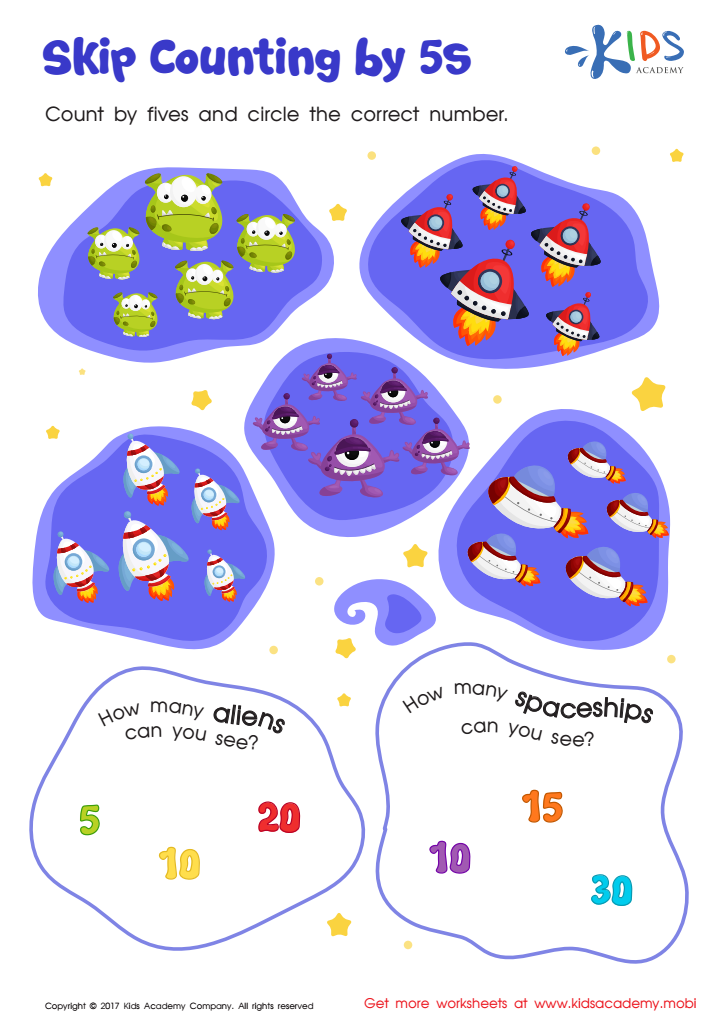
Skip Counting by 5s: Aliens and Spaceships Printable
 Assign to My Students
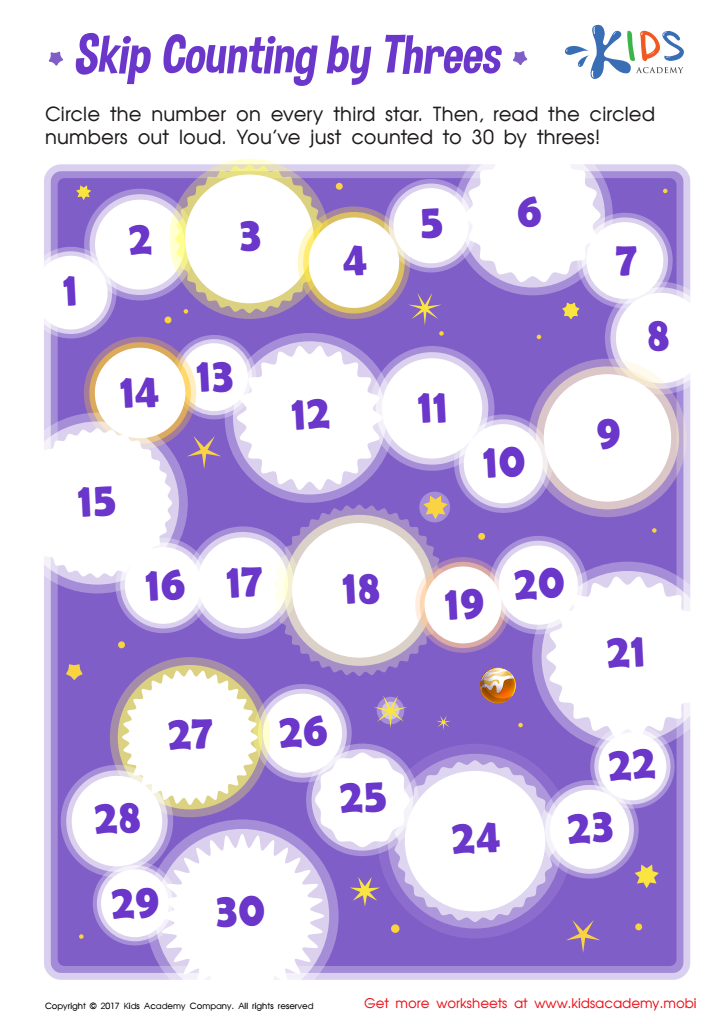
Skip Counting By Three Printable
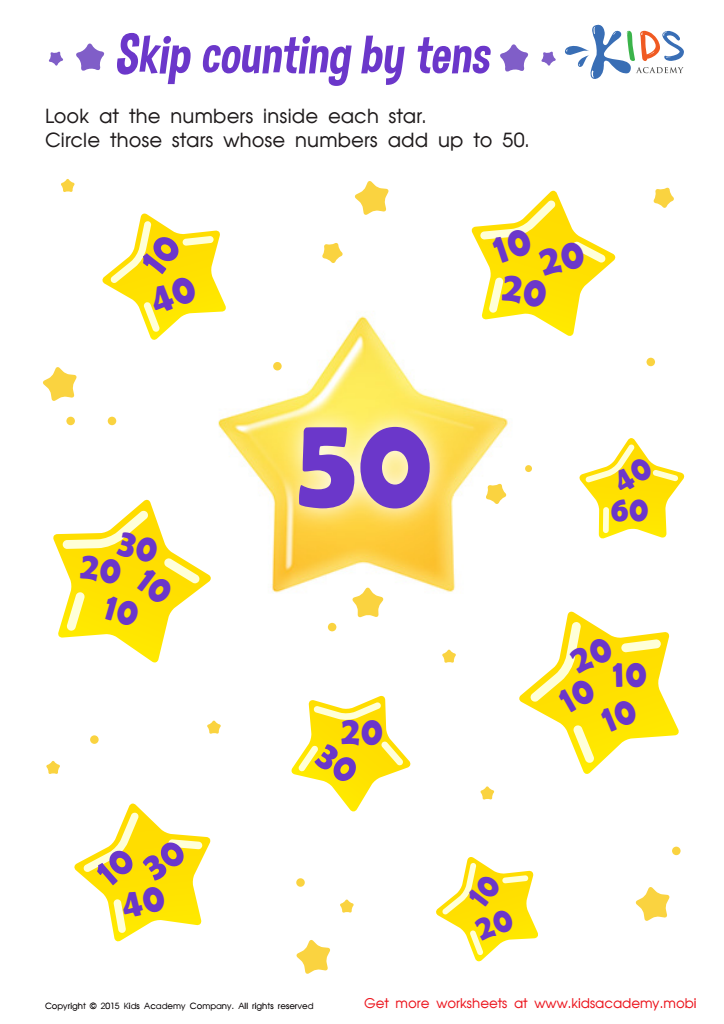
Learn Dozens: Skip Counting by Tens Printable



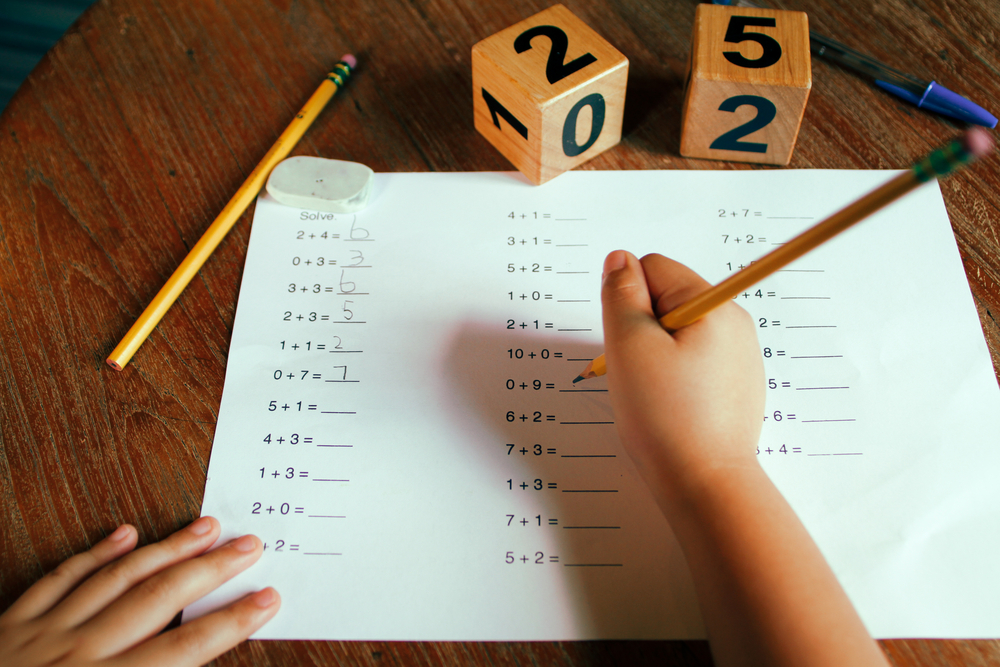




Understanding skip-counting numbers up to 100 is crucial for children and it is important for both parents and teachers to be aware of its significance. Skip-counting, which usually involves counting by 2s, 5s, or 10s, lays the foundation for essential arithmetic concepts. For instance, it helps kids grasp multiplication patterns, understand and recognize multiples, and perform quicker mental math.
For instance, when children adeptly skip count by 5s (5, 10, 15, 20...), they are essentially learning the basic steps of multiplication (e.g., 5 x 4 is 20) and division. Skip-counting also bolsters the understanding of even and odd numbers, fostering numerical fluency. It helps kids discern patterns and sequences, which are fundamental to more advanced math topics.
Additionally, skip-counting supports the development of a strong number sense, an intuitive understanding of numbers and their relationships. This skill is valuable beyond formal education; it improves practical daily tasks such as telling time, handling money, and measuring quantities.
Teachers who emphasize skip-counting foster a positive and engaging math environment. Parents who reinforce it at home empower their children with confidence and a head start in their math journeys. Thus, skip-counting up to 100 is not just a basic skill, but a crucial progression in a child’s mathematical education and everyday life competencies.