Sound recognition Normal Alphabet Worksheets for Ages 3-4
4 filtered results
-
From - To
Discover our engaging Sound Recognition Normal Alphabet Worksheets designed specifically for children ages 3-4! These interactive worksheets foster early literacy skills by helping young learners identify letter sounds and connect them with visual representations. The activities are vibrant and playful, capturing kids' attention while making learning enjoyable. By using these worksheets, children develop phonemic awareness, a crucial foundation for reading and writing. Our resources encourage independent exploration, making them perfect for both classroom settings and at-home education. Equip your little ones with essential skills for their educational journey through our fun-filled sound recognition worksheets today!
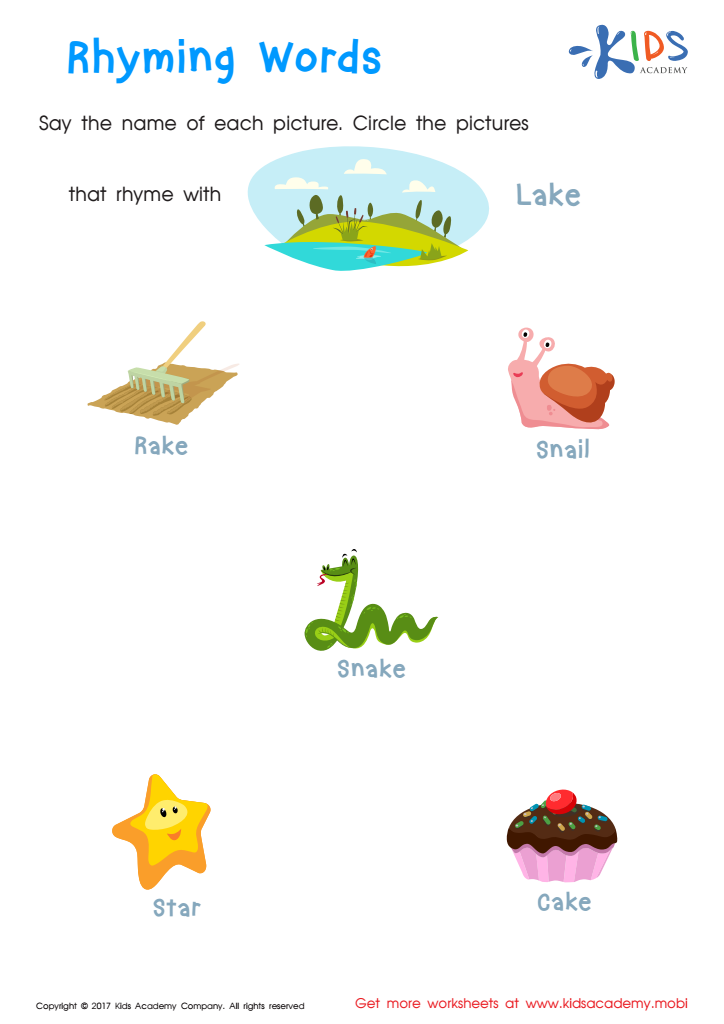
Rhyming Words Rhyming Worksheet

Long and Short U Worksheet
 Assign to My Students
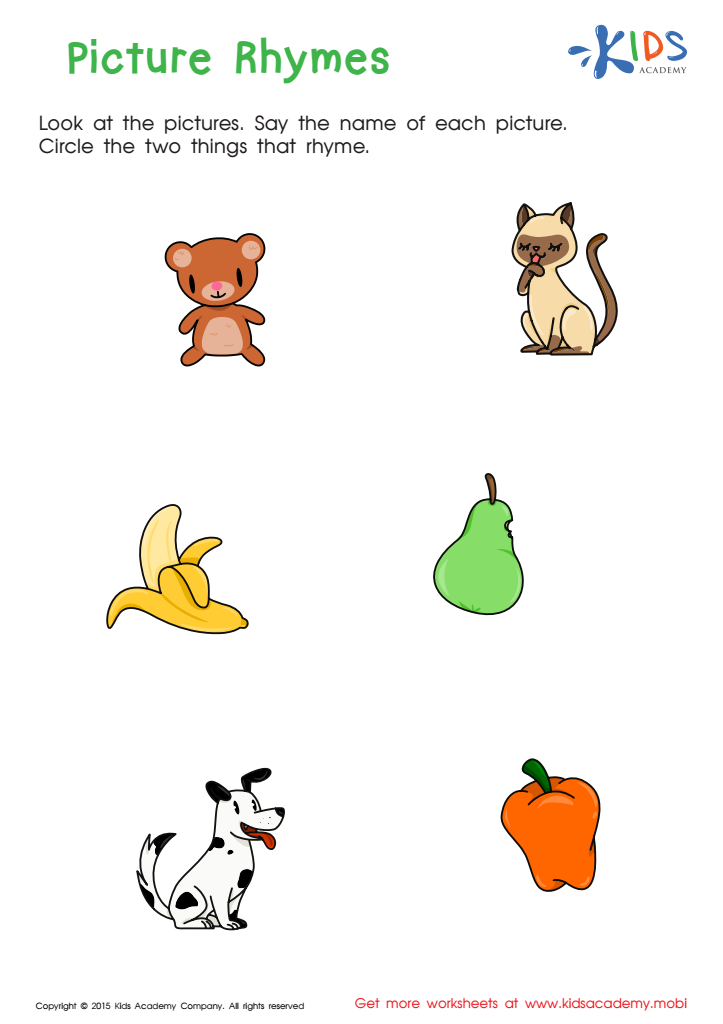
First Words: Picture Rhymes Worksheet
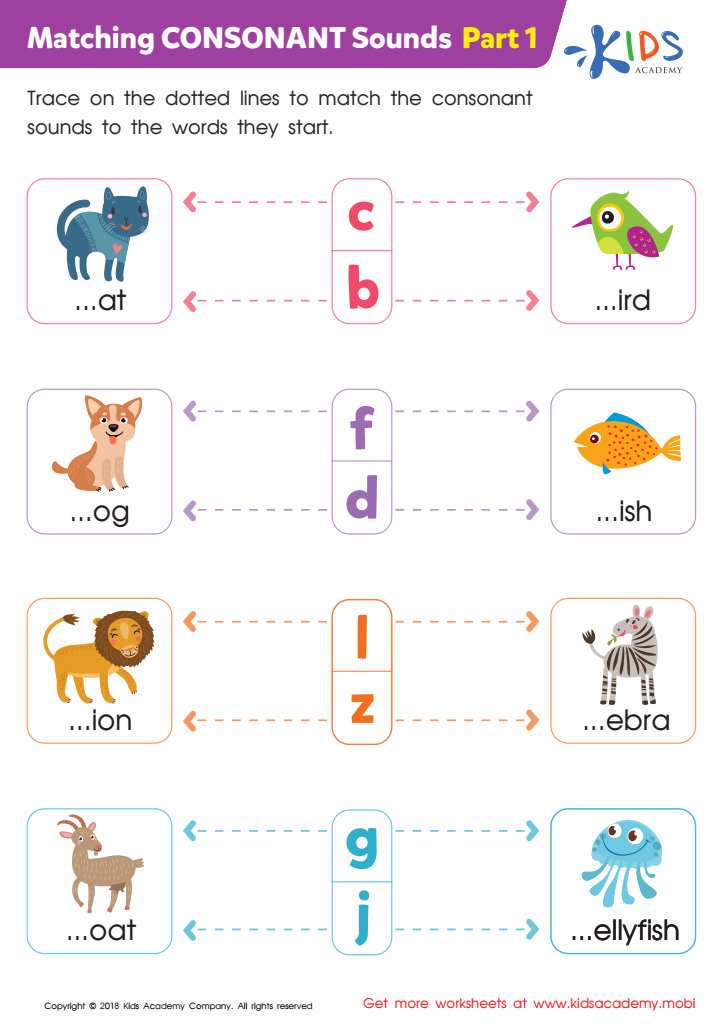
Matching Consonant Sounds: Part 1 Worksheet








Sound recognition of the normal alphabet is crucial for children aged 3-4 as it serves as the foundation for literacy development. At this early stage, children begin to grasp the relationship between sounds (phonemes) and letters (graphemes). Engaging in sound recognition equips them with the skills necessary for reading and writing, which are essential for academic success.
Furthermore, sound recognition fosters language development. By understanding the alphabet's sounds, children enhance their vocabulary and communication skills. This early engagement with phonics can lead to improved listening skills, enabling kids to discern words and sounds more effectively along their learning journey.
Additionally, sound recognition enriches children's cognitive development. It encourages critical thinking by challenging them to connect sounds with written symbols and decipher meaning. Early familiarity with the alphabet can boost children's confidence in their abilities, promoting a love for learning as they master new skills.
Parents and teachers play a vital role in this foundational stage. By incorporating engaging activities, such as games, songs, or storytelling, they can make the learning process enjoyable and effective. Ultimately, sound recognition of the normal alphabet at this age prepares children for a successful educational journey ahead.







