
Vocabulary Building Normal Phonics Worksheets for Ages 3-4
4 filtered results
Difficulty Level
Grade
Age
-
From - To
Subject
Activity
Standards
Discover our engaging Vocabulary Building Normal Phonics Worksheets tailored for children aged 3-4! These fun, interactive activities promote early literacy skills while keeping young learners entertained. Designed to enrich vocabulary and phonics knowledge, our worksheets feature colorful illustrations and playful themes that capture the attention of little minds. Children will enjoy identifying words, practicing letter sounds, and enhancing their reading readiness. Ideal for both classroom settings and at-home learning, these printable resources support educators and parents in fostering a love for language. Start your child's journey towards fluent reading and language comprehension with our captivating phonics worksheets today!
Favorites
With answer key
Interactive
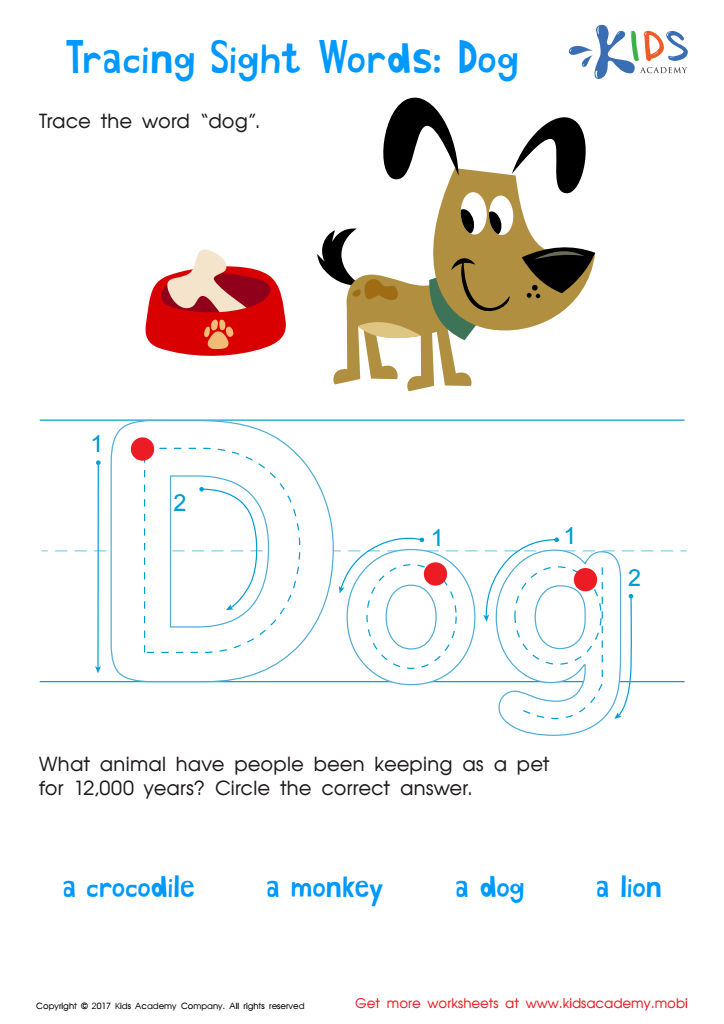
Dog Worksheet Sight Words Worksheet
Get your kids excited to read with our dog-themed sight words worksheet!
Excite your child to read with our sight words worksheet: dog edition! Featuring a lovable dog character to put a smile on any kid's face, this worksheet helps kids practice reading and writing the word "dog". Build a library of words they can read quickly and promote increasing literacy skills with early fluency! Get them ready for reading with our dog-themed sight words worksheet!
 Assign to My Students
Dog Worksheet Sight Words Worksheet
Worksheet
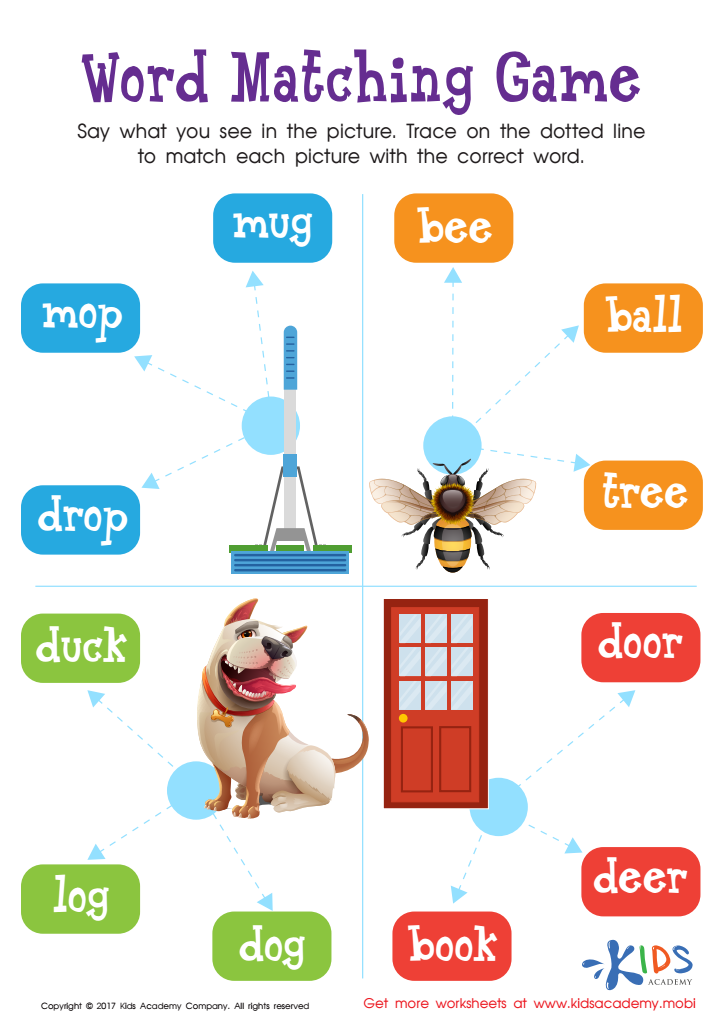
Word Matching Game Worksheet
Help your early reader develop prereading skills with this fun matching worksheet! Visual cues help them learn sight words, decode words in word families, and identify phonetic patterns. They'll practice discerning sounds past initial consonants while saying the name of the picture and finding the matching word - and reading at the same time!
Word Matching Game Worksheet
Worksheet
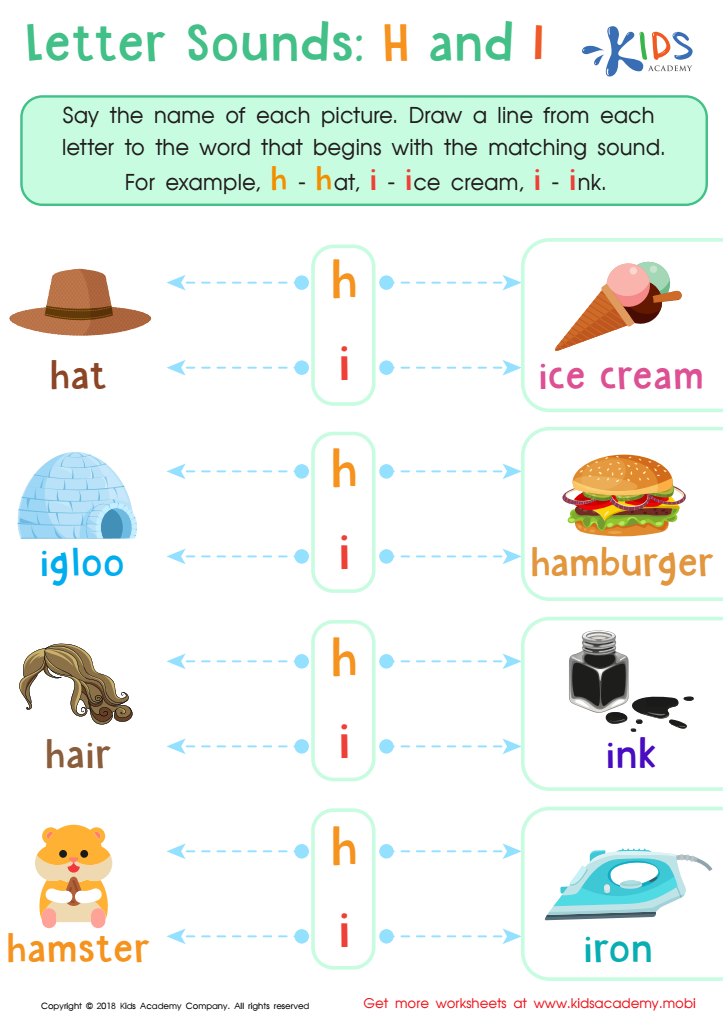
Letter H and I Sounds Worksheet
Preschoolers will have fun and develop reading and writing skills at the same time! They'll use pictures to recognize familiar words and differentiate between 'H' and 'I' sounds. Then they'll trace lines to connect each sound to the picture, improving their fine-motor skills. Bright and cheerful visuals make learning a breeze!
Letter H and I Sounds Worksheet
Worksheet
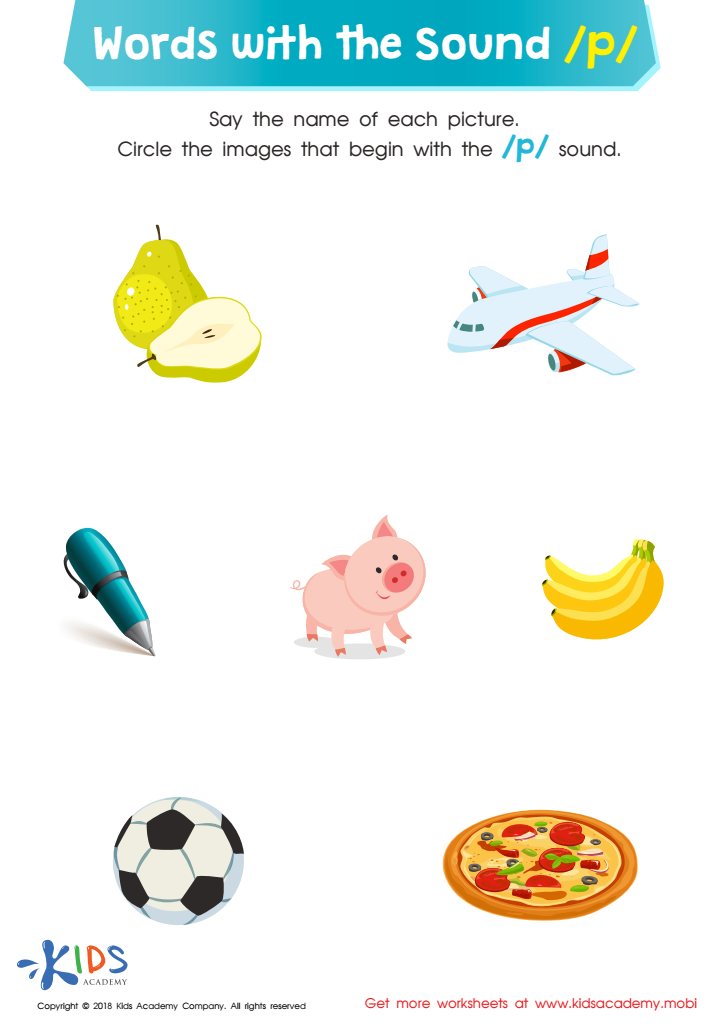
Words with sound p Reading Worksheet
Working on this fun worksheet? Name each picture aloud and listen carefully before circling those that start with the letter «p»! Pizza, pig, plane, or banana - practice phonics to help your child recognize the letter «p» sound for successful early reading and decoding!
Words with sound p Reading Worksheet
Worksheet
Join Kids Academy for Free
Who is primarily going to use this learning content?








Vocabulary building through phonics for ages 3-4 is crucial for children’s early literacy development and overall cognitive growth. At this stage, children’s brains are highly receptive to language acquisition, making it an ideal time for introducing phonics—a method that teaches the relationship between sounds and letters. A strong vocabulary forms the foundation for future reading comprehension and communication skills, essential for academic success.
Parents and teachers should prioritize vocabulary and phonics because they enable children to decode words, making reading less daunting as they progress. Engaging activities, such as rhyming games and singing songs, can enhance phonetic awareness in a fun and accessible way. Moreover, an enriched vocabulary not only aids in reading but also enhances oral language skills, enabling children to express themselves more effectively.
Additionally, fostering early vocabulary and phonics can create a lifelong love for learning and reading. As children see the connection between sounds, letters, and meanings, their confidence in using language will grow. Ultimately, this foundational understanding equips children with essential skills needed for later stages of education and positively affects their social interactions and emotional well-being. Therefore, nurturing vocabulary building through phonics is vital for holistic child development.







