Lowercase identification Normal Upper & Lowercase Letters Worksheets for Ages 3-4
4 filtered results
-
From - To
Explore our engaging "Lowercase Identification Normal Upper & Lowercase Letters Worksheets" designed specifically for children ages 3-4. These worksheets provide an interactive learning experience, helping young learners recognize and differentiate between uppercase and lowercase letters. With vibrant illustrations and fun activities, each worksheet encourages early literacy skills, critical thinking, and fine motor development. As kids trace, match, and color, they'll boost their letter recognition, preparing them for future reading success. Perfect for home or classroom use, our materials create a fun environment for discovering the world of letters. Start your child’s journey to literacy with our exciting worksheets today!
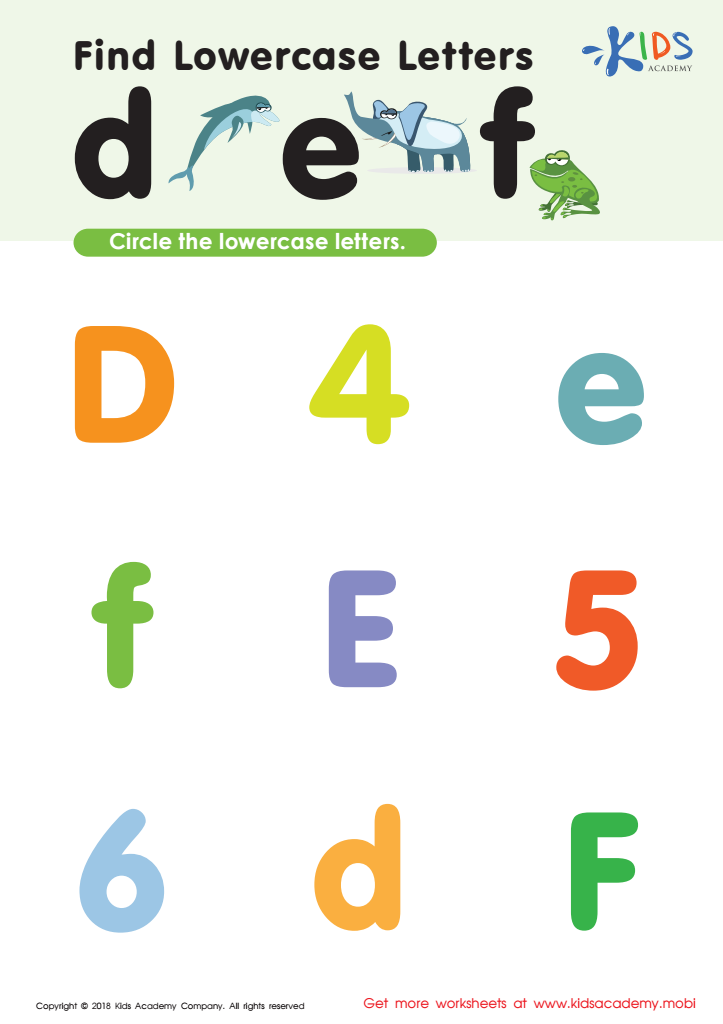
Find Lowercase Letters d e f Worksheet
 Assign to My Students





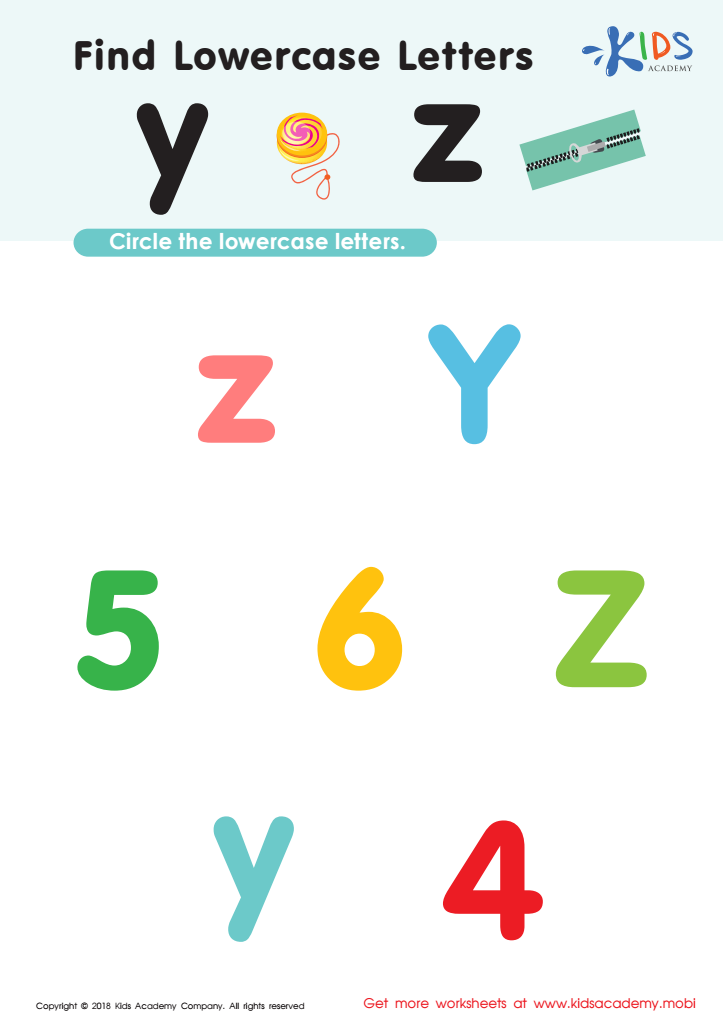
Find Lowercase Letters y z Worksheet
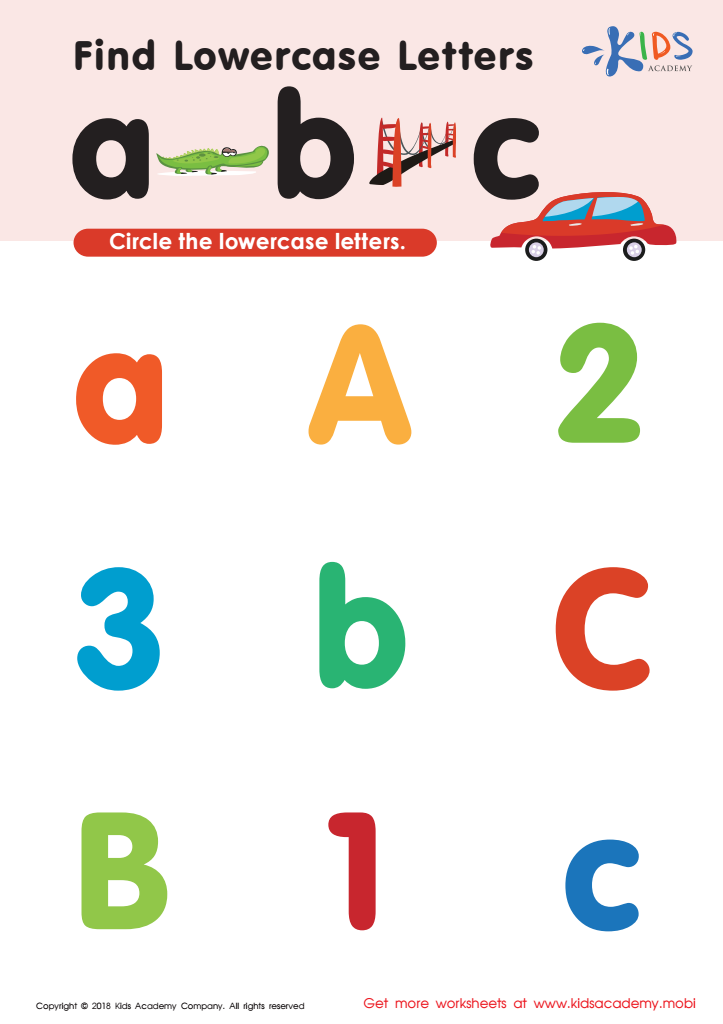
Find lowercase letters a b c Worksheet
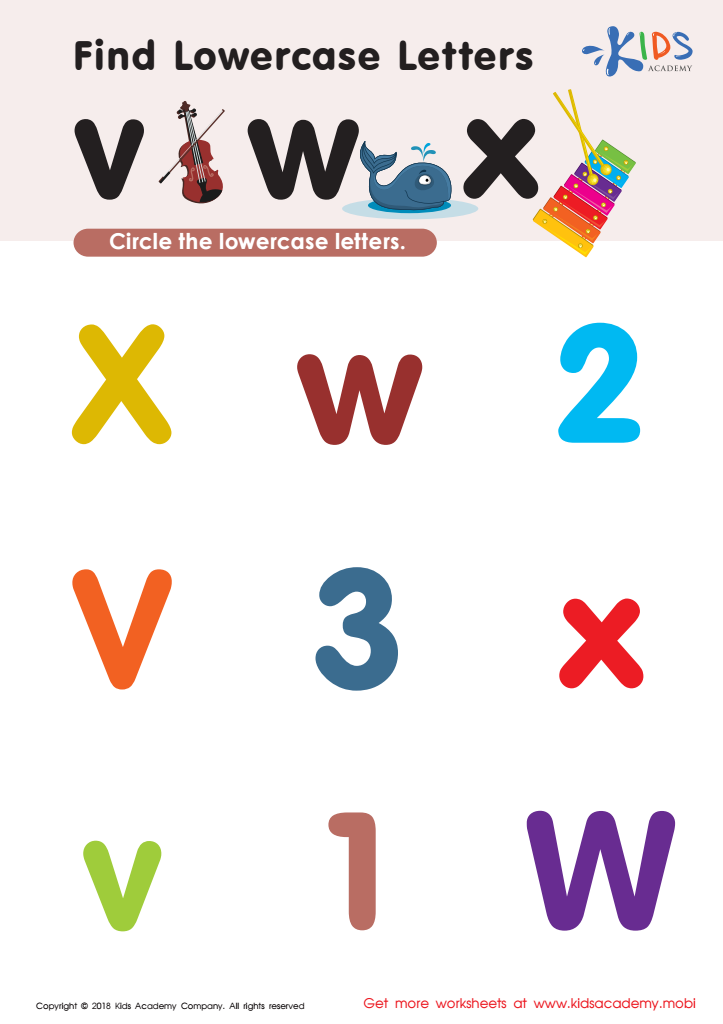
Find Lowercase Letters v w x Worksheet






Lowercase letter identification is a crucial foundational skill for children aged 3-4, significantly impacting their literacy development. Understanding lowercase letters helps young learners recognize that these letters often appear more frequently in written language compared to uppercase letters. By identifying lowercase letters, children can begin to make connections between spoken and written language, enhancing their phonemic awareness, which is essential for reading and writing later on.
Moreover, recognizing lowercase letters supports children's confidence and curiosity about reading. As they encounter more words in everyday situations – from books to labels and signs – familiarity with these letters enables them to decode language actively. This process fosters a love for reading, as children feel empowered to explore stories independently.
Educators and parents should prioritize lowercase letter identification in their teaching strategies. Engaging in playful activities, such as letter recognition games, craft projects, or interactive storytelling, can enhance this learning. By emphasizing the significance of lowercase letters, parents and teachers provide children with the essential tools they need to succeed in future literacy endeavors, thereby laying a strong groundwork for academic achievement and communication skills.







