Noun identification Normal Worksheets for Ages 3-4
3 filtered results
-
From - To
Our Noun Identification Worksheets for Ages 3-4 are thoughtfully designed to introduce young learners to the basics of grammar in a fun and engaging way. These printable activities help children identify people, places, things, and animals, building foundational language skills through vibrant images and simple exercises. Perfect for preschoolers, these worksheets support early literacy development and enhance vocabulary. Each worksheet combines playful illustrations with targeted tasks, making learning a joyful experience for little ones. Ideal for parents and educators, our noun identification exercises are a wonderful resource to spark curiosity and foster a love for learning in your child.
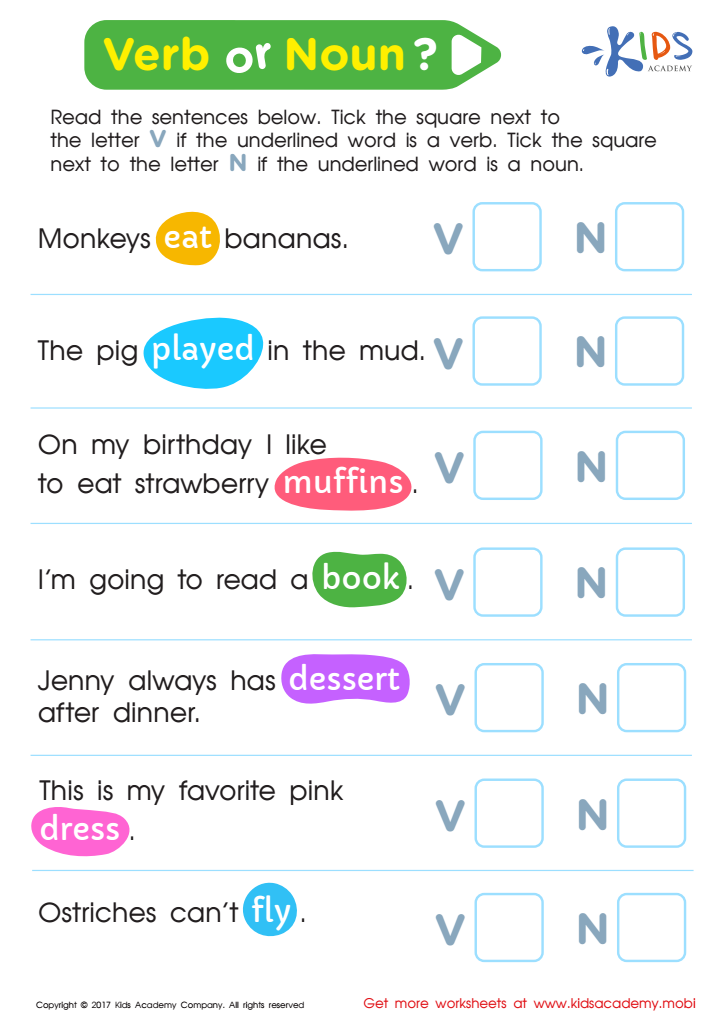
Verb or Noun Worksheet
 Assign to My Students
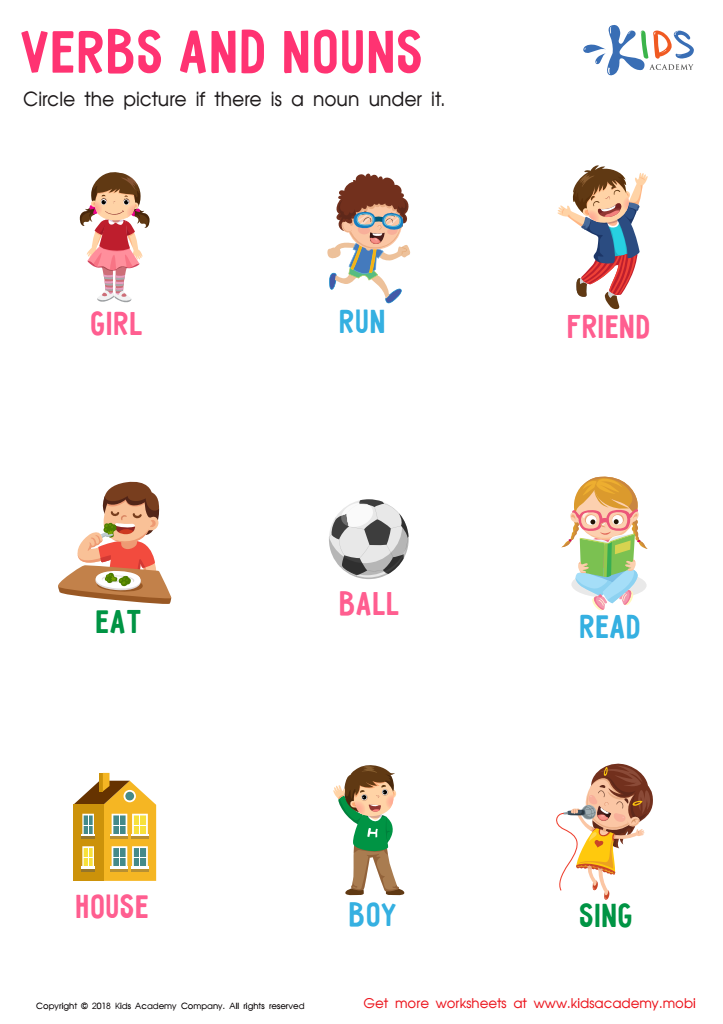
Verbs and Nouns Worksheet
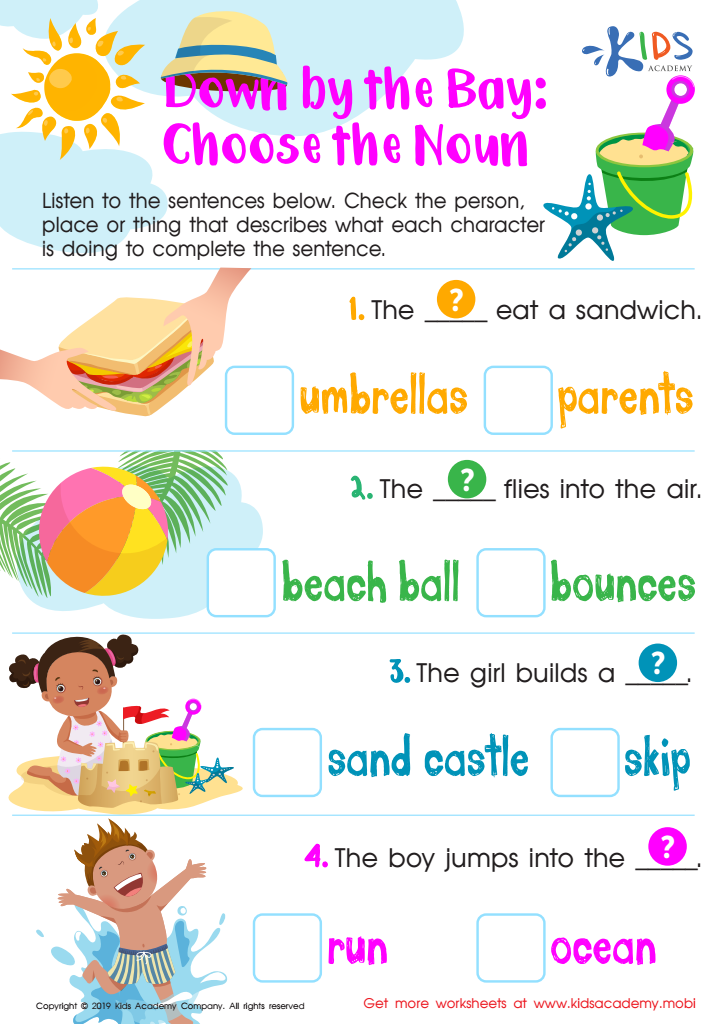
Down by the Bay: Choose the Noun Worksheet




Identifying nouns is a foundational skill in early language development for children aged 3-4. Parents and teachers should care about noun identification because it forms the groundwork for their child's communication abilities, aiding in both expressive and receptive language skills. Understanding nouns—people, places, things, or ideas—helps young children label their environment, which is crucial for effective verbal interactions. For instance, when a child can name objects like "apple" or "dog," they can more clearly express needs and observations.
Early mastery of noun identification boosts vocabulary, enabling children to better understand and follow instructions. This, in turn, facilitates smoother social interactions and cooperation in preschool settings. Moreover, this skill supports cognitive development, as naming objects requires recognizing, categorizing, and recalling information.
Conversely, when children struggle with noun identification, they may face delays in their communication development, leading to frustration and behavioral issues. Therefore, parents and teachers who focus on activities that help identify nouns—through reading books, playing interactive games, and engaging in descriptive conversations—offer essential support for their children's linguistic and cognitive growth. By fostering these foundational skills, they set the stage for success in later reading, writing, and overall academic achievement.








