Basic Arithmetic Normal Addition and Subtraction Word Problems Worksheets for Ages 3-4
4 filtered results
-
From - To
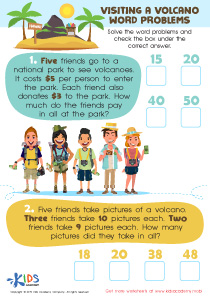
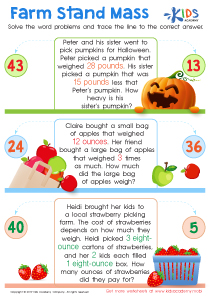
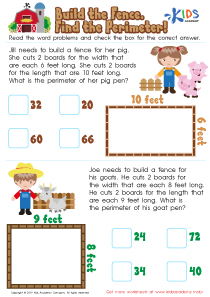
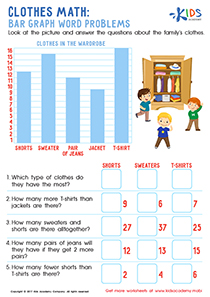
Nurture your child's early math skills with our "Basic Arithmetic Normal Addition and Subtraction Word Problems Worksheets" designed specifically for ages 3-4. These engaging and colorful worksheets introduce youngsters to fundamental addition and subtraction concepts through interactive word problems. Each worksheet features easy-to-understand scenarios tailored to their developmental level. Our thoughtfully crafted exercises help to build confidence, enhance problem-solving abilities, and provide a solid foundation in basic arithmetic. Perfect for home or classroom use, these worksheets make learning fun and meaningful. Help your little ones embark on a rewarding math journey today!
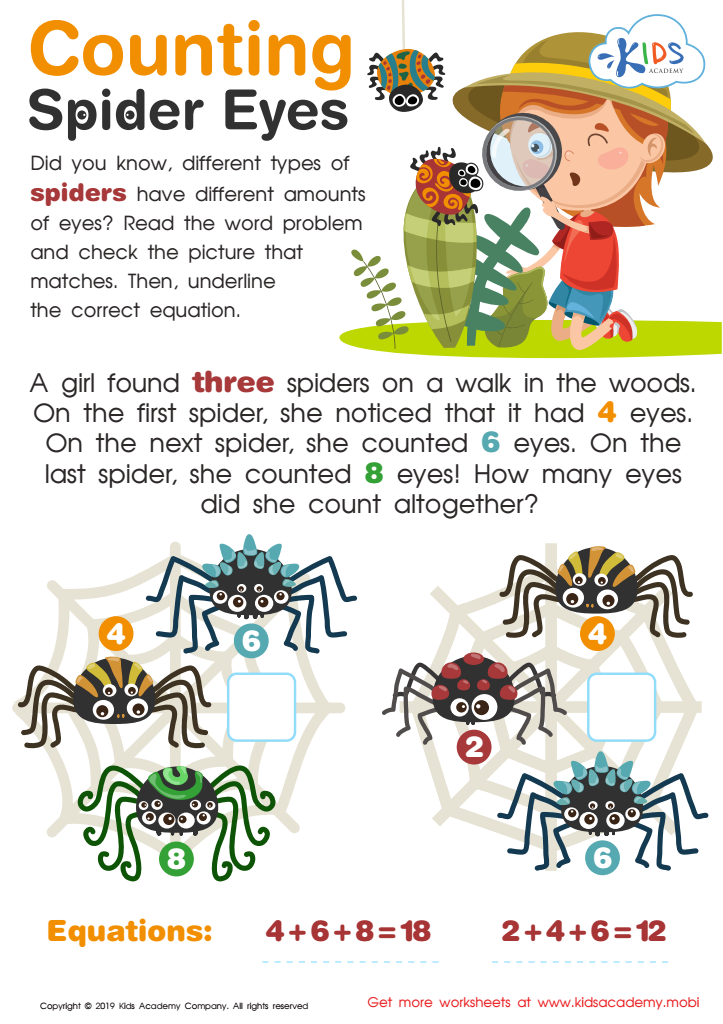
Counting Spider Eyes Worksheet
 Assign to My Students
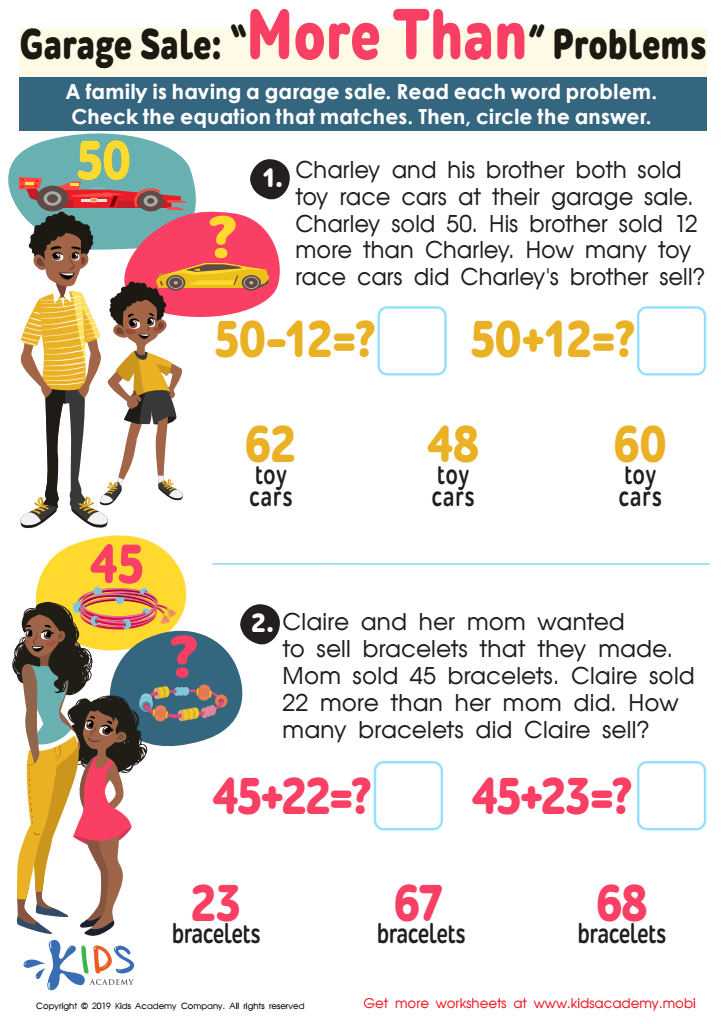
Garage Sale - More yhan Worksheet
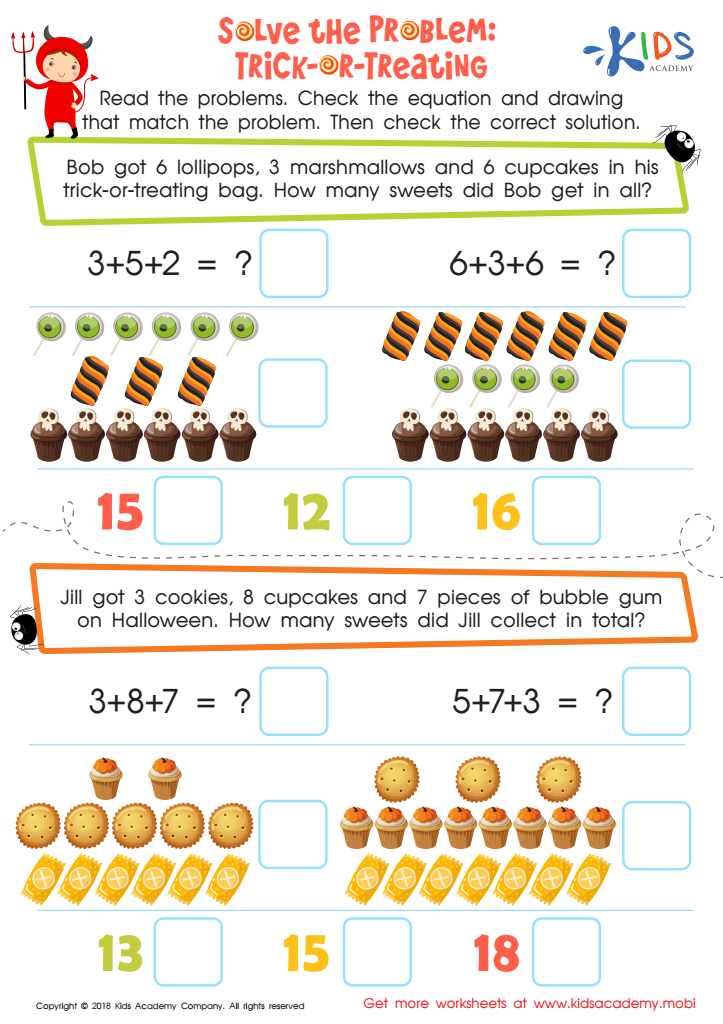
Solve the Problem: Trick–or–treating Worksheet
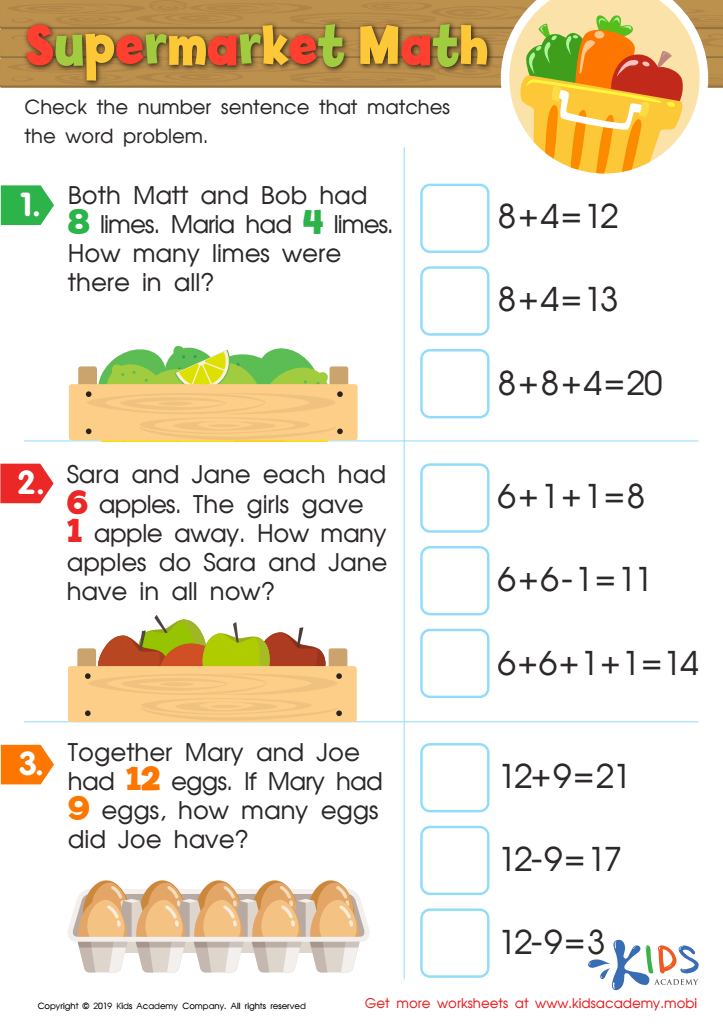
Supermarket Math Worksheet








Parents and teachers should care about basic arithmetic, specifically normal addition and subtraction word problems, for ages 3-4 because these foundational skills are crucial for early cognitive development. Exposing young children to these concepts enhances their understanding of numbers and their relationships, fostering numeracy skills that are essential for later academic success. Arithmetic word problems also promote critical thinking, problem-solving, and comprehension skills, as children learn to interpret and analyze the questions asked.
Moreover, introducing arithmetic at an early age ensures that children develop a positive attitude towards mathematics, reducing future math anxiety. When children master simple addition and subtraction in a fun and engaging way, they build confidence and a sense of accomplishment. These skills also have practical applications in everyday life, such as sharing toys or snacks, which children can relate to their mathematical experiences.
Early exposure in a supportive environment, with patient guidance from adults, makes learning enjoyable and relevant, setting a strong baseline for more complex mathematical concepts in the future. Thus, prioritizing arithmetic word problems for young learners not only contributes to their immediate educational needs but also paves the way for lifelong analytical and conceptual abilities.