Counting practice Normal Addition & Subtraction Worksheets for Ages 3-4
4 filtered results
-
From - To
Welcome to our engaging Counting Practice Worksheets for Normal Addition and Subtraction, specially designed for children ages 3-4! Our interactive worksheets help young learners develop essential math skills, focusing on counting, addition, and subtraction in a fun and playful way. With vibrant illustrations and simple instructions, these worksheets make learning enjoyable, promoting number recognition and problem-solving skills. Designed for home or classroom use, our printables foster a love for math early on, ensuring a solid foundation for future learning. Explore our collection and let your little ones embark on their mathematical journey today! Perfect for parents and educators alike!
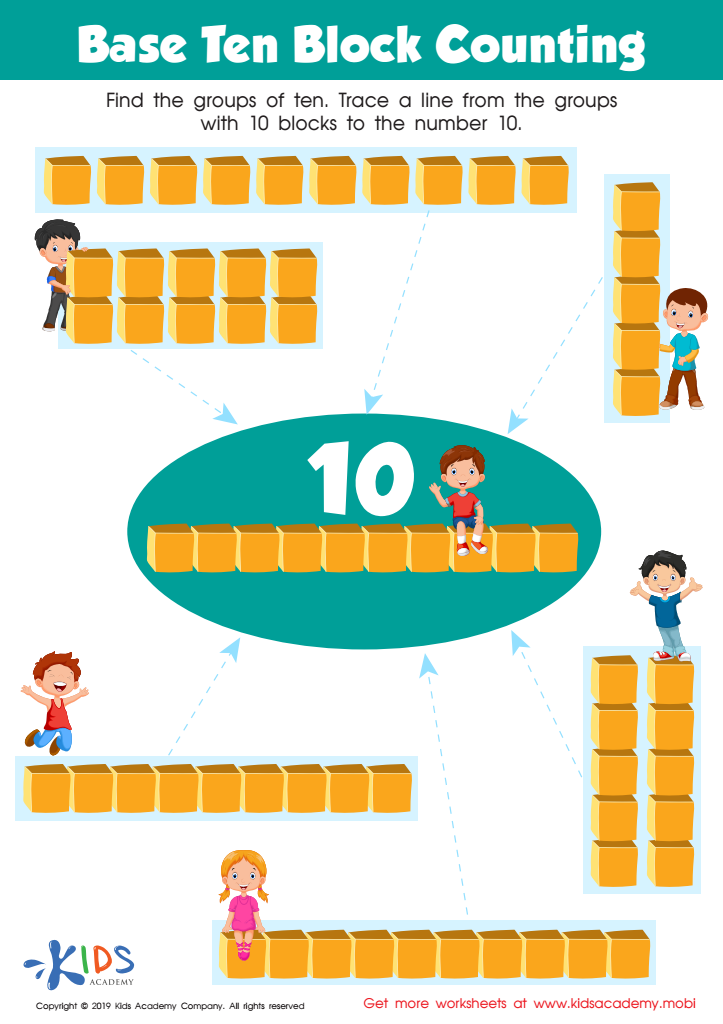
Base Ten Block Counting Worksheet
 Assign to My Students
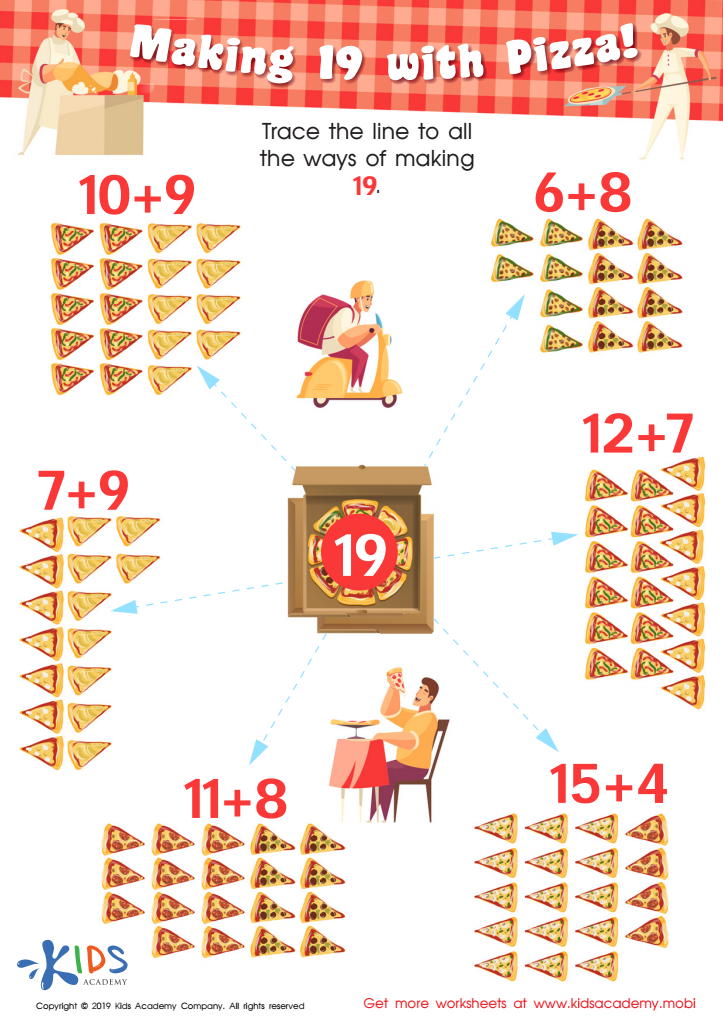
Making 19 with Pizza! Worksheet
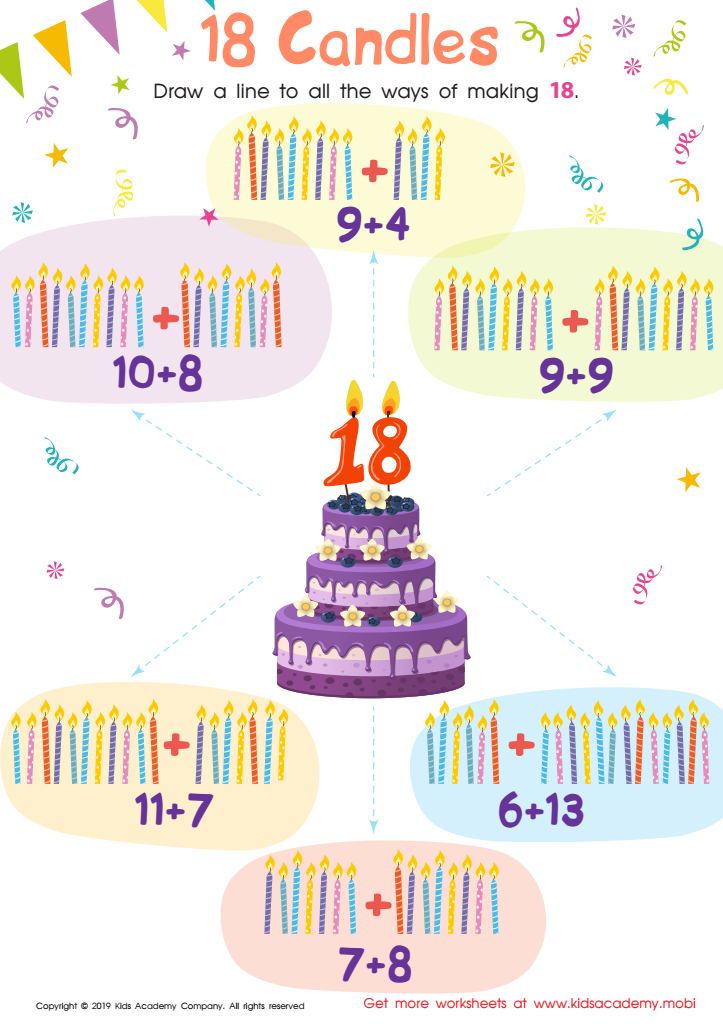
18 Candles Worksheet
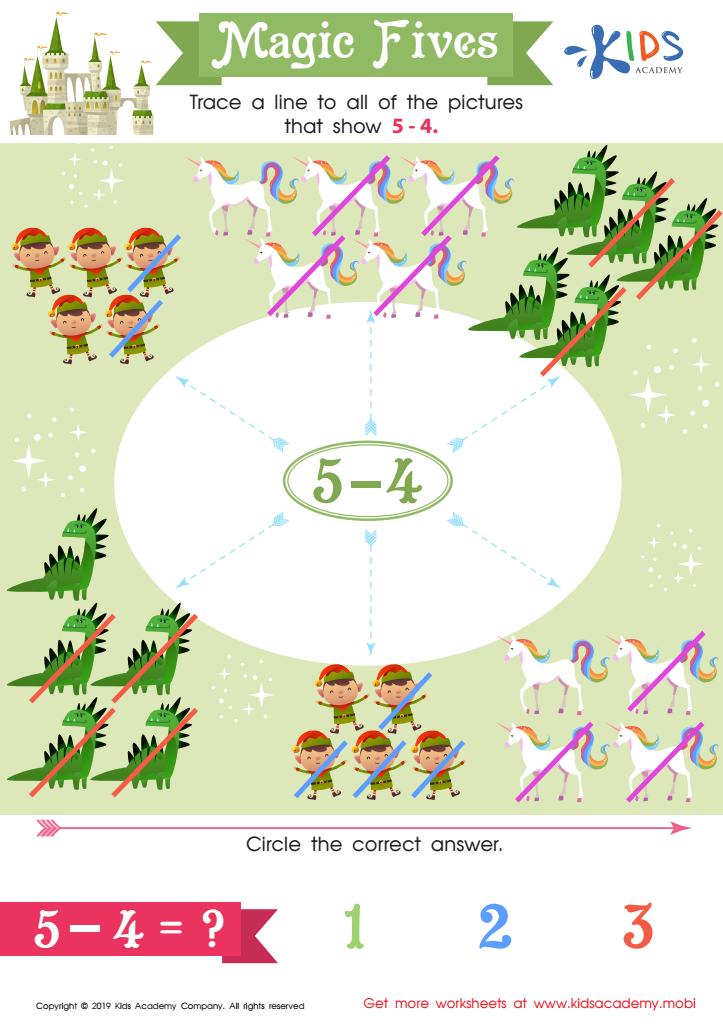
Magic Fives Worksheet








Counting practice and mastery of normal addition and subtraction are foundational skills that serve as the building blocks for a child's mathematical understanding. For children ages 3-4, engaging in these activities lays the groundwork for future learning and cognitive development. At this stage, children are naturally curious and eager to explore numbers and quantities through play, making it an ideal time for parents and teachers to introduce these concepts in enjoyable ways.
By focusing on counting and basic arithmetic, children develop essential skills such as problem-solving and critical thinking. These practices encourage logical reasoning and enhance children's ability to recognize patterns and relationships within numbers. Moreover, counting often intersects with other developmental areas, such as language skills when children verbalize numbers, and fine motor skills when they manipulate objects during counting exercises.
Additionally, early exposure to addition and subtraction fosters a positive attitude toward math. When children grasp these concepts, they build confidence, reducing math anxiety as they advance academically. Ultimately, strengthening counting abilities and basic arithmetic in young children enriches their learning experiences, paving the way for effective learning in higher math concepts later in their educational journey. Parents’ and teachers’ involvement in this stage is crucial for nurturing a lifelong appreciation for mathematics.








