Filters

8 filtered results

Clear all filters
Favorites
With answer key
Interactive

8 filtered results

Difficulty Level

Grade


Boost your child's early math skills with our Number Recognition Normal Addition Worksheets, designed specifically for ages 3-4. These engaging worksheets encourage young learners to identify numbers and understand basic addition concepts through fun exercises. Each carefully crafted activity promotes numerical awareness, building a solid foundation for future math success. With vibrant illustrations and playful exercises, learning becomes enjoyable and interactive. Perfect for use at home or in preschool settings, these worksheets help prepare children for kindergarten while reinforcing cognitive skills. Download now to enhance your child’s number recognition and addition abilities, setting them on a path to mathematical confidence!

Check out this FREE Trial Lesson on Addition for age 3-4!

Making 19

Favorites
With answer key
Interactive
  • 3-4
  • Number Recognition
  • Addition
  • Normal
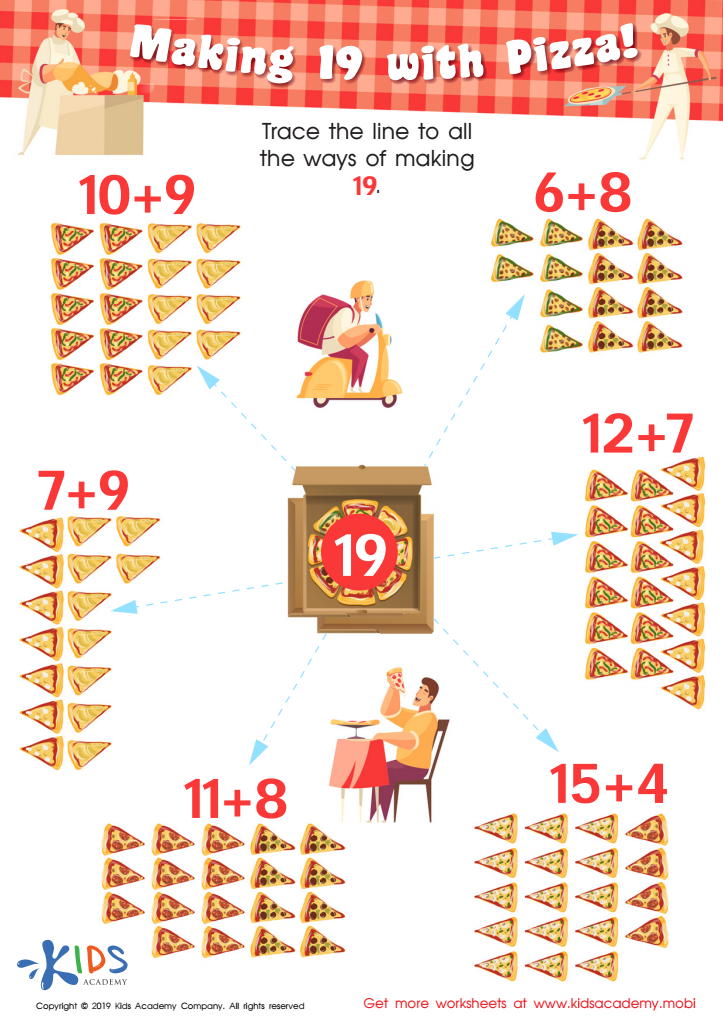
Making 19 with Pizza! Worksheet

Making 19 with Pizza! Worksheet

Who loves pizza? Your kids do! Next time you need to teach them math, make it fun by combining it with something they enjoy. This worksheet uses a pizza-themed problem to help them practice solving equations. Have them trace the line to figure out how to make 19. It's a great way to make learning math fun!
Making 19 with Pizza! Worksheet
Worksheet
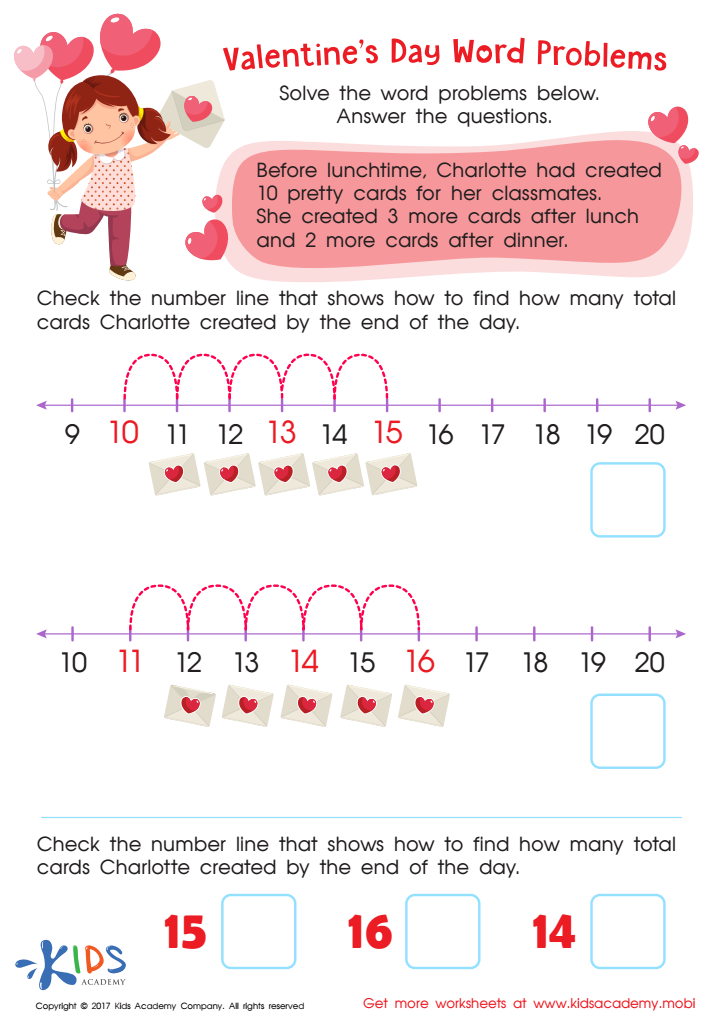
Valentine’s Day word problems worksheet

Valentines Day Word Problem Worksheet
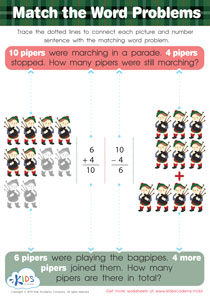
This Valentine's Day worksheet will help your child practice using a number line to solve an addition problem. It's a great way to boost confidence and make solving word problems a breeze.
Valentines Day Word Problem Worksheet
Worksheet
18 Candles Worksheet

18 Candles Worksheet

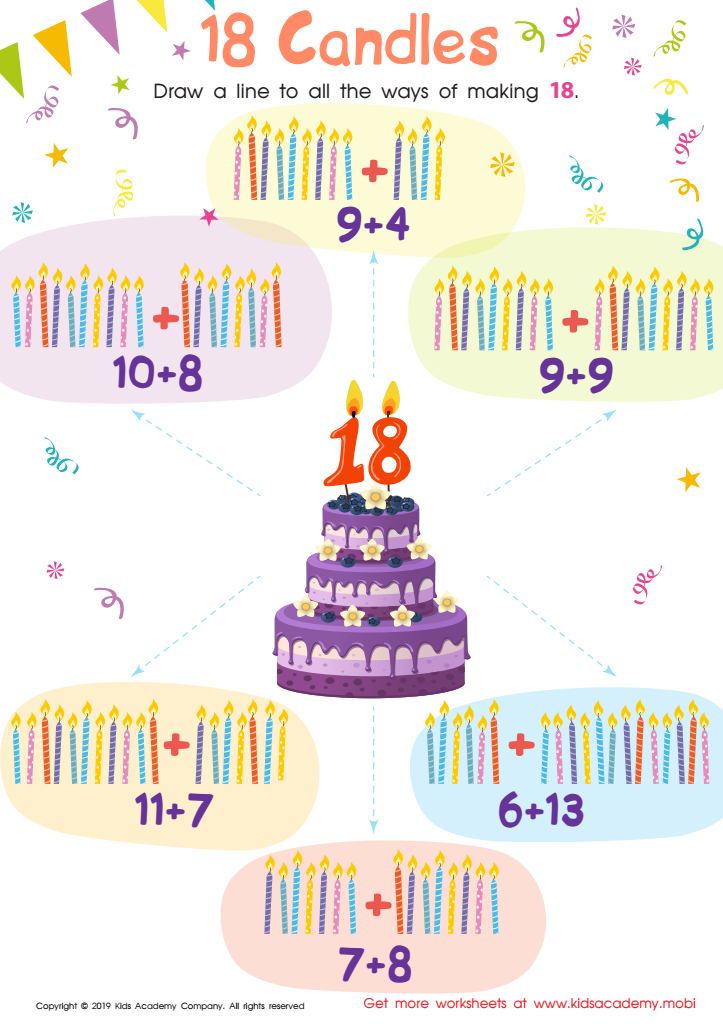
This worksheet is great for introducing your students to addition and subtraction. Help your kids solve the simple equations on it and draw a line from the birthday cake with 18 on it to all the solutions. Practice like this will prepare them to tackle more complex math problems.
18 Candles Worksheet
Worksheet
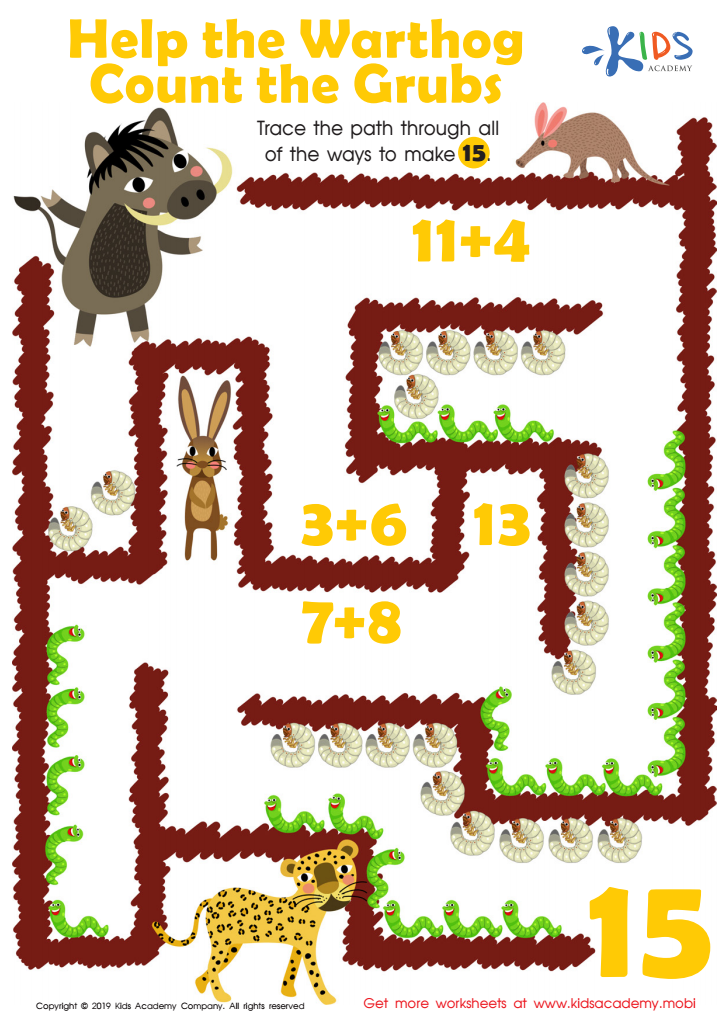
Help the Warthog Count the Grubs Worksheet

Help the Warthog Count the Grubs Worksheet

Test your kids' knowledge of wild animals. Ask them to name some they know, then have them identify the animals on this worksheet. If they can't, take the time to tell them the names. Finally, trace the warthog's path through the maze by solving the equations and going through paths that make 15.
Help the Warthog Count the Grubs Worksheet
Worksheet
Building with 10 Worksheet

Building with 10 Worksheet

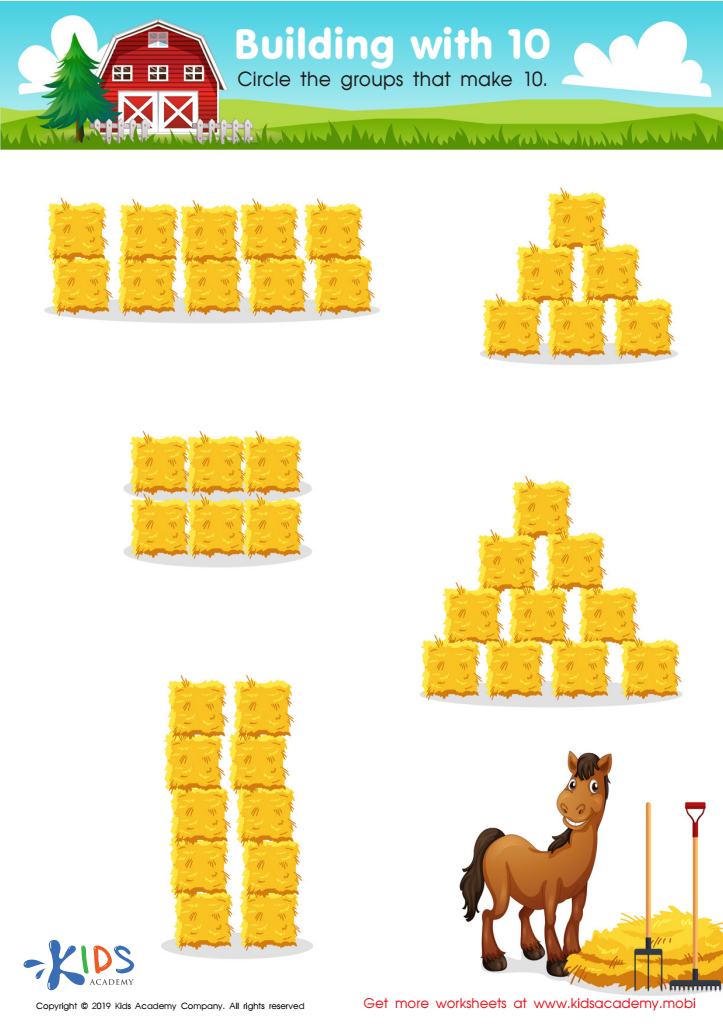
Counting numbers can be simple with this worksheet: Ask your kids to count the stacks of objects, ensure accuracy with your help, then circle the ones of ten. With practice and guidance, your children will soon become counting pros!
Building with 10 Worksheet
Worksheet
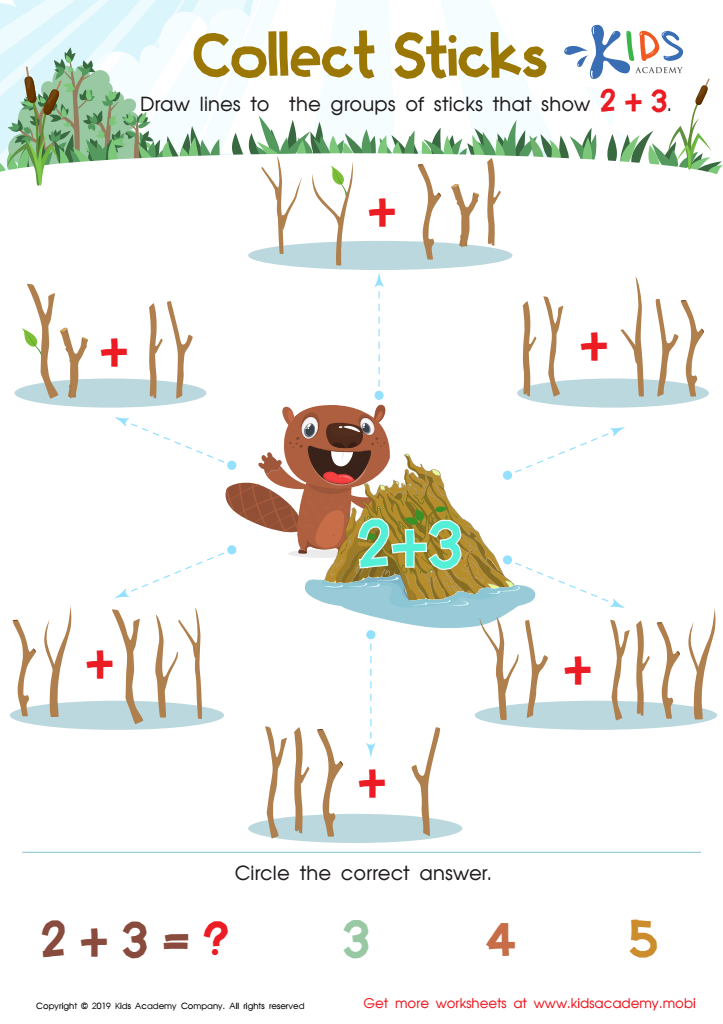
Collect Sticks Worksheet

Collect Sticks Worksheet

Let math be fun for your kids with a simple and colorful worksheet exercise. Addition and subtraction can be daunting, but you can make it enjoyable with exercises like this one. Get them to draw lines to the groups of sticks that show 2+3 and watch them light up.
Collect Sticks Worksheet
Worksheet
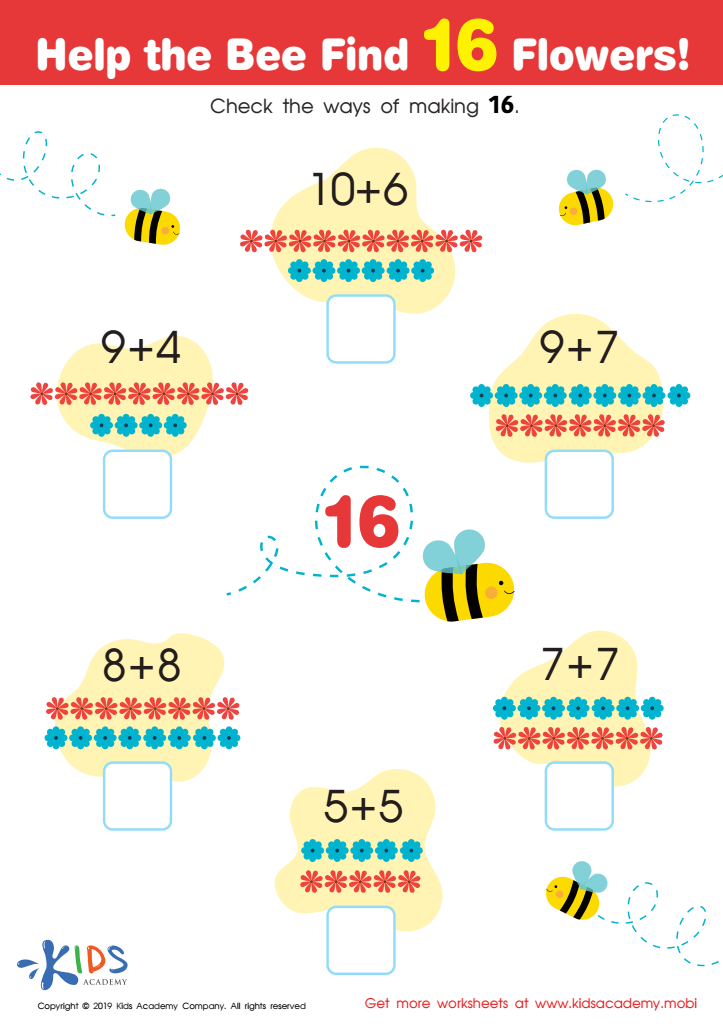
Help the Bee Find 16 Flowers Worksheet

Help the Bee Find 16 Flowers Worksheet

Ask your students to count as high as they can. Show them that different numbers can equal the same figure with examples like 2+2=4 and 3+1=4. Ask for more examples, then help the bees find 16 flowers by checking the ways of making 16.
Help the Bee Find 16 Flowers Worksheet
Worksheet
Growing with 15 Worksheet


Growing with 15 Worksheet

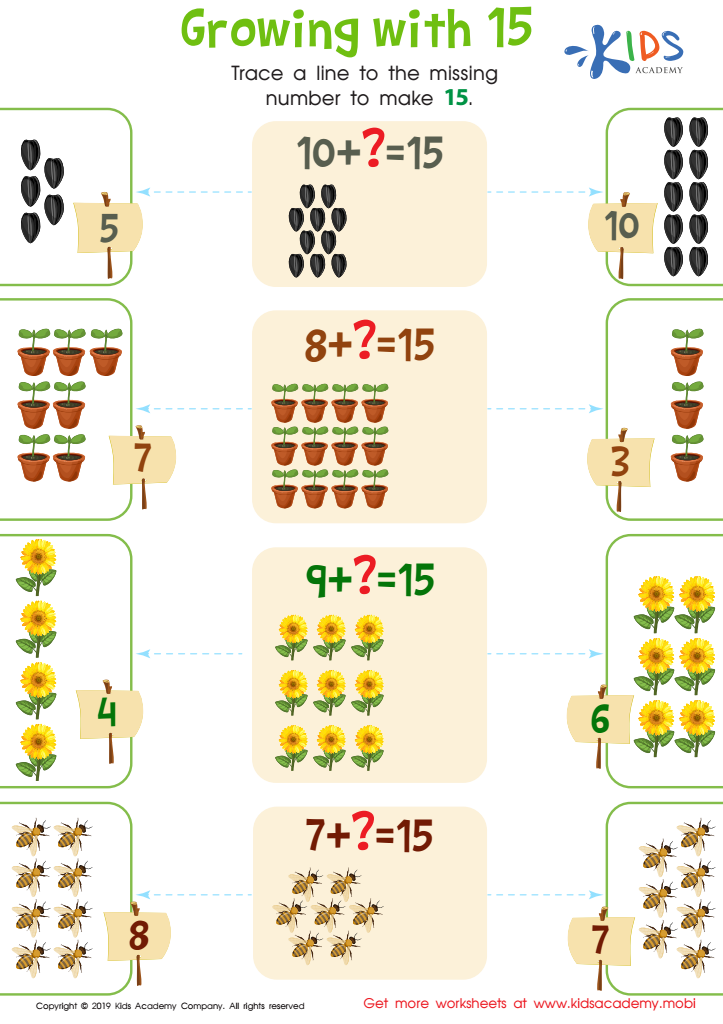
Remind your kids that adding different sets of numbers can give the same total (e.g. 2+3=5, 4+1=5). Test their understanding by asking them for more examples. Move onto the worksheet: count objects, then trace the line to the number making a total of 15.
Growing with 15 Worksheet
Worksheet


Number recognition and basic addition skills are foundational building blocks for young children's mathematical understanding. For parents and teachers of children aged 3 to 4, fostering these skills is crucial. Firstly, early number recognition promotes confidence and curiosity about math. By learning to identify numbers, children become familiar with counting and begin to understand quantities, which helps develop their cognitive abilities.

Additionally, introducing normal addition at this age lays the groundwork for more complex mathematical concepts in the future. Simple addition helps children grasp the idea of combining quantities and enhances their problem-solving skills. Engaging in fun activities—like counting objects or playing addition games—makes learning enjoyable and interactive.

Furthermore, early exposure to these concepts supports overall academic success. Research shows that strong early math skills are linked to later achievement in mathematics and even literacy. Moreover, fostering a positive attitude toward math early on can help dispel anxiety or apprehension associated with the subject.

Ultimately, by prioritizing number recognition and basic addition skills in early education, parents and teachers equip children with essential tools for lifelong learning, setting the stage for enthusiasm and proficiency in mathematics as they grow.