Spatial reasoning Normal Geometry Worksheets for Ages 3-4
3 filtered results
-
From - To
Enhance your child's spatial reasoning skills with our engaging Normal Geometry Worksheets designed specifically for ages 3-4. These worksheets are crafted to introduce early learners to essential geometric concepts through fun and interactive activities. Our printables focus on recognizing shapes, understanding spatial relationships, and mastering essential vocabulary. By encouraging hands-on exploration, these worksheets help develop critical thinking and problem-solving abilities in young minds. Perfect for parents and educators alike, these resources not only promote cognitive growth but also foster a love for learning. Download now and watch your child build a strong foundation in geometry while having fun!
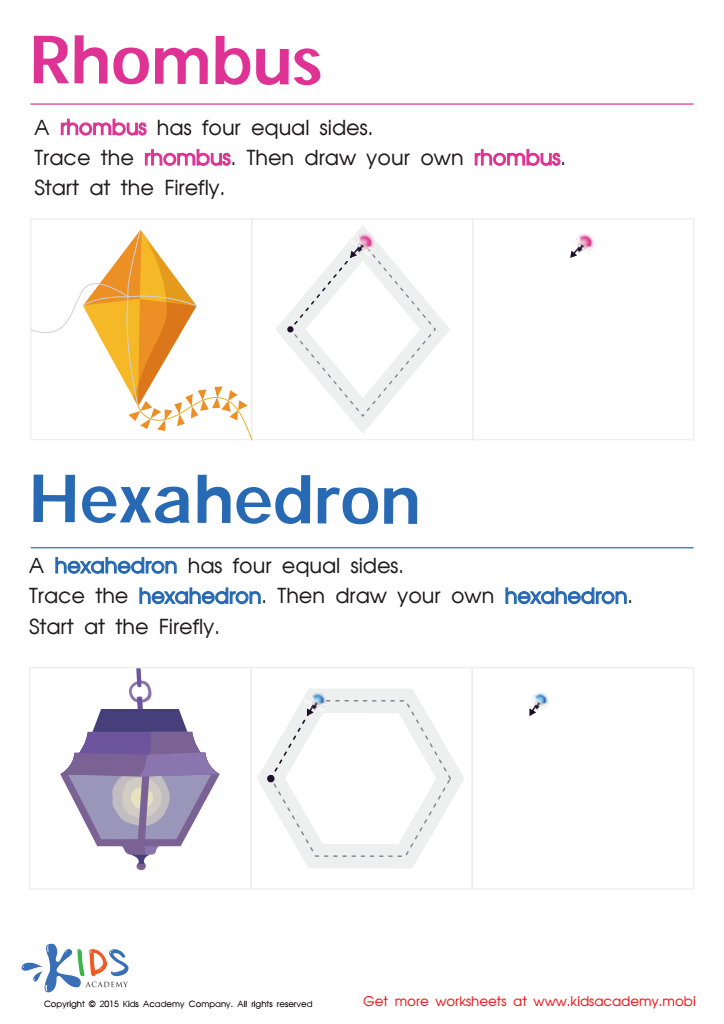
Draw a Rhombus And a Hexahedron Printable
 Assign to My Students











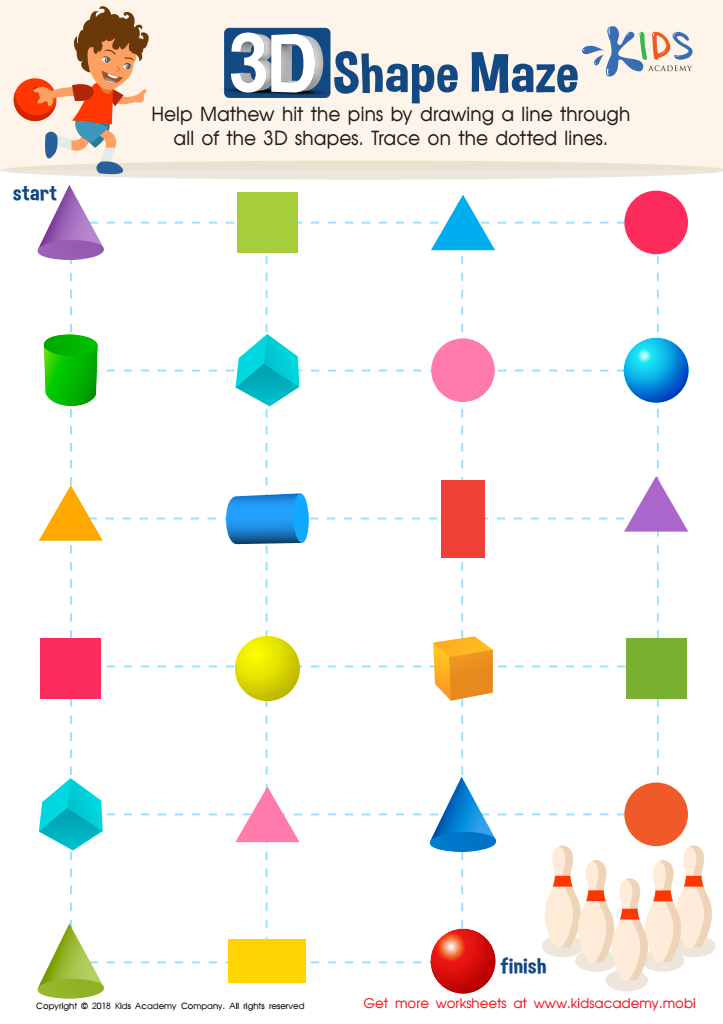
Shapes Maze Geometry Worksheet
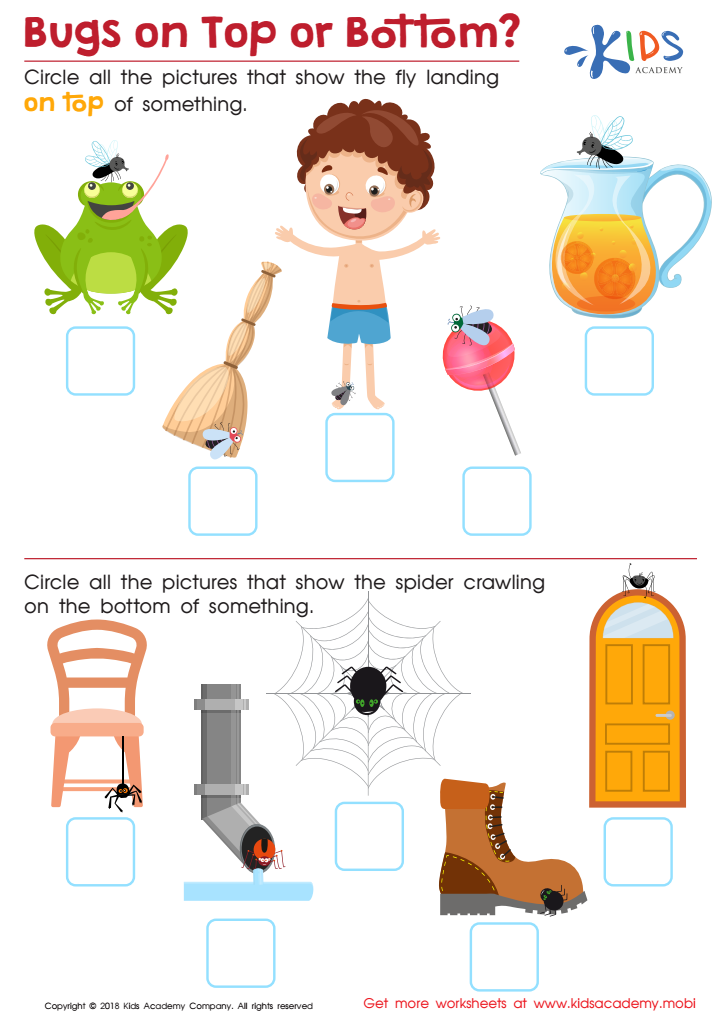
Bugs on Top or Bottom? Worksheet








Spatial reasoning is a crucial developmental skill that involves understanding how objects relate to each other in space. For children aged 3-4, cultivating spatial reasoning through normal geometry helps them build a strong foundation for later learning in mathematics, science, and critical thinking. During these formative years, the brain is highly malleable, and engaging activities that incorporate shapes and spatial relationships—like sorting, constructing with blocks, and drawing—can significantly boost cognitive development.
Parents and teachers should prioritize this skill to foster logical reasoning, problem-solving capabilities, and creativity in children. Mastering spatial concepts enables young learners to better visualize their world, making them more effective in navigating daily tasks and challenges. For example, recognizing how to rotate shapes or understand how shapes fit together lays the groundwork for skills in geometry, engineering, and even everyday activities like puzzle-solving.
Moreover, research suggests that strong spatial skills correlate with higher achievement in STEM (science, technology, engineering, and mathematics) fields. By integrating these concepts into playful learning experiences, adults can instill both confidence and competence in young learners, preparing them for future academic success and everyday practical skills. Ultimately, nurturing spatial reasoning is an investment in a child’s holistic development.








