Basic measurement concepts Normal Math Worksheets for Ages 3-4
3 filtered results
-
From - To
Introduce your little learners to the world of measurement with our Basic Measurement Concepts Normal Math Worksheets for Ages 3-4. These carefully designed worksheets aim to develop essential math skills in a fun, engaging way. Perfectly tailored for preschoolers, each worksheet introduces fundamental measurement concepts like length, height, and weight through vibrant graphics and easy-to-follow instructions. Foster early math confidence by helping your children compare, measure, and understand sizes while they enjoy coloring and hands-on activities. Available for download, these worksheets make the perfect addition to any learning routine, ensuring your child builds a solid foundation in math.
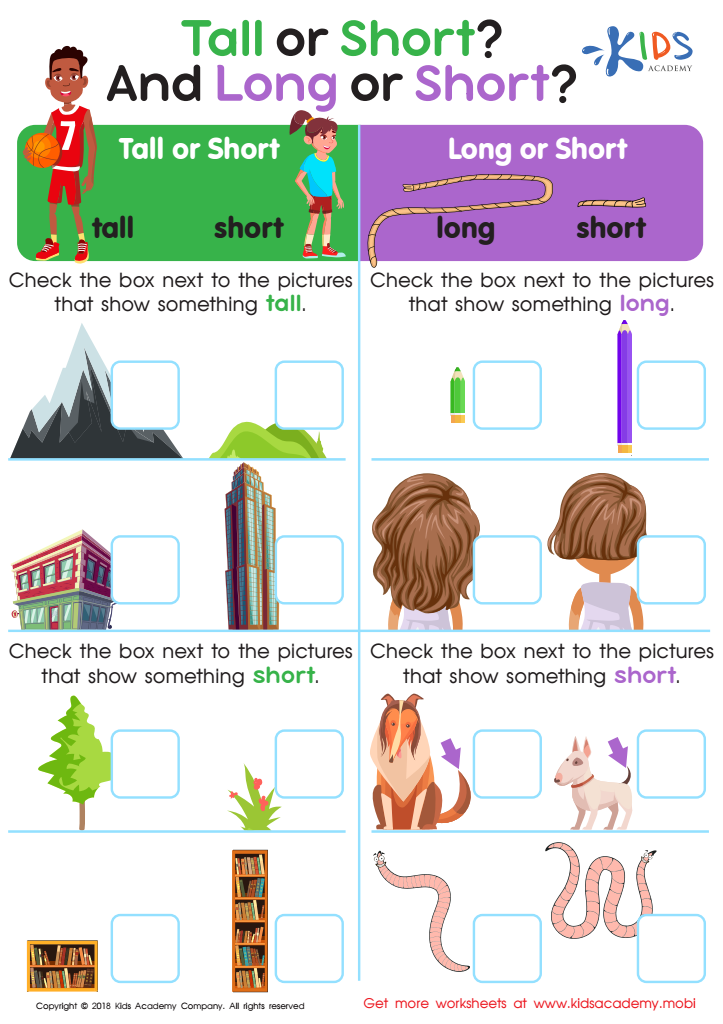
Tall or Short and Long or Short? Worksheet
 Assign to My Students
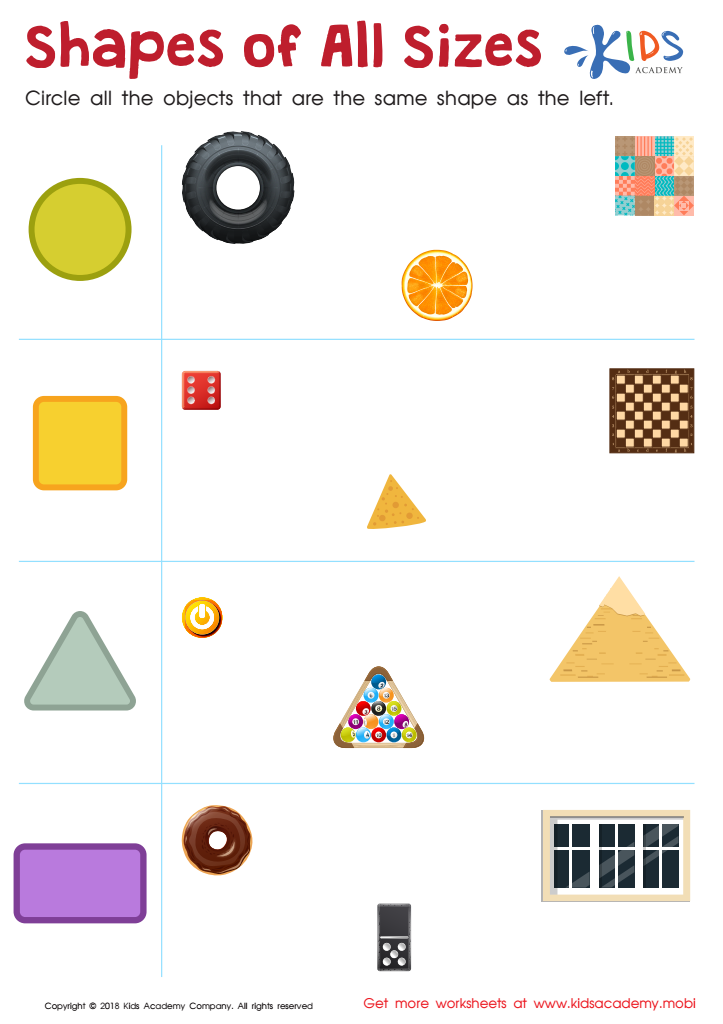
Shapes of All Sizes Worksheet
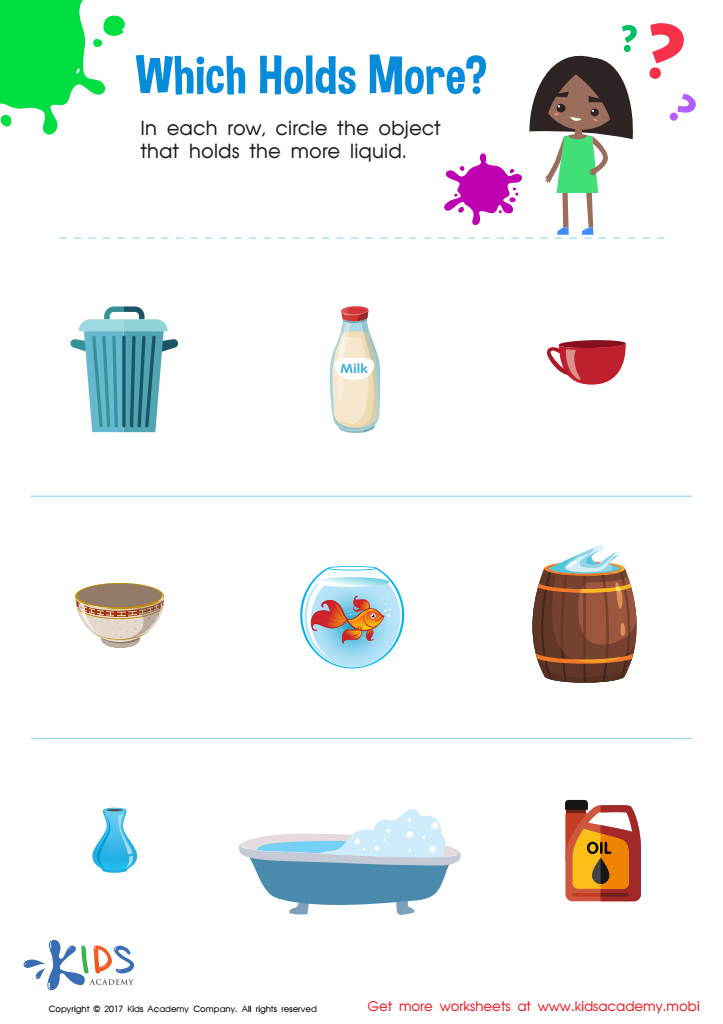
Which Holds More: Capacity Worksheet


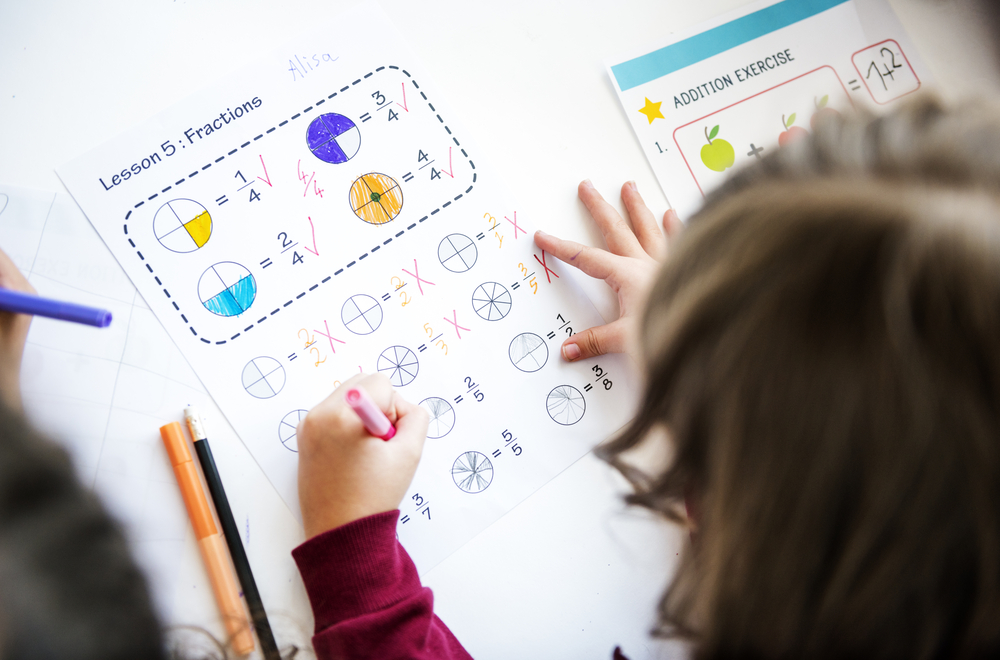


.jpg)


Introducing basic measurement concepts to children aged 3-4 is essential for several key reasons. Early exposure to these concepts lays a crucial foundation for future mathematical learning and logical reasoning. At this age, children are naturally curious and begin to notice and compare attributes of objects, like length, height, weight, and volume. Utilizing everyday items to explore measurement helps them make sense of the world around them.
Learning to measure fosters important cognitive skills such as counting, comparing, and recognizing patterns. These activities engage children in hands-on, practical experiences that enhance their problem-solving abilities and critical thinking skills. For instance, using blocks to measure how tall a structure is or comparing the weight of different objects can be both educational and fun, making learning an integrated part of their playtime.
Additionally, measurement concepts are fundamental in developing spatial awareness and mathematical vocabulary. This early math language, including terms like "taller," "shorter," "heavier," and "lighter," equips children with the tools to communicate their observations accurately.
Engaging with basic measurement also helps children follow instructions and improves their attention to detail, setting the stage for academic success. In essence, caring about these concepts in early childhood supports broader educational development, promoting a lifelong interest and competency in math.








