Comparison Skills Normal Math Worksheets for Ages 3-4
3 filtered results
-
From - To
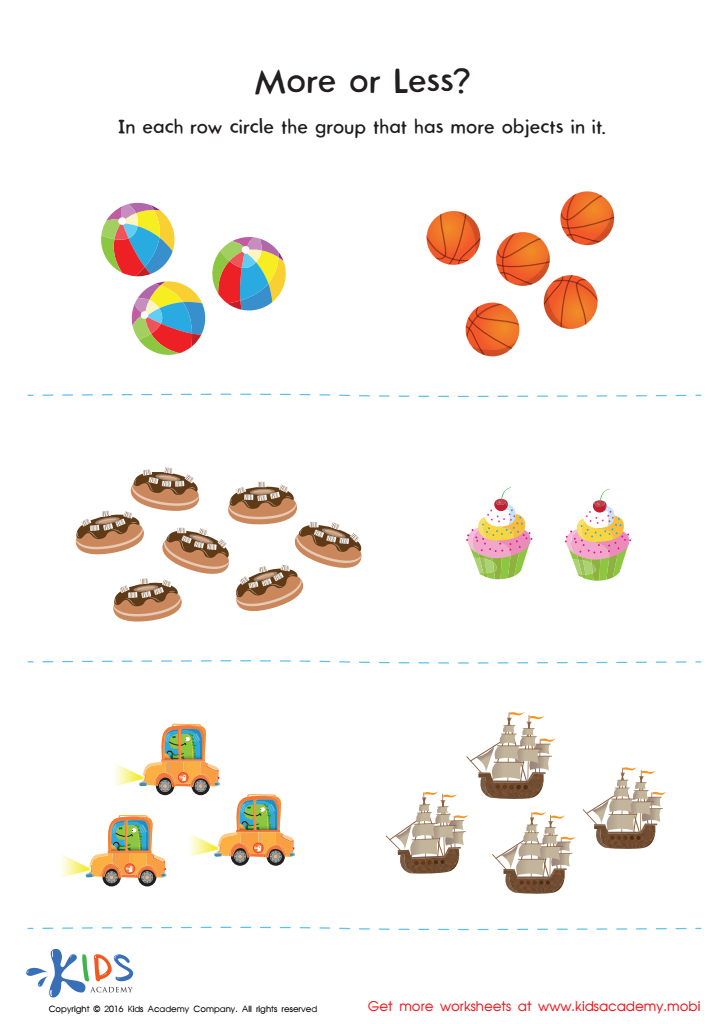
Enhance your child's early math abilities with our "Comparison Skills Normal Math Worksheets for Ages 3-4." Designed for young learners, these engaging worksheets introduce basic comparison concepts such as greater than, less than, and equal to. With colorful images and relatable scenarios, children will enjoy identifying differences and similarities in quantity, size, and length. Our resources promote essential cognitive skills while ensuring a fun learning experience. Ideal for parents and educators alike, these printable worksheets support foundational math knowledge and help toddlers build confidence in their abilities. Explore our varied activities to make learning comparisons an enjoyable adventure!
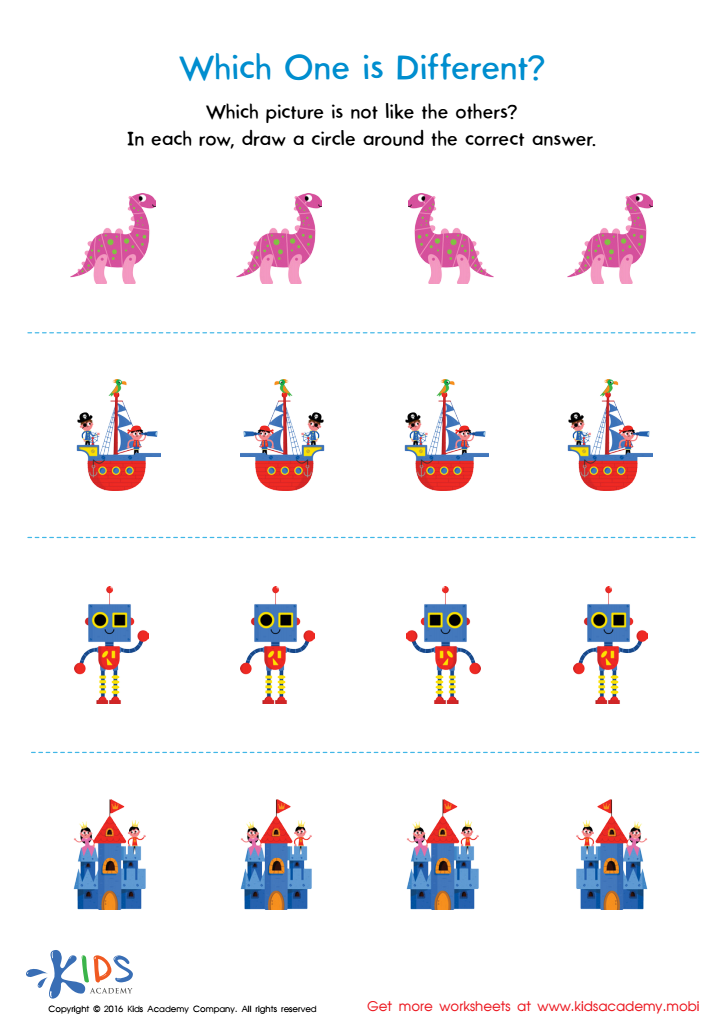
Which One Is Different Worksheet
 Assign to My Students
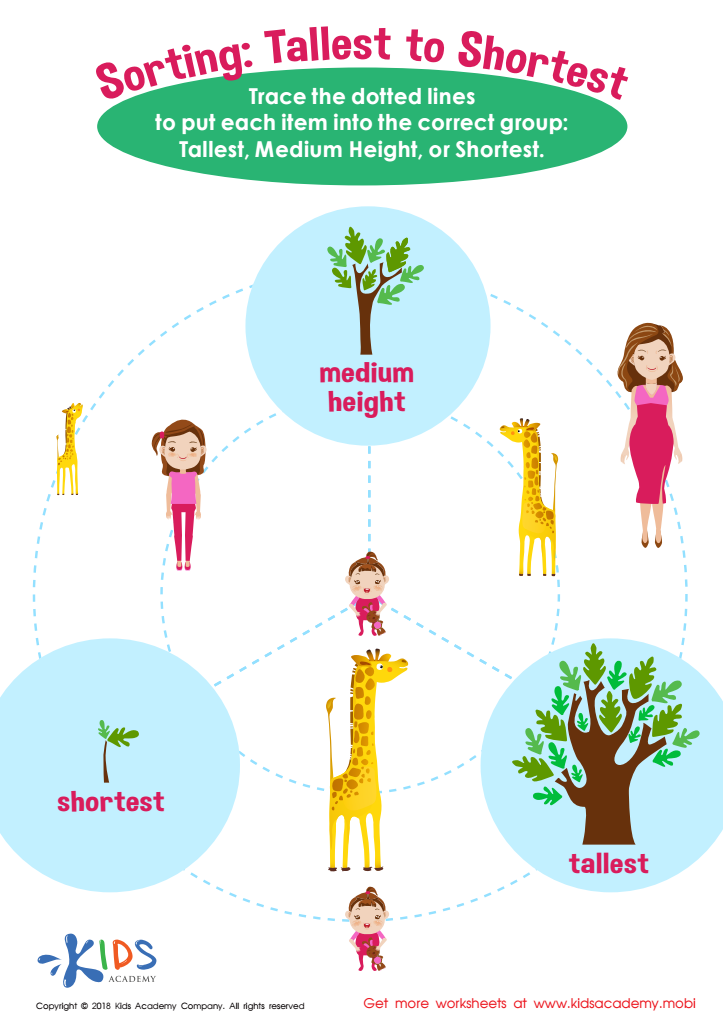
Sorting: Tallest to Shortest Worksheet







Comparison skills are vital for children ages 3-4, as they lay the groundwork for essential mathematical understanding and reasoning. This developmental stage is crucial for cognitive and academic growth, and fostering comparison skills helps children understand concepts such as greater than, less than, and equal to, which are foundational for future math skills.
At this age, children are naturally curious and begin to explore their environment through observation. Teachers and parents should engage children in activities that promote comparison skills, such as sorting objects by size, shape, or color, and discussing quantities in their everyday experiences. These skills enhance children's critical thinking, allowing them to make connections between different objects and quantities.
Moreover, comparison skills are not just about math; they also support language development as children learn to articulate their thoughts and justify their reasoning. Encouraging discussions around comparisons helps students express their understanding and reasoning verbally, which enhances both vocabulary and comprehension. By caring about and actively nurturing these skills, parents and teachers contribute to a strong foundation in numeracy and help instill confidence and curiosity about mathematics, setting children on a path for future academic success.








