Shape Recognition Normal Math Worksheets for Ages 3-4 - Page 2
25 filtered results
-
From - To
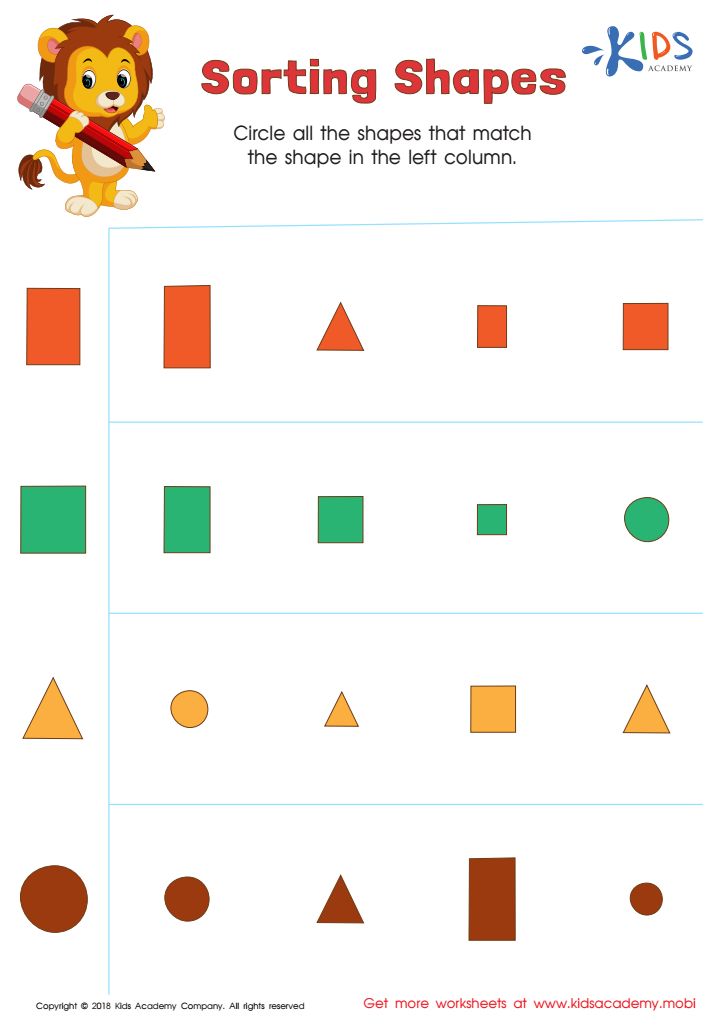
Sorting Shapes - Part 2 Worksheet
 Assign to My Students








Shape recognition is a foundational skill in early childhood education, playing a crucial role in a child's cognitive development. For children aged 3-4, engaging in normal math activities that include shape recognition helps them understand their environment, facilitate better communication, and develop problem-solving skills.
Parents and teachers should care about this aspect of learning because it supports essential learning objectives. Recognizing shapes aids children in spatial awareness, enhancing their ability to understand complex concepts later in school. Moreover, as they identify and categorize shapes, children build foundational skills in mathematics, such as sorting, counting, and understanding geometry.
Furthermore, incorporating shape recognition into everyday activities fosters curiosity and engagement. It encourages children to explore their surroundings while developing critical thinking skills. Engaging in shape-related activities, whether through interactive games, arts and crafts, or nature walks, promotes a love for learning and lays the groundwork for future academic success.
In promoting shape recognition, parents and teachers can help cultivate young minds that are not only better prepared for formal education but also more confident in their ability to explore and navigate the world around them, nurturing lifelong learners.








