Understanding directions Normal Math Worksheets for Ages 3-4
3 filtered results
-
From - To
"Understanding Directions Normal Math Worksheets for Ages 3-4" offers an engaging way for young learners to grasp fundamental directional concepts. Designed for preschoolers, these worksheets foster essential skills such as following instructions, differentiating between left and right, and identifying object placement. Through fun activities and colorful illustrations, children will develop critical thinking abilities while enhancing their math knowledge in a playful manner. Perfect for teachers and parents, these resources promote interactive learning experiences, setting a strong foundation for more advanced math skills down the line. Encourage your child’s cognitive development with our thoughtfully crafted worksheets tailored specifically for early learners!
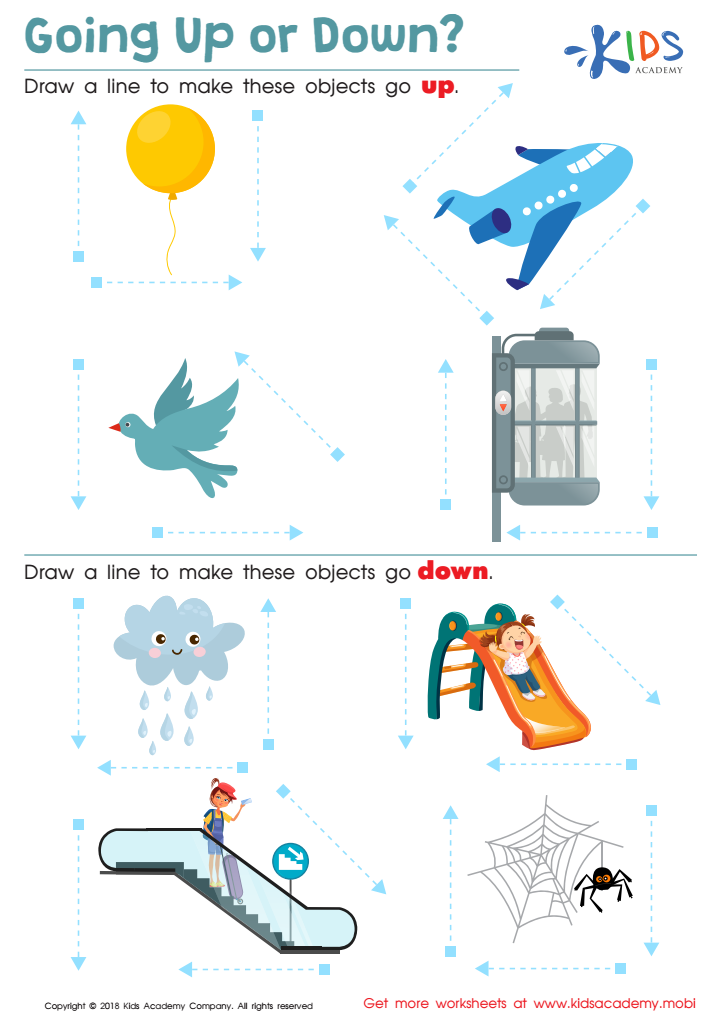
Going up or Down? Worksheet
 Assign to My Students
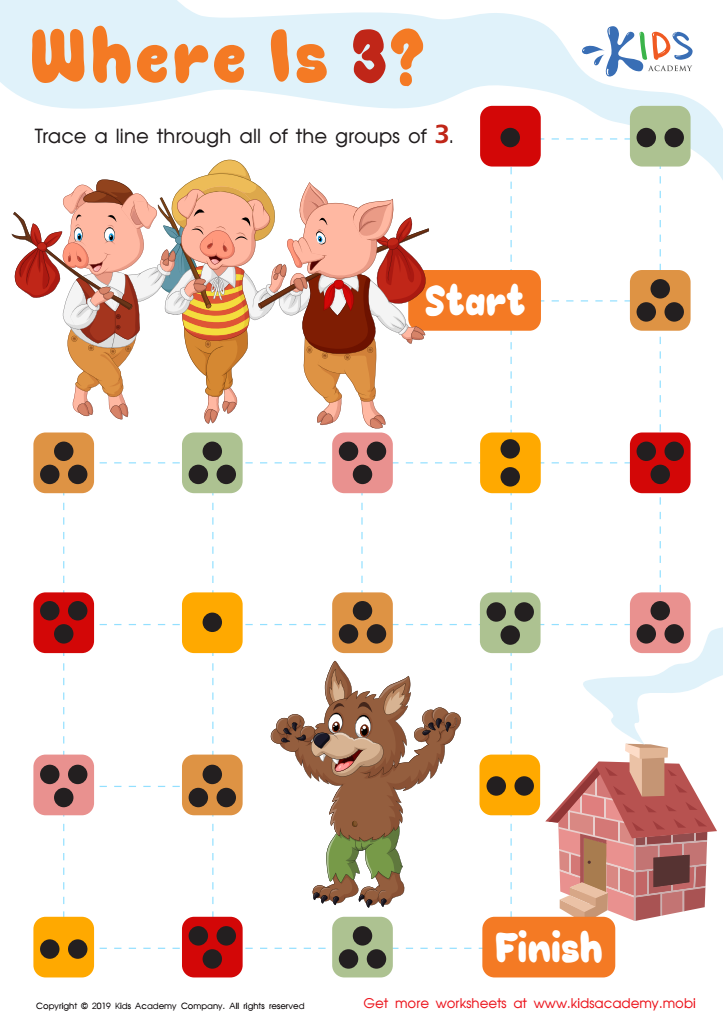
Where Is 3? Worksheet
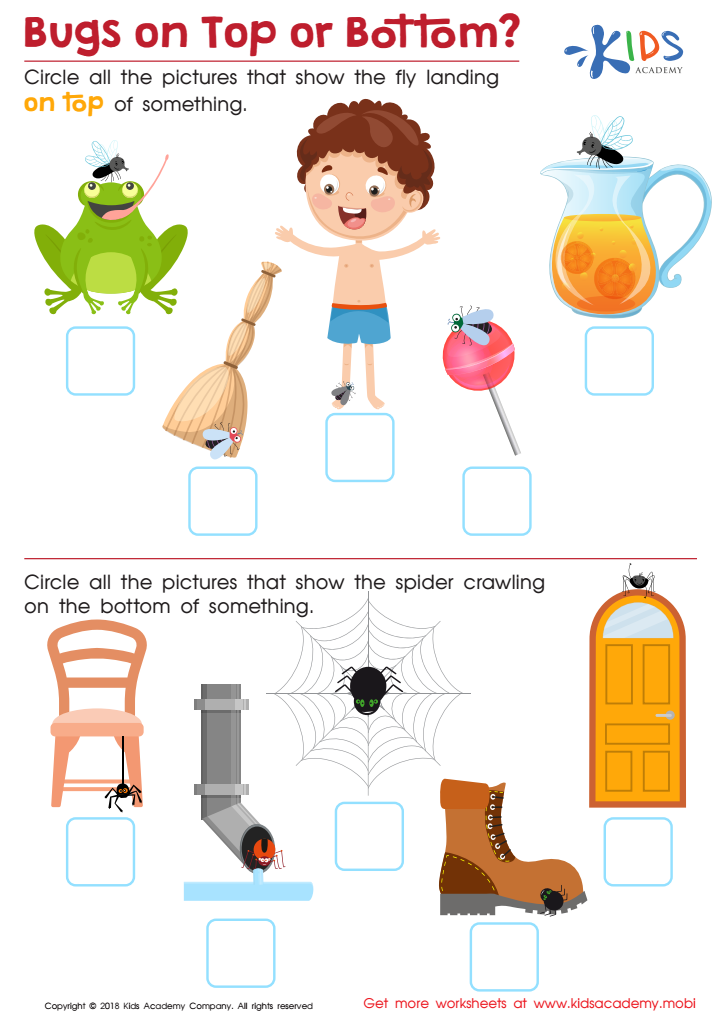
Bugs on Top or Bottom? Worksheet





.jpg)


Understanding directions in mathematics is essential for children aged 3-4, as it lays the foundation for critical thinking and problem-solving skills. For parents and teachers, fostering this understanding is vital because early math skills are closely linked to later academic success. At this age, children are like sponges, absorbing information and learning through exploration and play.
Teaching simple mathematical directions helps young learners make sense of quantities, shapes, and patterns, integrating these concepts into their everyday activities. For instance, when children follow verbal instructions, such as "find two blocks" or "put the square in the box," they practice listening skills and reinforce counting and categorization. Recognizing and acting on directional cues enhances their cognitive abilities and improves their attention span.
Additionally, a strong grasp of these foundational skills encourages a healthy attitude toward learning and math. When parents and teachers work together to create a supportive, engaging environment that emphasizes the value of understanding mathematical directions, they help instill confidence and curiosity in children. Ultimately, this proactive approach not only nurtures essential math skills but also fosters a lifelong love for learning, preparing them for future academic challenges.








