Logical Reasoning Normal Word Problems Worksheets for Ages 3-4
4 filtered results
-
From - To
Enhance your child's logical reasoning skills with our engaging Normal Word Problems Worksheets designed specifically for ages 3-4. These worksheets provide a fun and interactive way for young learners to explore basic problem-solving through familiar scenarios. Each activity encourages critical thinking, allowing children to make connections and develop their understanding of numbers and relationships. From counting items to simple addition and subtraction, these worksheets are perfect for early math readiness. Ideal for both classroom settings and homeschooling, these resources make learning enjoyable and impactful, setting a strong foundation for future educational success. Download and start igniting your child's curiosity today!
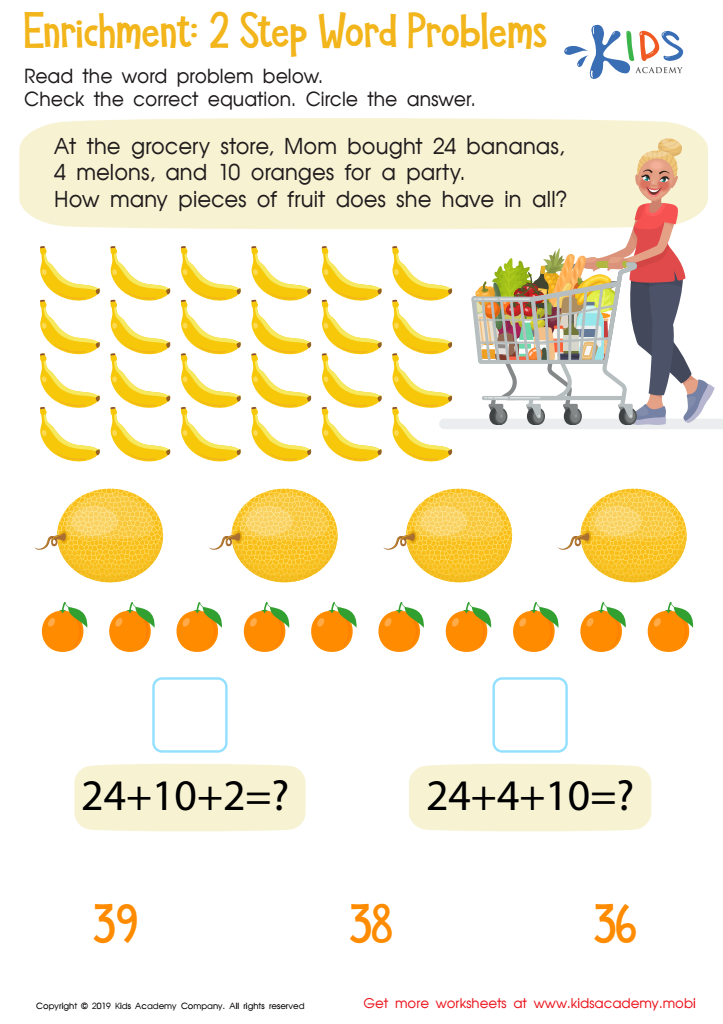
Enrichment -2 Step Word Problems Worksheet
 Assign to My Students
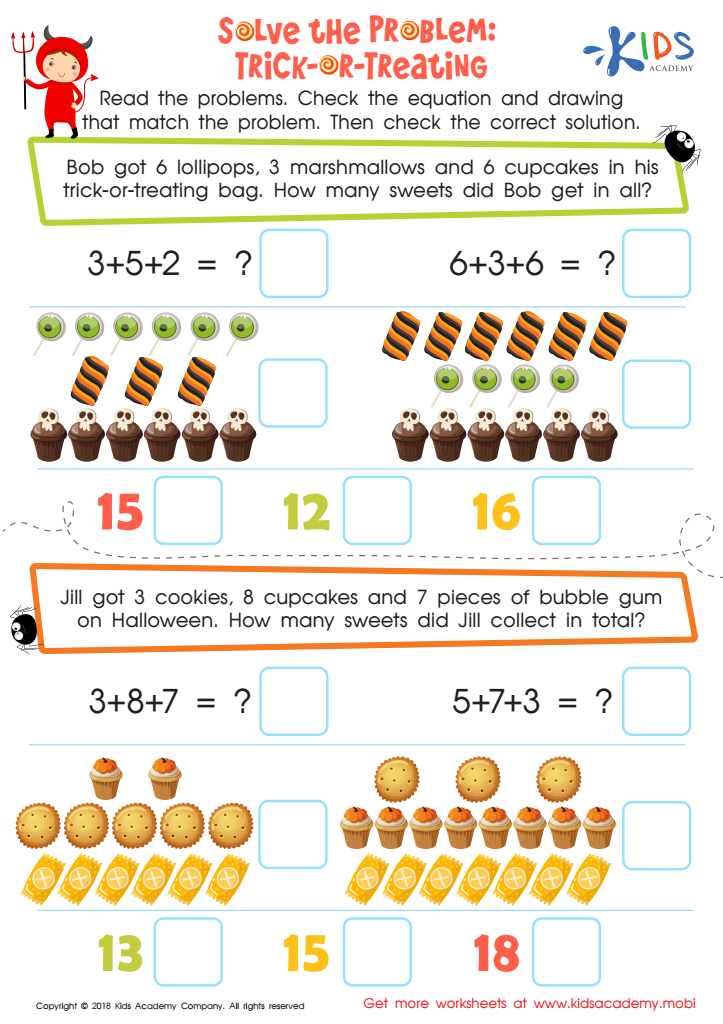
Solve the Problem: Trick–or–treating Worksheet
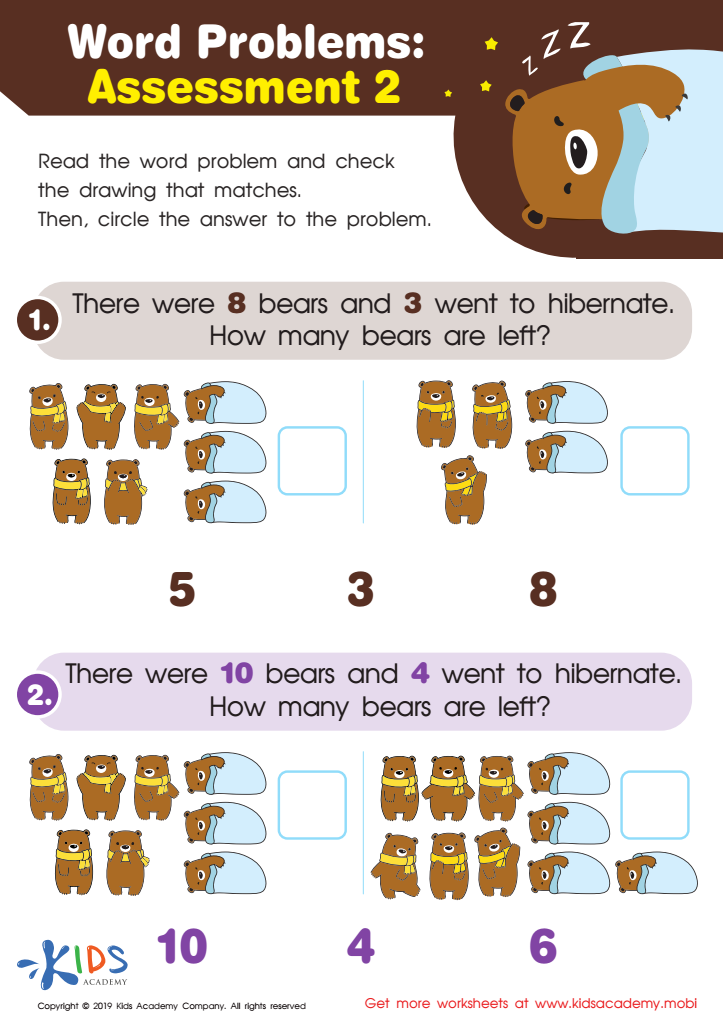
Word Problems: Assessment 2 Worksheet
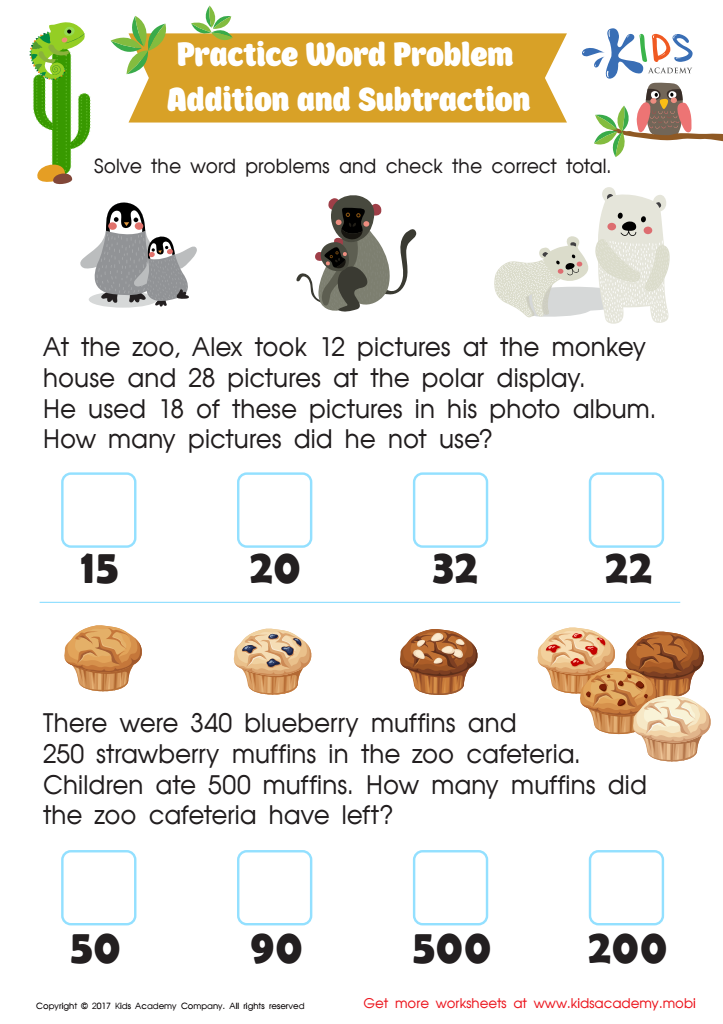
Addition and Subtraction: Word Problems Worksheet








Logical reasoning is critical for young children as it lays the foundation for essential cognitive skills. Engaging children aged 3-4 in normal word problems that require logical reasoning helps develop their critical thinking abilities and problem-solving skills early on. During this stage, children are naturally curious and eager to understand their surroundings—logical reasoning challenges stimulate their minds, fostering a deeper comprehension of concepts like numbers, relationships, and cause-and-effect.
These activities also enhance language development; as children listen to and interpret problems, they practice vocabulary and improve their ability to articulate thoughts. Additionally, solving word problems nurtures perseverance and resilience, qualities vital for future academic success.
Parents and teachers should incorporate logical reasoning problems into daily activities because they encourage collaborative discussion and shared problem-solving experiences. This not only strengthens parent-child and teacher-child relationships but also builds a supportive learning environment. Lastly, as logical reasoning skills are directly linked to mathematics and literacy, cultivating them in early childhood can lead to higher performance in these subjects later on, giving children the strong foundation they need for continued learning and development.








