Cognitive Development Normal Building Vocabulary Worksheets for Ages 3-4
4 filtered results
-
From - To
Discover our engaging Cognitive Development Normal Building Vocabulary Worksheets, designed specifically for children aged 3 to 4. These worksheets encourage young learners to enhance their vocabulary and cognitive skills through fun and interactive activities. Each worksheet focuses on essential words and concepts relevant to their everyday experiences, promoting language acquisition and comprehension. As children complete these exercises, they develop critical thinking, categorization, and problem-solving abilities. Perfect for parents and educators, our resources provide a structured approach to early literacy, supporting children's natural curiosity and love for learning. Explore our worksheets and watch your child's vocabulary flourish!
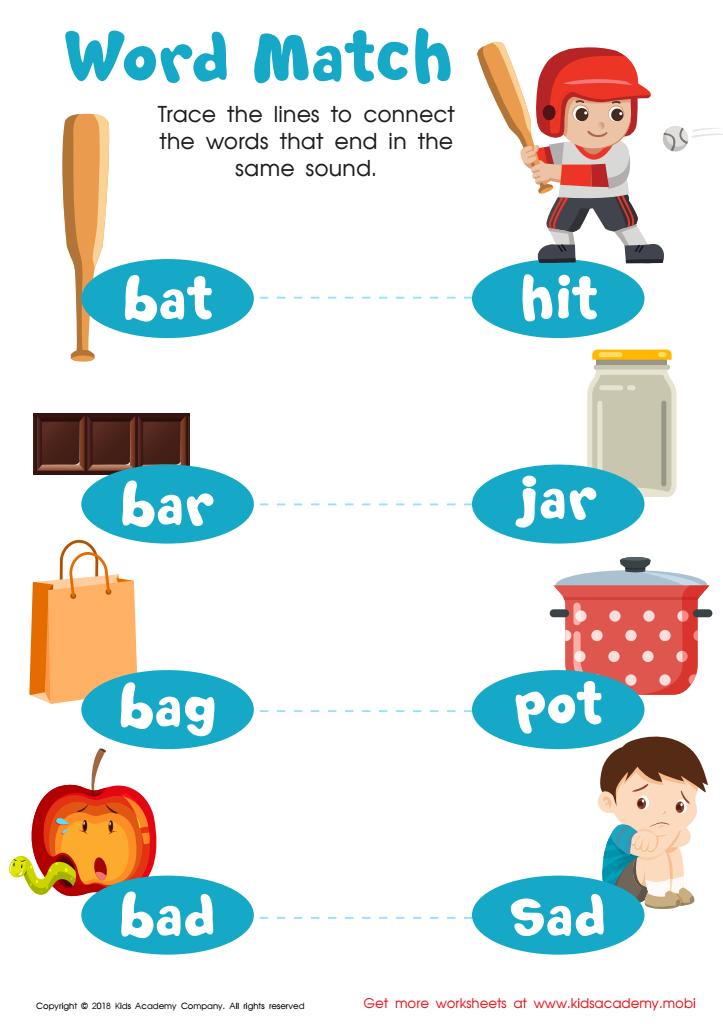
Word Match Reading Worksheet
 Assign to My Students











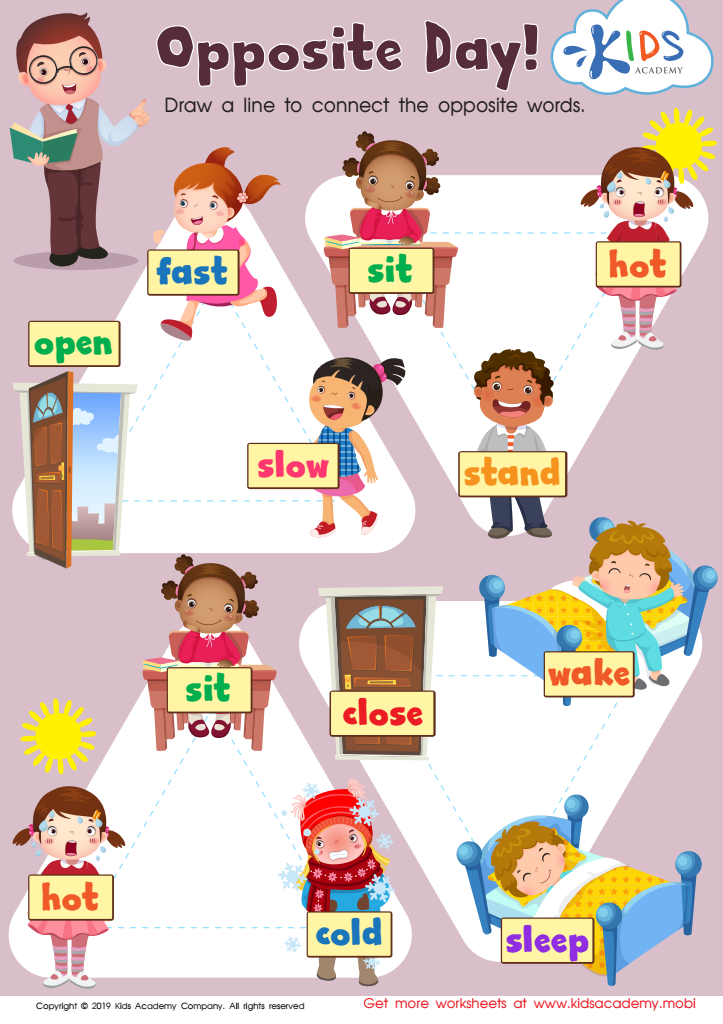
Opposite Day Worksheet
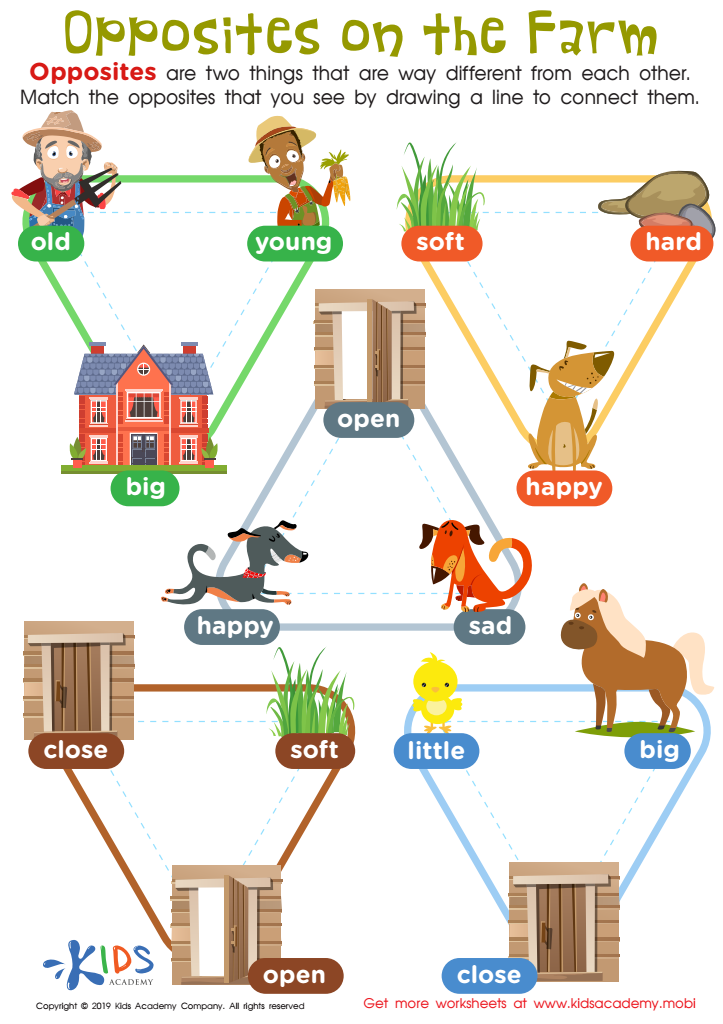
Opposites on the Farm Worksheet
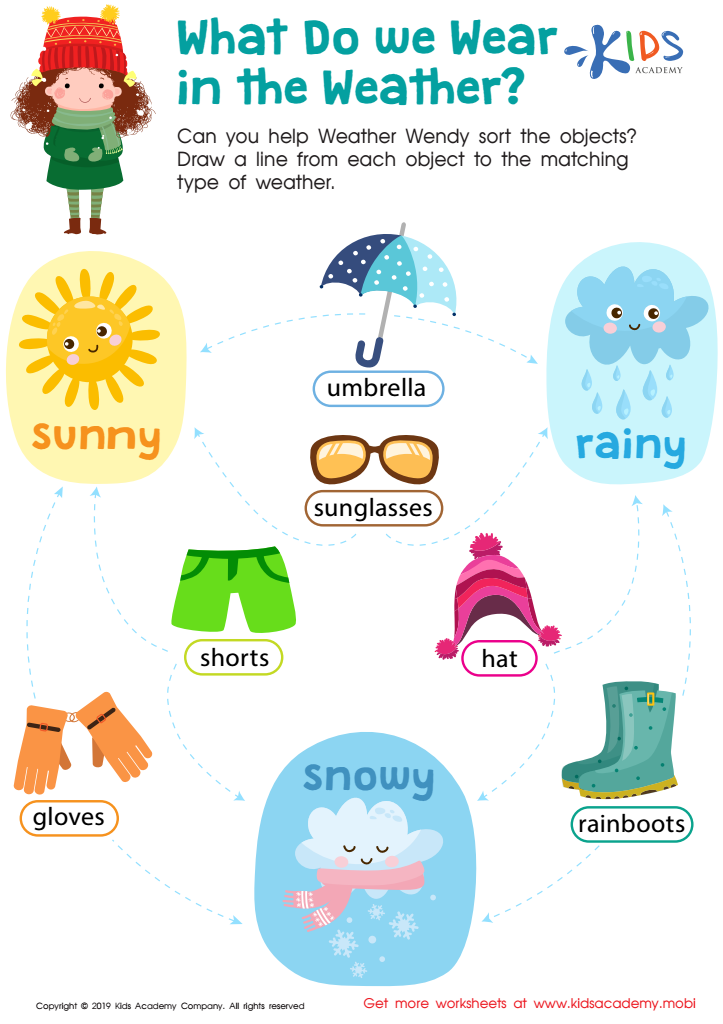
What Do We Wear in the Weather? Worksheet







Cognitive development in young children is vital as it lays the foundation for future learning and social skills. For ages 3-4, vocabulary development is especially crucial; it not only enhances communication but also fosters critical thinking and comprehension. When parents and teachers prioritize vocabulary building during this stage, they help children articulate their thoughts and feelings, which boosts their ability to engage in conversations and form relationships.
A rich vocabulary aids in understanding concepts across subjects, from language arts to math. Children with larger vocabularies are more likely to grasp key ideas and follow instructions, paving the way for academic success. Moreover, consistent exposure to new words during play, storytelling, and interactions helps children make connections between language and the world around them.
Additionally, strong vocabulary skills are linked to increased confidence and a sense of belonging, which are essential elements in a child's emotional development. Parents and teachers can make vocabulary building enjoyable through interactive games, rhymes, and storytelling, encouraging a love for learning. Investing in cognitive development by fostering vocabulary skills not only benefits children in the present but also equips them for lifelong learning.








