Rhyming skills development Normal Reading Worksheets for Ages 3-4
3 filtered results
-
From - To
Boost your child's reading abilities with our Rhyming Skills Development Normal Reading Worksheets, tailored for ages 3-4. These engaging worksheets are designed to enhance early literacy by teaching children to recognize and produce rhyming words, a crucial skill for phonemic awareness. With a variety of fun activities, including matching and drawing, your little one will delight in learning rhymes, improving their language skills, and expanding their vocabulary. Perfect for preschoolers, these worksheets provide a solid foundation for reading readiness, setting the stage for future academic success. Start your child's rhyming adventure today!

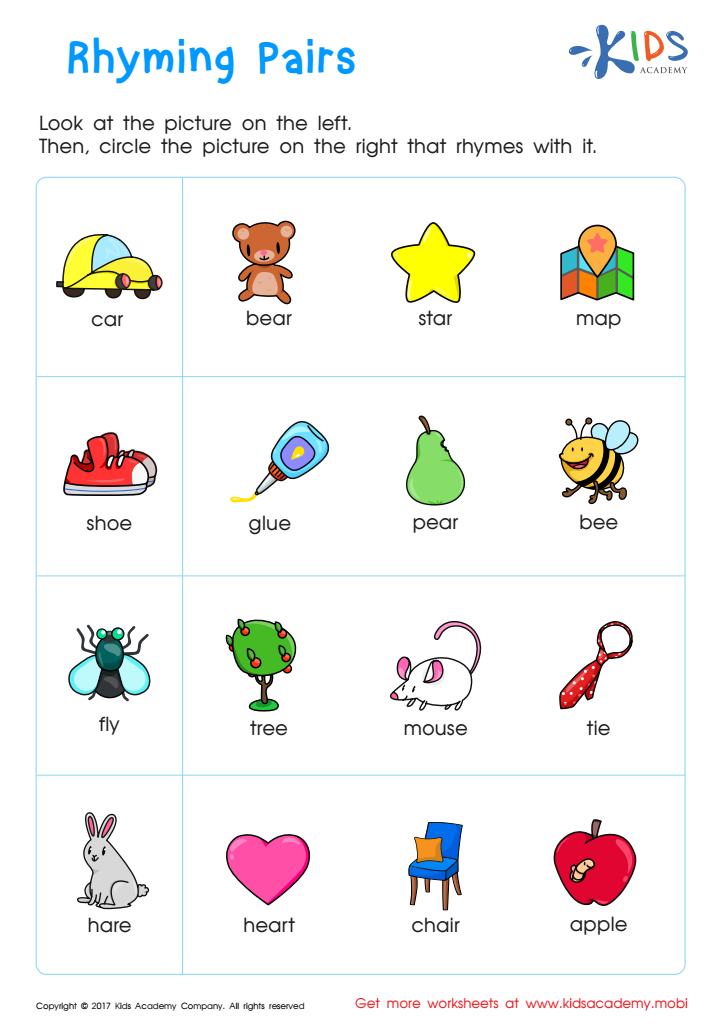
Rhyming Words Rhyming Worksheet
 Assign to My Students
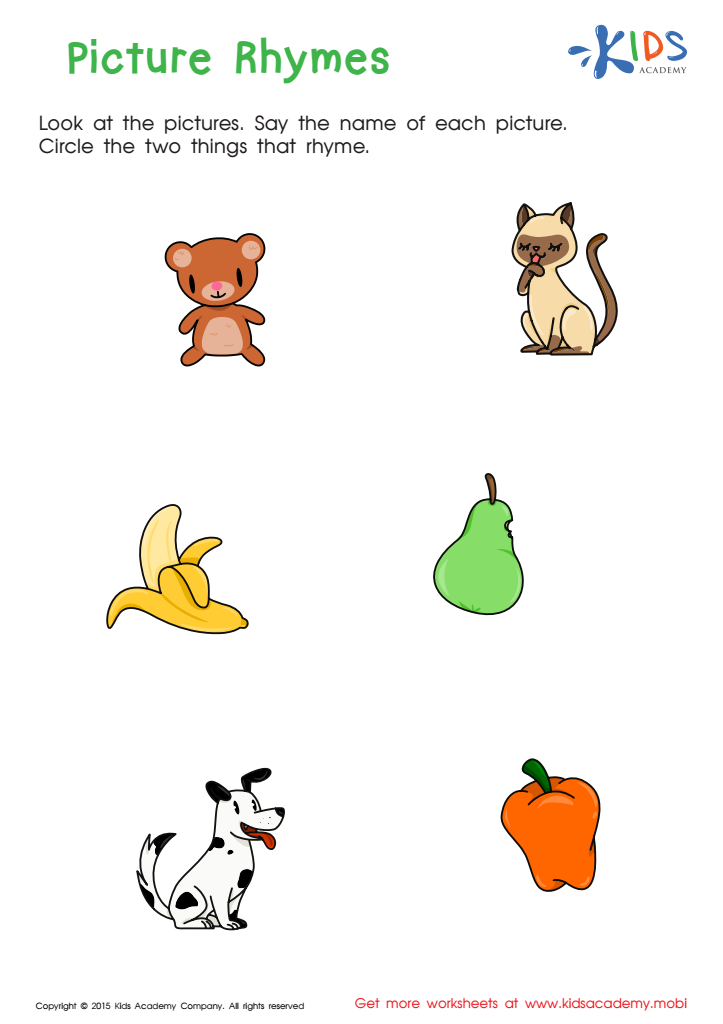
First Words: Picture Rhymes Worksheet



Rhyming skills are crucial in the early development of reading abilities for children ages 3-4 because they lay the foundation for phonological awareness, which is the ability to hear and manipulate sounds in words. Phonological awareness is a key predictor of reading success. By recognizing and generating rhymes, children develop an understanding of the sounds within words, which helps them with decoding and spelling as they learn to read.
When parents and teachers engage children in rhyming activities, such as singing nursery rhymes, reading rhyming books, and playing word games, they are enhancing the kids’ listening skills and their ability to pick up on patterns in language. This kind of playful and repetitive practice helps children to anticipate sounds, leading to an easier grasp of word structures.
Additionally, rhyming reinforces vocabulary by introducing children to new words in a fun and memorable way. It also promotes memory skills and helps in developing expressive language. By fostering a love of playful language through rhyming activities, parents and teachers can support children in becoming enthusiastic and confident readers as they grow, setting them on a path to academic success. Formative experiences with rhyming enriches language acquisition and instills a foundation that benefits further literacy education.








