Animal Classification Normal Animals Worksheets for Ages 3-4
4 filtered results
-
From - To
Explore the fascinating world of animal classification with our engaging worksheets designed specifically for children aged 3-4. Our "Animal Classification Normal Animals Worksheets" offer young learners an interactive way to discover various animals and their unique characteristics. Through fun activities, colorful visuals, and easy-to-follow instructions, kids will identify and categorize animals based on different traits. These worksheets promote essential skills like critical thinking, observation, and pattern recognition, making learning enjoyable and effective. Perfect for early education settings or home learning, these resources spark curiosity about nature while fostering a foundational understanding of science. Join the adventure in animal classification today!
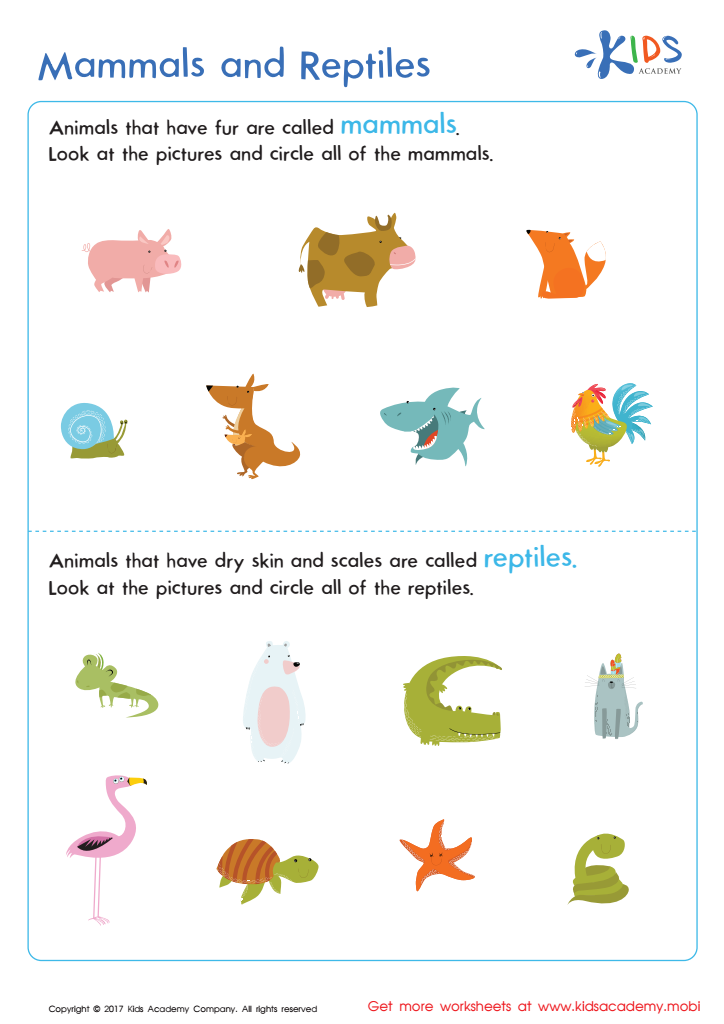
Mammals and Reptiles Worksheet
 Assign to My Students
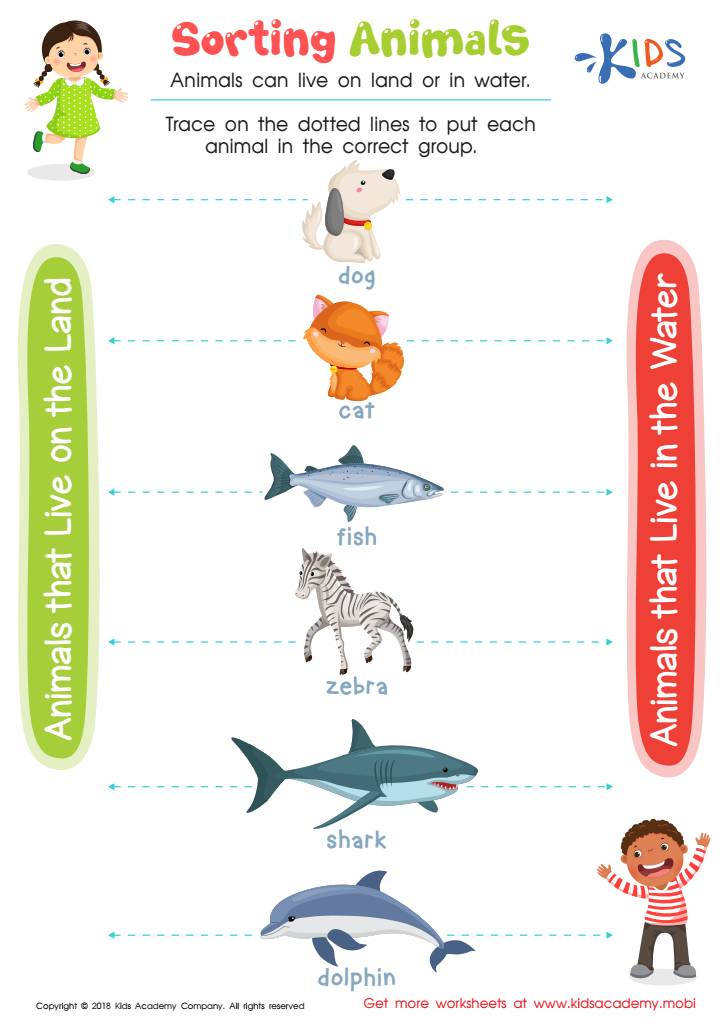
Sorting Animals Worksheet
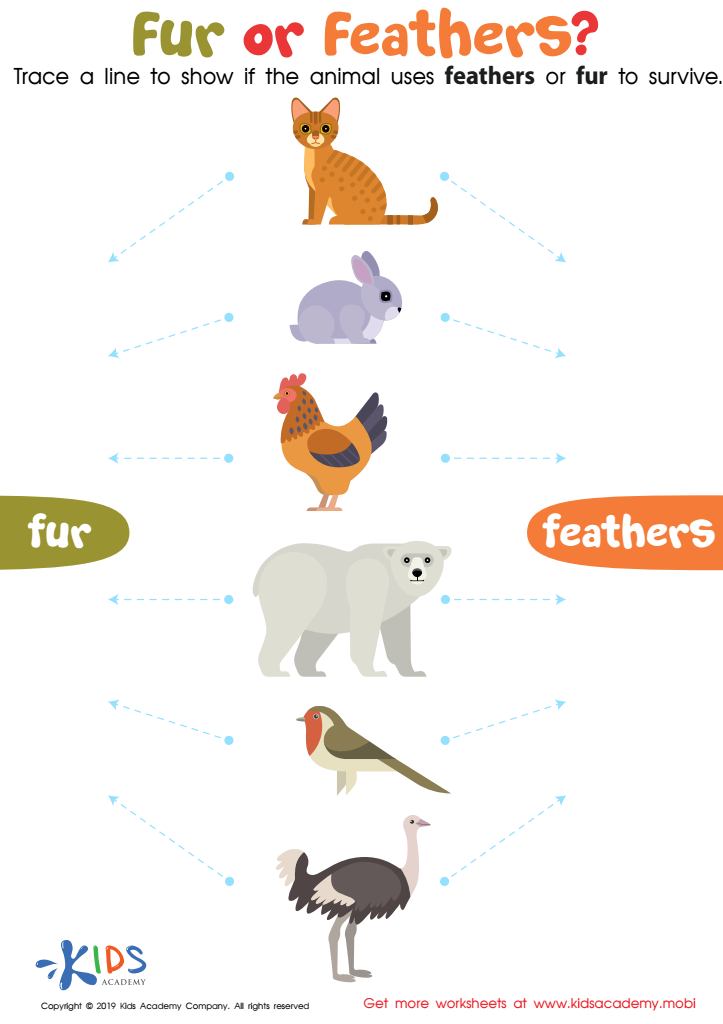
Fur or Feathers? Worksheet
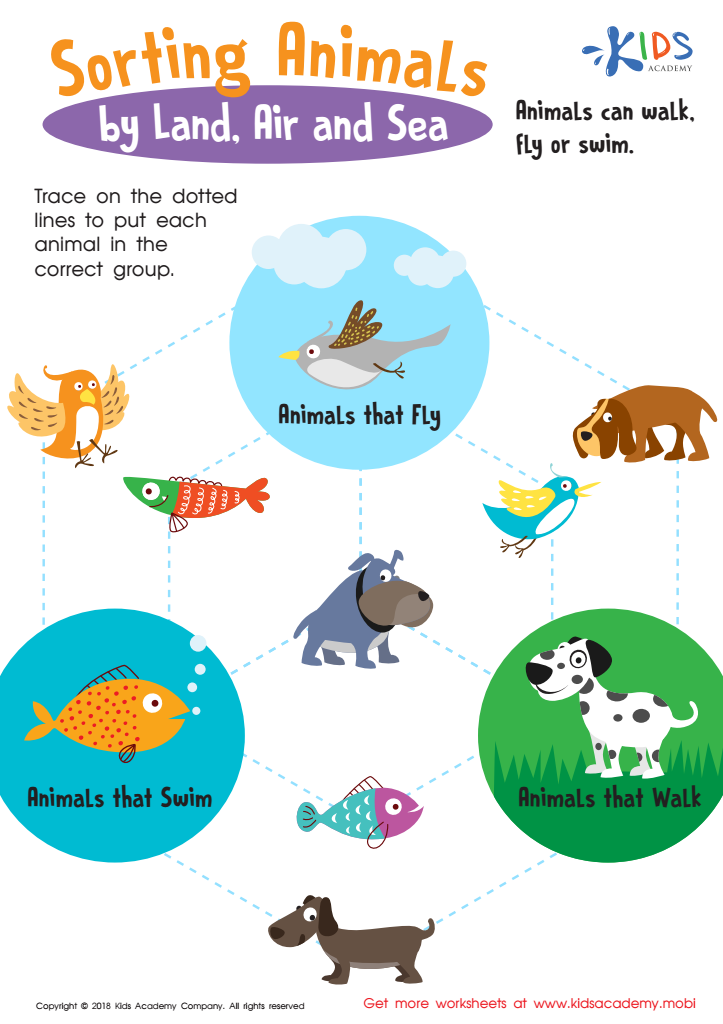
Sorting Animals by Land, Air and Sea Worksheet




%20(1).jpg)

Animal classification is an essential foundation for understanding the natural world, making it a crucial topic for parents and teachers of young children aged 3-4. At this tender age, children are naturally curious about animals, and introducing them to animal classification helps to nurture that curiosity.
By categorizing animals into groups such as mammals, birds, reptiles, amphibians, and fish, children can begin to recognize similarities and differences. This foundational knowledge supports cognitive development, enhancing their critical thinking and observational skills. Additionally, learning about animals helps children develop vocabulary, as they encounter new words associated with different species and their characteristics.
Moreover, understanding animal classification fosters empathy and respect for living creatures. As children learn about various habitats and animal behaviors, they gain an appreciation for biodiversity and the roles different species play in our ecosystem. This awareness can instill a sense of responsibility for protecting wildlife and the environment from a young age.
Overall, the exploration of animal classification through engaging activities, stories, and play can create memorable learning experiences that set the stage for a lifelong love of nature and learning. Therefore, it's beneficial for parents and teachers to integrate these concepts into early educational experiences.








