Cognitive Development Normal Animals Worksheets for Ages 3-4
3 filtered results
-
From - To
Boost your child's cognitive skills with our "Cognitive Development Normal Animals Worksheets for Ages 3-4". Designed to engage and educate, these worksheets introduce young learners to the fascinating world of animals. Through exciting activities, children develop critical thinking, problem-solving, and memory skills while learning about various animal species, their habitats, and characteristics. Our worksheets are perfect for curious minds, ensuring a fun and educational experience that supports early cognitive development. Engage your preschooler with activities that foster a love for learning and build a strong foundation in science. Discover the joy of learning through our expertly crafted worksheets!
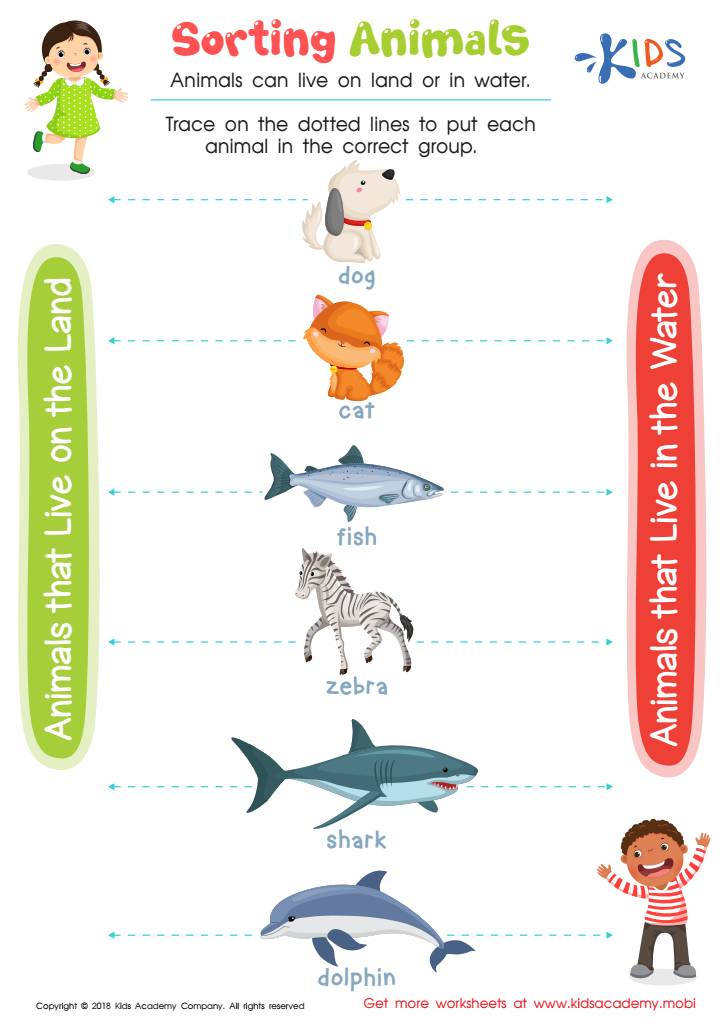
Sorting Animals Worksheet
 Assign to My Students
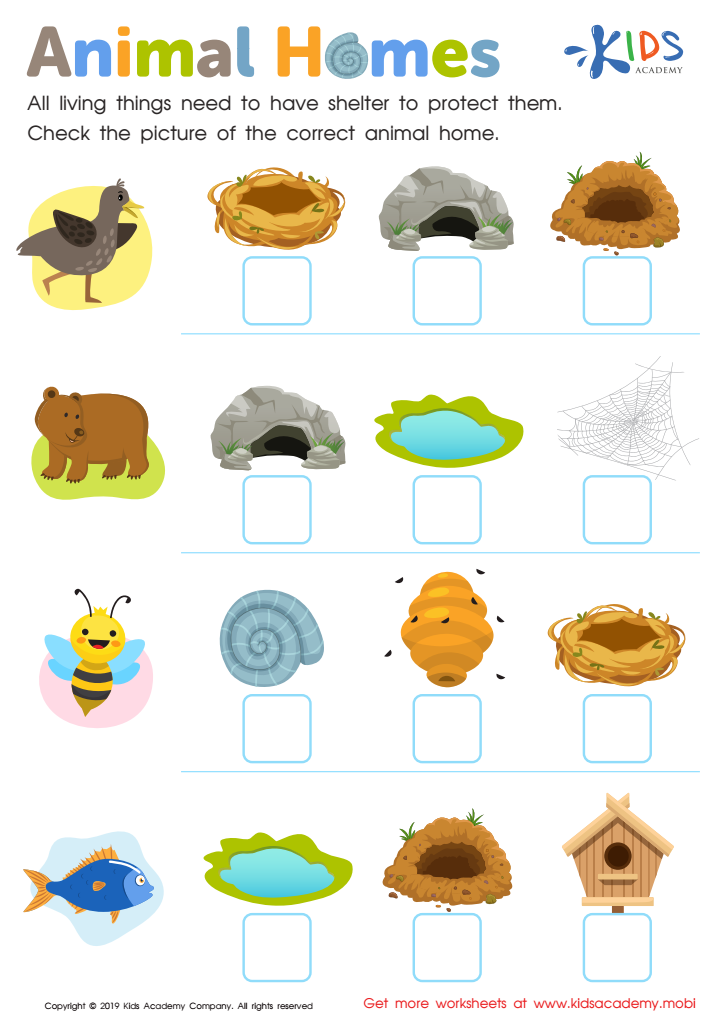
Animal Homes Worksheet
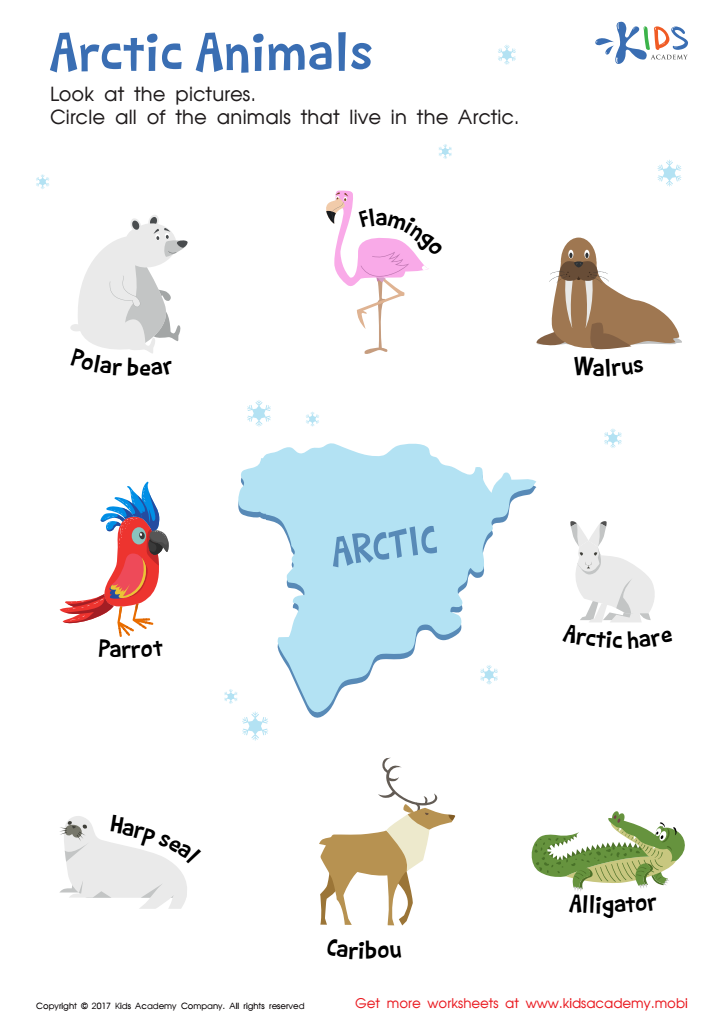
Arctic Animals Worksheet








Cognitive development in children ages 3-4 is essential as it forms the foundation for future learning, problem-solving, and decision-making. At this stage, children are developing critical thinking skills, expanding their vocabulary, and learning to understand the world around them. It's also a pivotal time for them to foster curiosity and imagination, which are key components of intellectual growth.
Parents and teachers play a vital role in this process by creating a supportive environment that encourages exploration and learning. Recognizing normal cognitive milestones helps adults identify areas where a child might need additional support or stimulation. For instance, typically developing children should be able to complete simple puzzles, recognize shapes and colors, and understand basic concepts like same and different.
Engaging children with activities involving Cognitive Development Normal Animals, such as animal puzzles or educational games, can enhance their memory, attention span, and problem-solving skills. Using animals as a theme captivates their interest and makes learning enjoyable.
For parents and teachers, understanding these cognitive milestones and how to support them ensures that children are given the best possible start. Early interventions can address any developmental delays and pave the way for successful future learning experiences, making it crucial to pay attention to and nurture cognitive growth at this formative age.








