Counting skills Normal Science Worksheets for Ages 3-4
4 filtered results
-
From - To
Enhance your child's counting skills with our engaging "Counting Skills Normal Science Worksheets" designed for ages 3-4. These expertly crafted worksheets, available on our page, offer a captivating approach to nurture early math prowess. Little learners will love the fun illustrations and interactive activities, which seamlessly blend science concepts with counting exercises. Perfect for preschoolers, each worksheet aims to develop foundational math skills through exploration and curiosity. Give your child the advantage of solid counting abilities while sparking their scientific interest. Visit to download and make learning an enjoyable journey with Kids Academy's resources.
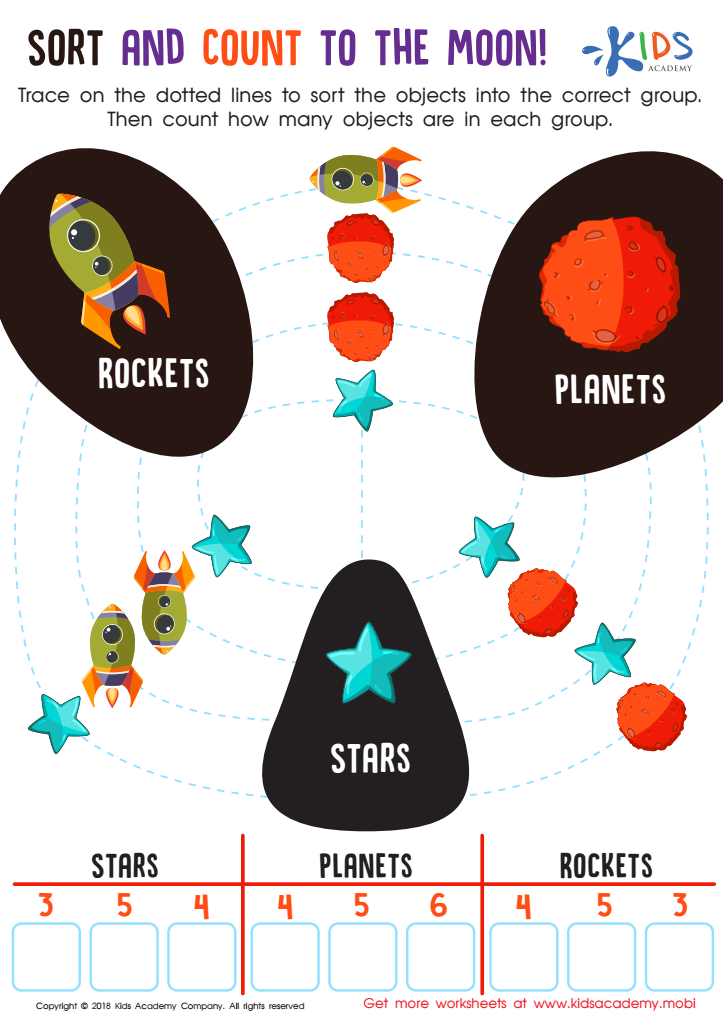
Sort and Count to the Moon Worksheet
 Assign to My Students

African Wildlife: Giraffe Worksheet
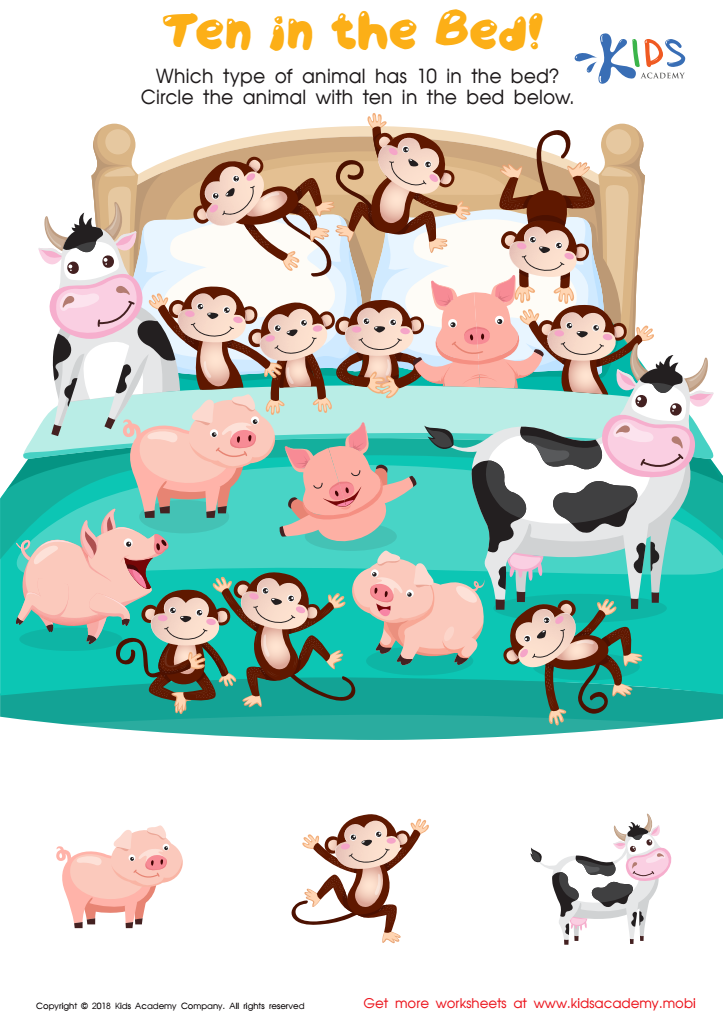
Ten in the Bed Worksheet
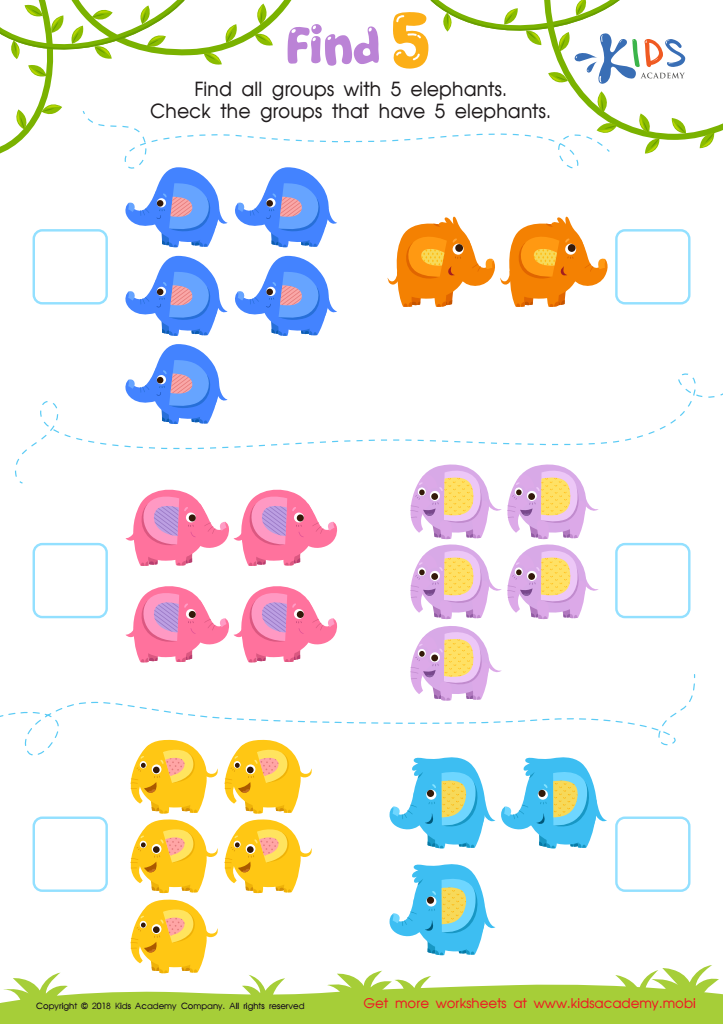
Find 5 Worksheet







Counting skills are foundational to early childhood development and vital for a child's future academic success. During ages 3-4, children are like sponges, absorbing new information rapidly, which makes it a critical period for laying down essential numeracy skills. Both parents and teachers play an instrumental role in nurturing these counting abilities, which are the building blocks for more complex mathematical concepts later on.
Counting helps children understand quantities, recognize patterns, and develop logical thinking and problem-solving skills. It enables them to relate numerical symbols to actual quantities, creating a bridge between abstract concepts and real-world applications. For instance, learning to count helps children make sense of their environment by quantifying objects, understanding sequences, and incorporating numbers into daily activities like setting the table or counting toys.
Furthermore, early counting skills are important for cognitive development. They encourage memory, attention to detail, and fine motor skills, as children often engage in hands-on activities like counting blocks or using fingers. This interplay between physical and cognitive activities enhances brain development. By focusing on counting skills at an early age, parents and teachers create a strong educational foundation, boosting children's confidence, encouraging a love for learning, and preparing them for more advanced mathematical education in the future.







