
Reading comprehension Normal Life Science Worksheets for Ages 3-4
3 filtered results
Difficulty Level
Grade
Age
-
From - To
Subject
Activity
Standards
Nurture your child's curiosity and foundational reading skills with our "Reading Comprehension Normal Life Science Worksheets for Ages 3-4". Designed specifically for young learners, these worksheets combine captivating illustrations and simple sentences to engage little minds. Each activity promotes understanding of basic life science concepts, such as animals, plants, and their environments. By practicing these worksheets, kids will enhance their vocabulary, build critical thinking skills, and develop a love for reading and science. Perfect for both classroom and home use, these materials offer a fun, educational journey tailored to preschoolers' inquisitive nature. Let’s spark a love for learning today!
Favorites
With answer key
Interactive
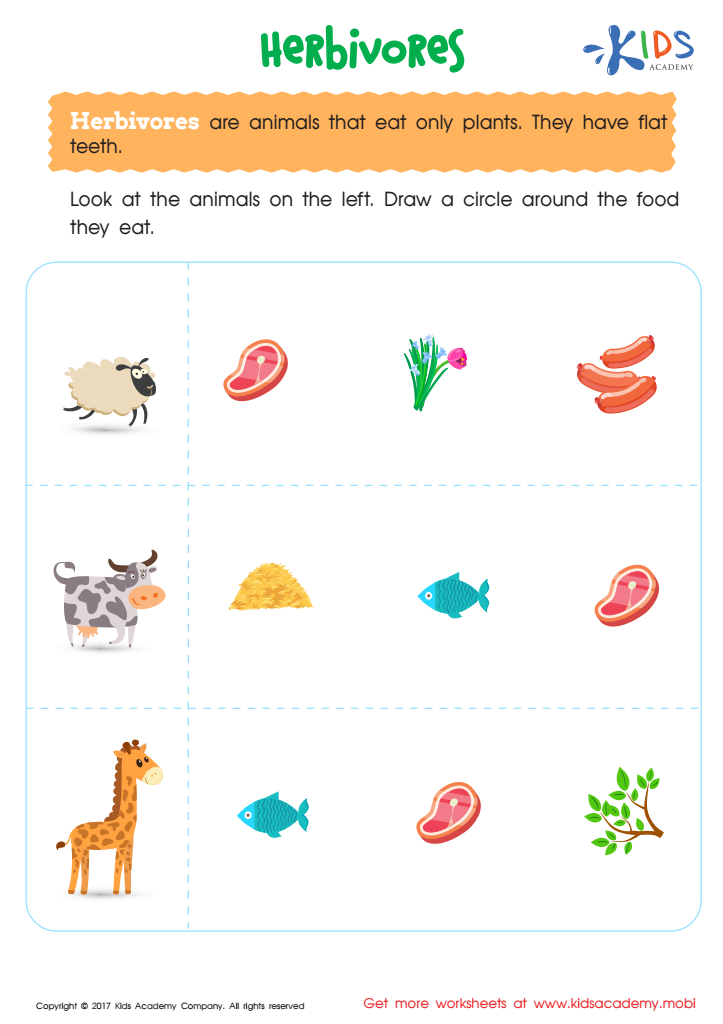
Herbivores Printable
Strengthen their vocab with these fascinating creatures, as they explore an intriguing aspect of beloved animals.
 Assign to My Students
Herbivores Printable
Worksheet
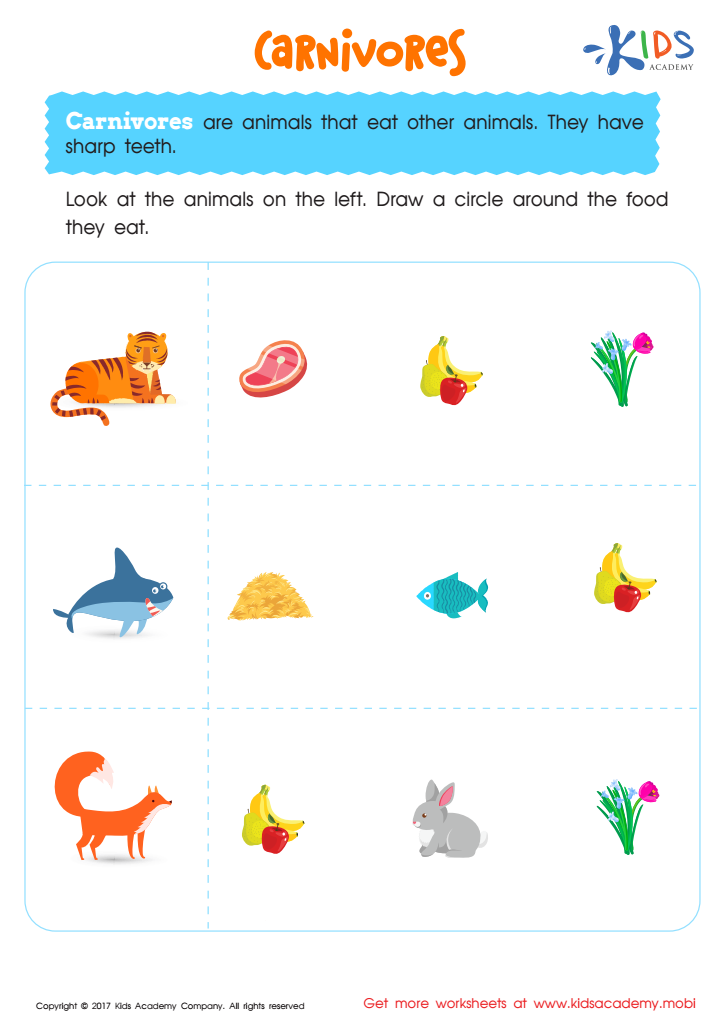
Carnivores Worksheet
Boost their vocabulary and help them explore the incredible world of carnivores.
Carnivores Worksheet
Worksheet
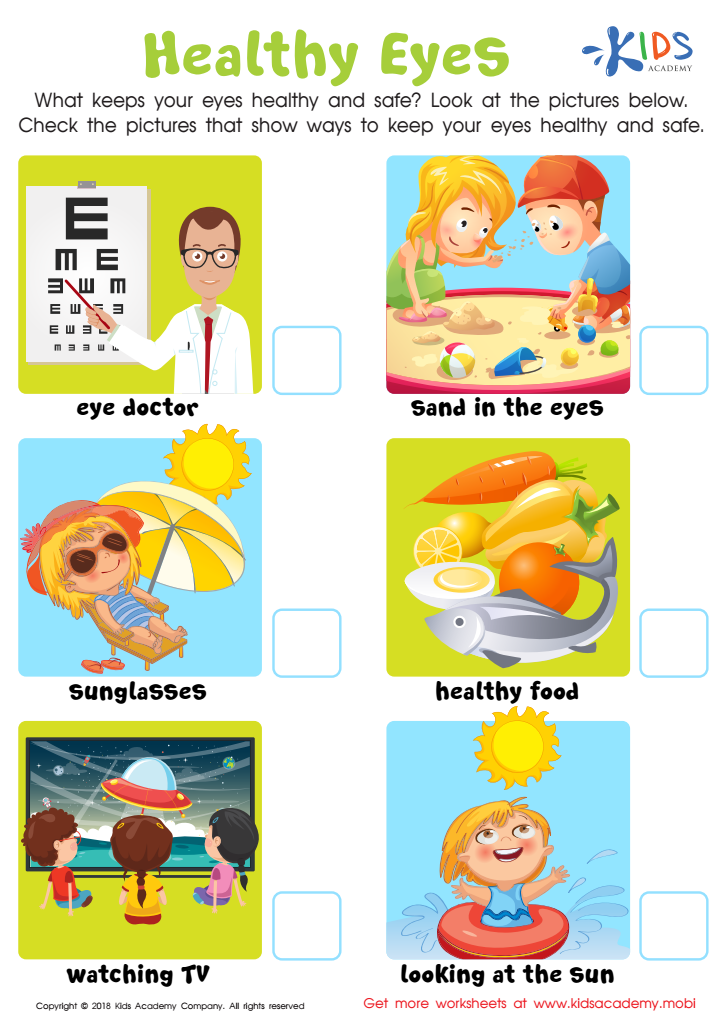
Healthy Eyes Worksheet
Does your child know how to care for their eyes? Help them understand with this worksheet. Look through the pictures together and discuss the different ways to keep the eyes healthy and safe. These include visits to the doctor, wearing sunglasses, and eating healthy food.
Healthy Eyes Worksheet
Worksheet
Join Kids Academy for Free
Who is primarily going to use this learning content?


.jpg)




Reading comprehension for children ages 3-4 is a foundational skill essential for their overall development and future academic success. At this age, children are in a critical period for language acquisition and cognitive development. Understanding texts, even at a very basic level, enhances their ability to process information, follow instructions, and build vocabulary. When parents or teachers engage kids with stories or simple texts about normal life science, it introduces them to new concepts about the world around them—plants, animals, weather, and everyday phenomena.
These early encounters with reading materials help children develop curiosity and a love for learning, creating a positive attitude towards education. During these interactions, children learn to make connections between the pictures they see and the words they hear, fostering their ability to comprehend narratives and informational content.
Moreover, read-aloud sessions strengthen the bond between parents and children, promoting social and emotional skills like empathy and imagination. Teachers who incorporate reading comprehension in their curriculum provide a structured approach to literacy, equipping children with the skills they need to question, infer, and understand their surroundings.
By caring about reading comprehension in early life science, parents and teachers lay the groundwork for a child's academic journey, ensuring they are prepared for more complex concepts in later years.








