
Geography knowledge Normal Social Studies Worksheets for Ages 3-4
7 filtered results
Difficulty Level
Grade
Age
-
From - To
Subject
Activity
Standards
Explore our engaging Geography Knowledge Worksheets tailored for children aged 3-4! Designed to introduce young learners to fundamental geographical concepts, these printable resources provide fun and interactive activities that promote an early understanding of shapes, places, and basic spatial relationships. Crafted with vibrant illustrations and age-appropriate content, our worksheets encourage curiosity about the world around them. Perfect for home or classroom use, these resources foster critical thinking and enhance social studies skills in a way that’s enjoyable and accessible. Start your child's geographical journey today with our curated activities that lay a solid foundation for future learning!
Favorites
With answer key
Interactive
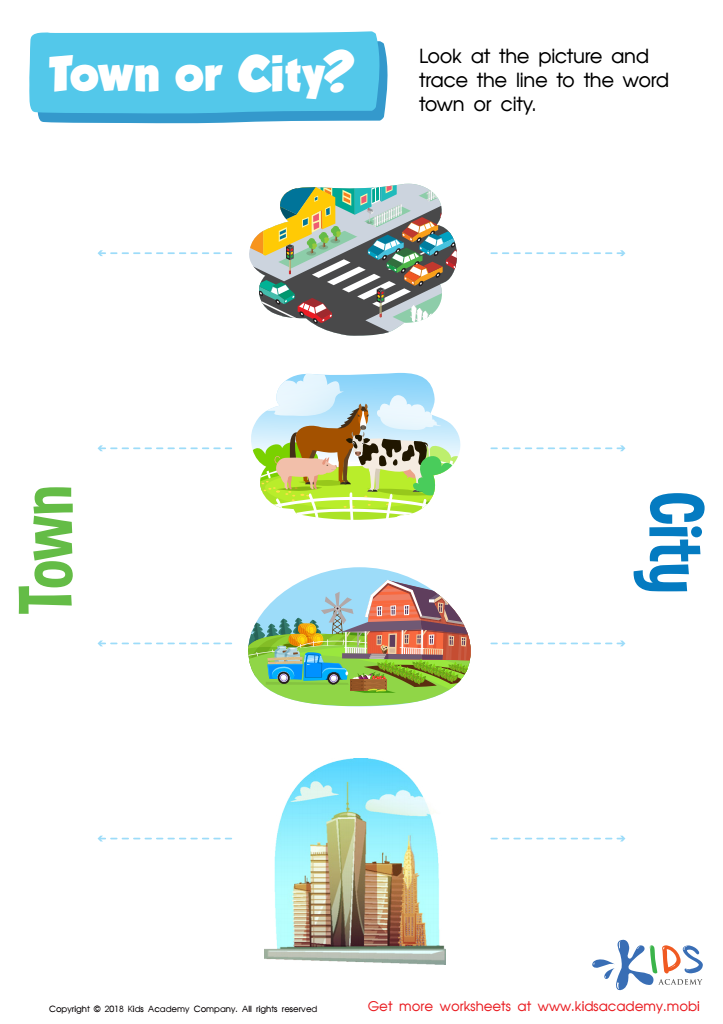
Town or City? Worksheet
Kids will have fun with this free worksheet, matching pictures to either a city or a town. Fine motor skills will be practiced as they trace the lines to their answer. It's a great way to reinforce the differences between cities and towns.
 Assign to My Students
Town or City? Worksheet
Worksheet
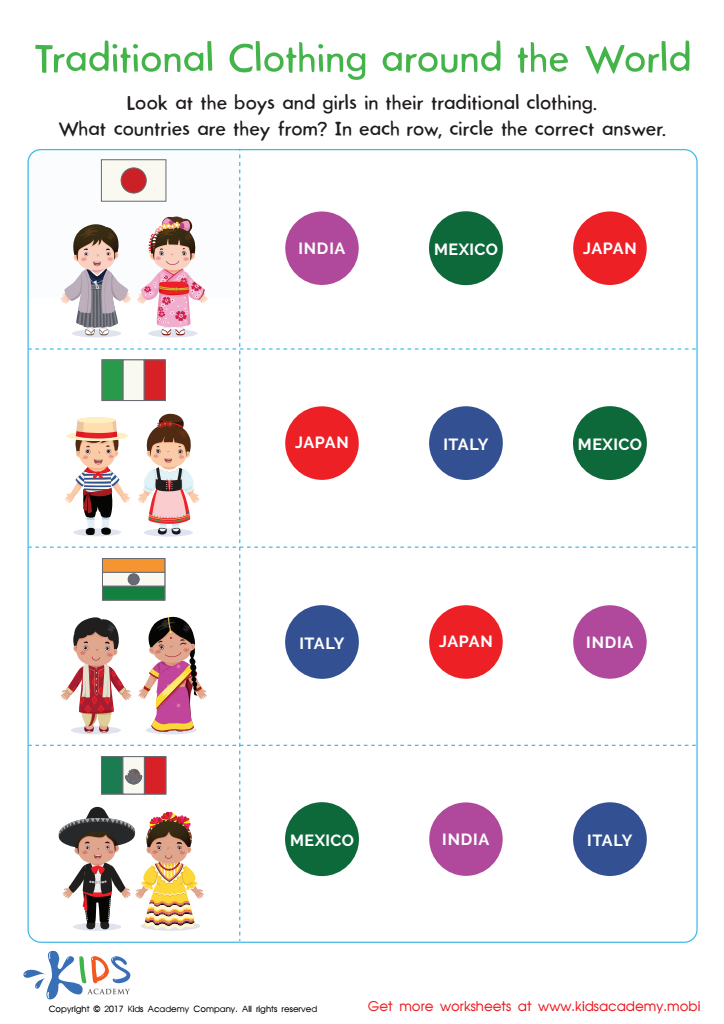
Traditional Clothing Worksheet
Introduce your child to cultures around the world with this illustrated traditional clothing printable worksheet! It will help them to recognize clothing, national flags and cultures from different countries, fostering an appreciation and love for all. It's a joyful way to learn and recognize the differences of people from around the world!
Traditional Clothing Worksheet
Worksheet
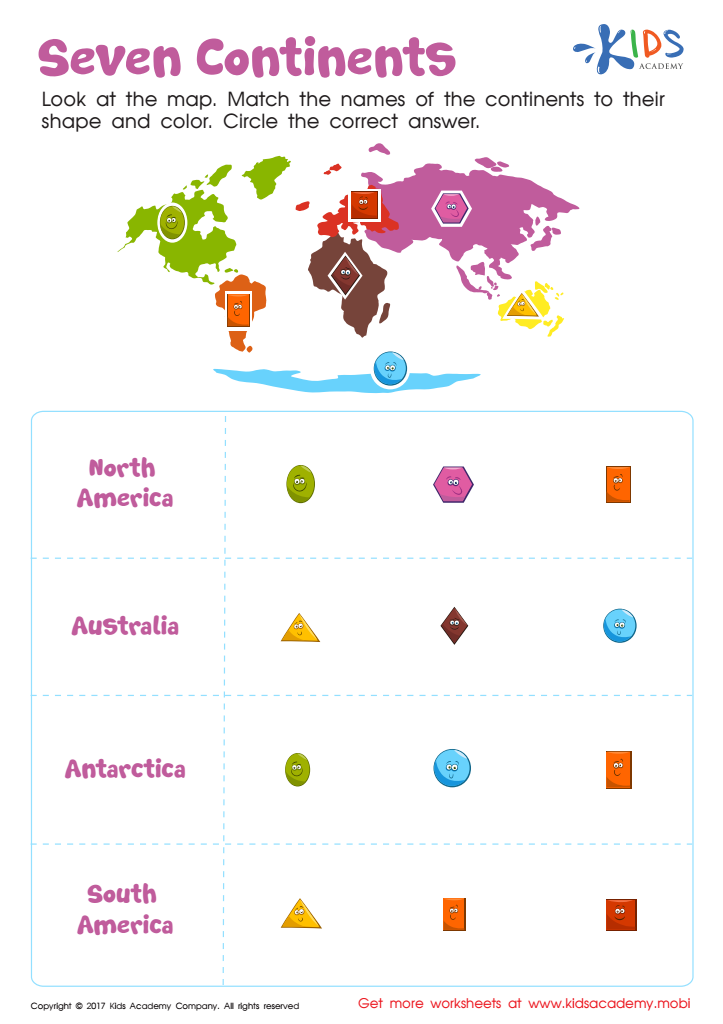
Seven Continents Worksheet
Geography teaches kids about the world! Encourage exploration with a seven continents worksheet - it'll help your child identify each continent using fun shapes.
Seven Continents Worksheet
Worksheet
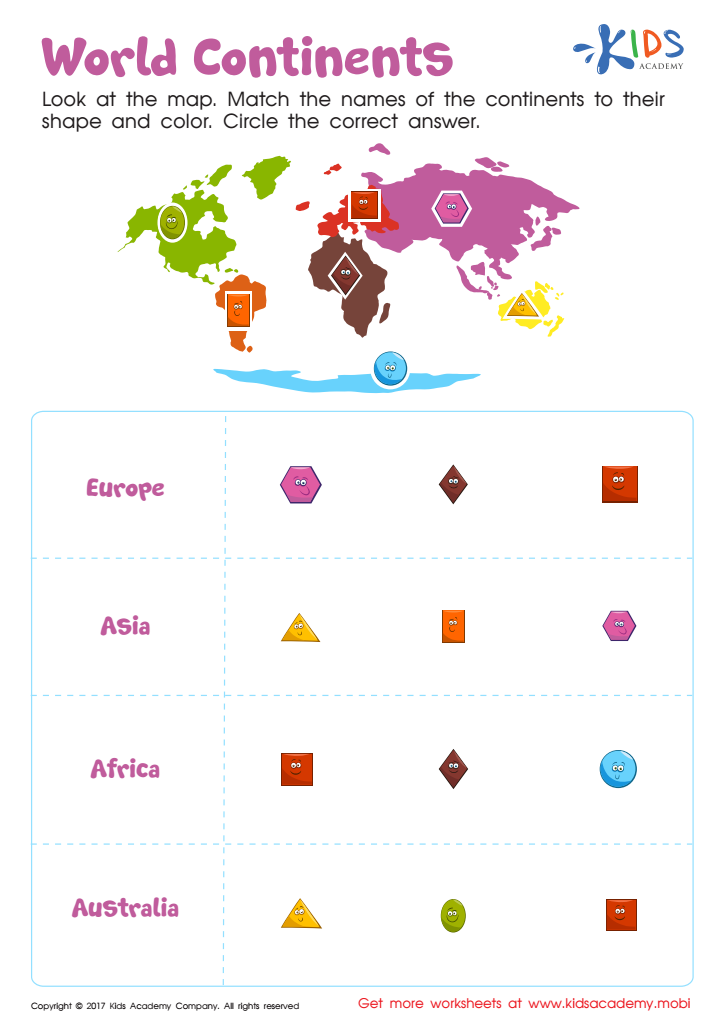
World Continents Worksheet
Help expand your child's knowledge of the world with this fun worksheet! It features goofy shapes to identify each continent, making learning the seven continents fun and memorable.
World Continents Worksheet
Worksheet
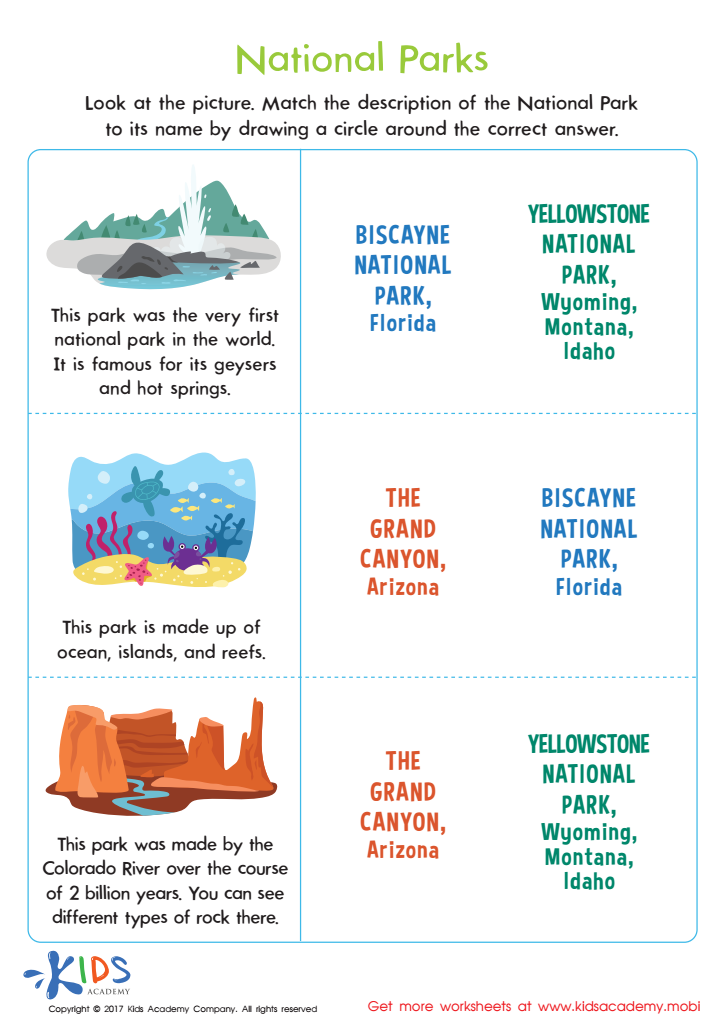
National Parks Printable
Introduce your child to the iconic US national parks with this worksheet! It teaches them important facts and features, and helps them explore the parks from home. Plus, extend their learning with real images from the parks!
National Parks Printable
Worksheet

Towns Worksheet
Towns are generally quiet and safe, making them attractive for young families. Cities have more people, businesses and tall buildings. Roads are busy, and there is often plenty to do and see. Help your kids check which pictures in this worksheet show towns.
Towns Worksheet
Worksheet
Join Kids Academy for Free
Who is primarily going to use this learning content?






Introducing geography knowledge to children ages 3-4 is vital for their holistic development and understanding of the world. At this tender age, children are naturally curious, eager to learn about their surroundings, and form connections with the environment. Knowledge of geography fosters a sense of belonging, helping them understand their place in the world and community.
Geography in early childhood encourages spatial awareness, enhancing cognitive skills that are foundational for later learning. When children learn about different places, cultures, and environments, they develop empathy and respect for diversity, fostering an inclusive mindset. Engaging them in simple geographical concepts—like maps, landmarks, and natural features—can lay the groundwork for critical thinking and problem-solving skills.
Moreover, these early lessons promote language development as children learn new vocabulary related to places and experiences. Activities like identifying where they live, discussing family locations, or exploring different cultures fuel imaginative play and storytelling, nurturing creativity.
Ultimately, incorporating geography into early learning prepares children for future academic success while instilling a greater awareness of their world. Parents and teachers should view this foundational knowledge as essential for creating informed and connected global citizens.








