Visual recognition Normal Social Studies Worksheets for Ages 3-4
4 filtered results
-
From - To
Discover our engaging Visual Recognition Social Studies Worksheets designed specifically for children ages 3-4! These age-appropriate resources help young learners develop essential visual recognition skills through fun and interactive activities. Our worksheets encourage children to identify shapes, colors, and everyday objects in a familiar context, fostering their cognitive understanding of the world around them. Ideal for both classroom and home use, these worksheets enhance critical thinking and observation skills while introducing foundational social studies concepts. Empower your child’s learning journey with creative exercises that make education enjoyable and relevant. Explore our collection now and watch your child's skills blossom!
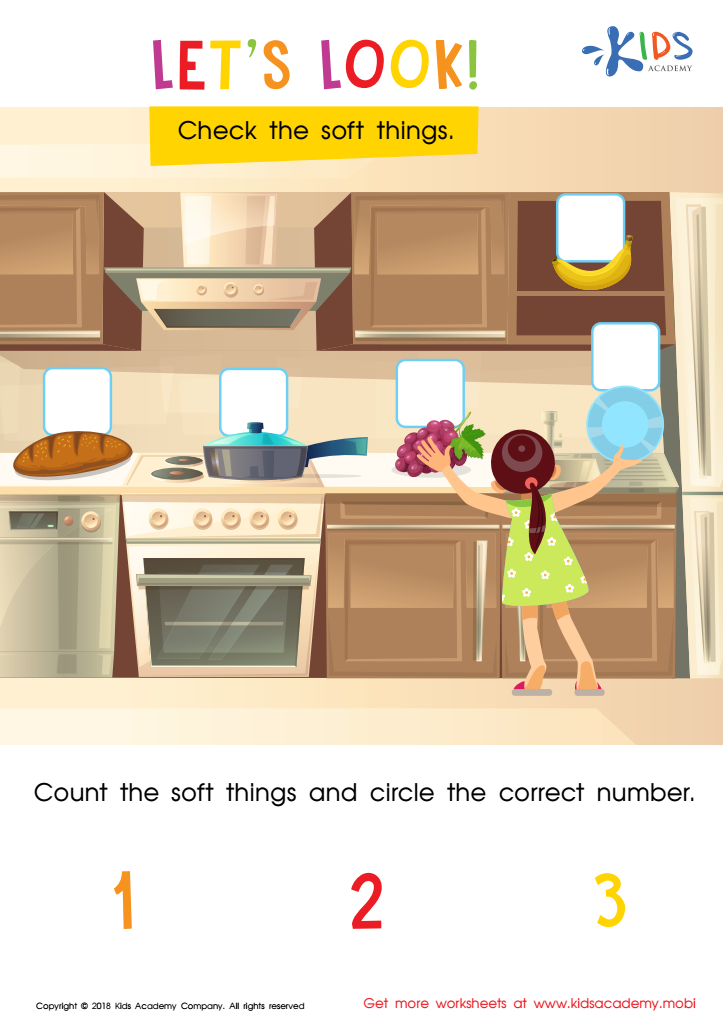
Let's Look! Assessment Worksheet
 Assign to My Students
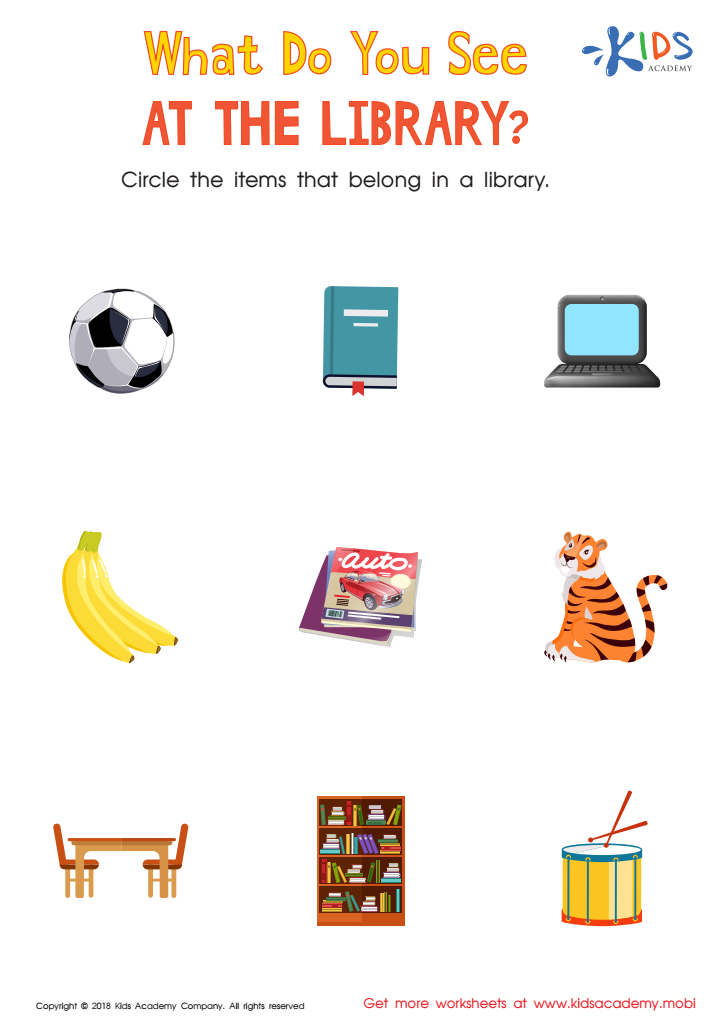
What Do you See at the Library? Worksheet
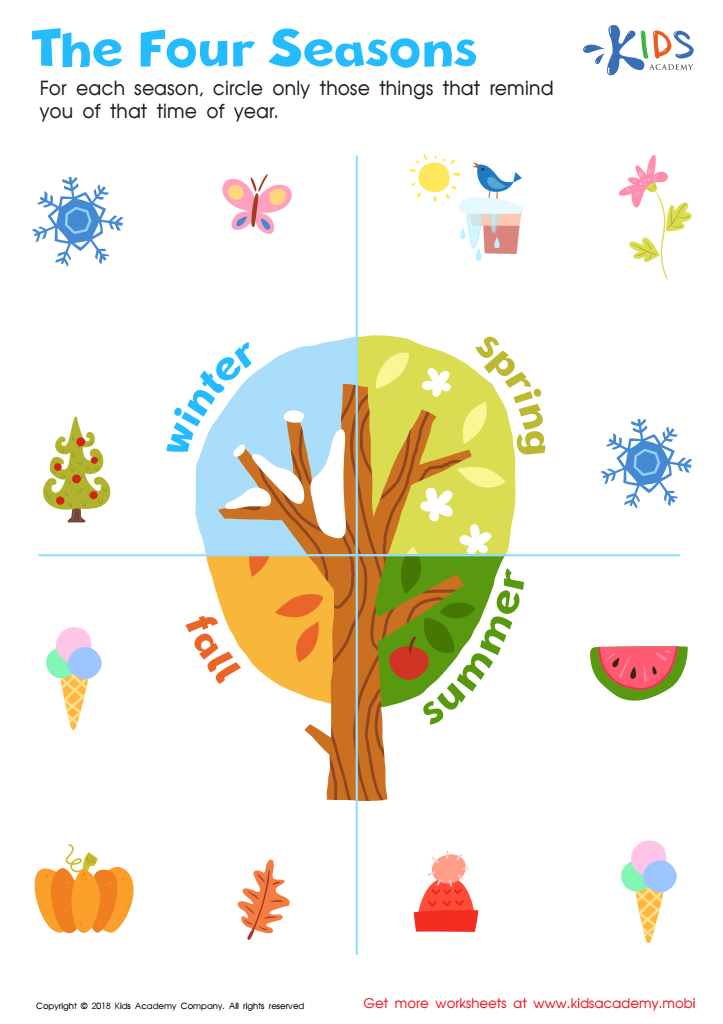
The Four Seasons Worksheet
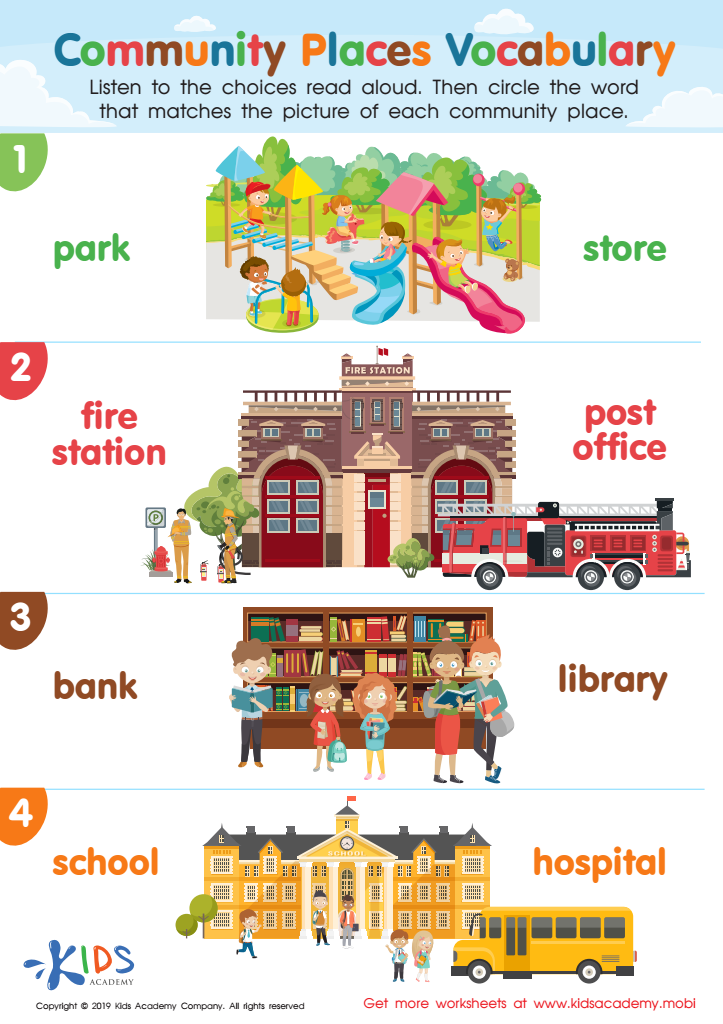
Community Places Vocabulary Worksheet







Visual recognition in social studies for ages 3-4 is crucial for early development because it lays the foundation for children’s understanding of the world around them. At this age, children are naturally curious and eager to learn about their environment, including people, cultures, and social interactions. By fostering their visual recognition skills, parents and teachers help young learners identify and differentiate important social symbols, community helpers, and cultural elements.
Recognizing faces, places, and objects is an essential cognitive skill that enhances memory, language acquisition, and social interactions. When children can visually identify community figures like firefighters or teachers, they grow more aware of their surroundings and learn to navigate their social environment confidently.
Moreover, engaging in visual recognition activities can promote empathy and diversity appreciation. Through stories, images, and interactive play, children learn about different cultures, fostering inclusivity and respect for others.
By nurturing visual recognition in social studies, parents and teachers set the stage for critical thinking, effective communication, and problem-solving skills that children will carry into their future education and social interactions. Building this skill early promotes not just academic success, but also emotional and social development, making it paramount for holistic childhood growth.