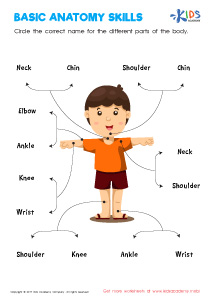
Vocabulary Building Normal World Around Us Worksheets for Ages 3-4
3 filtered results
Difficulty Level
Grade
Age
-
From - To
Subject
Activity
Standards
Explore our engaging Vocabulary Building Worksheets designed for young learners aged 3-4! These interactive resources introduce children to the normal world around them, helping to develop language skills through fun and age-appropriate activities. Your little ones will enjoy identifying everyday objects, enhancing their vocabulary, and improving their communication skills. Each worksheet features colorful images and simple tasks that encourage creativity while making learning enjoyable. Perfect for both classroom and home use, our worksheets foster curiosity and a love for learning. Start your child’s vocabulary journey today and watch their confidence grow as they discover the world around them!
Favorites
With answer key
Interactive
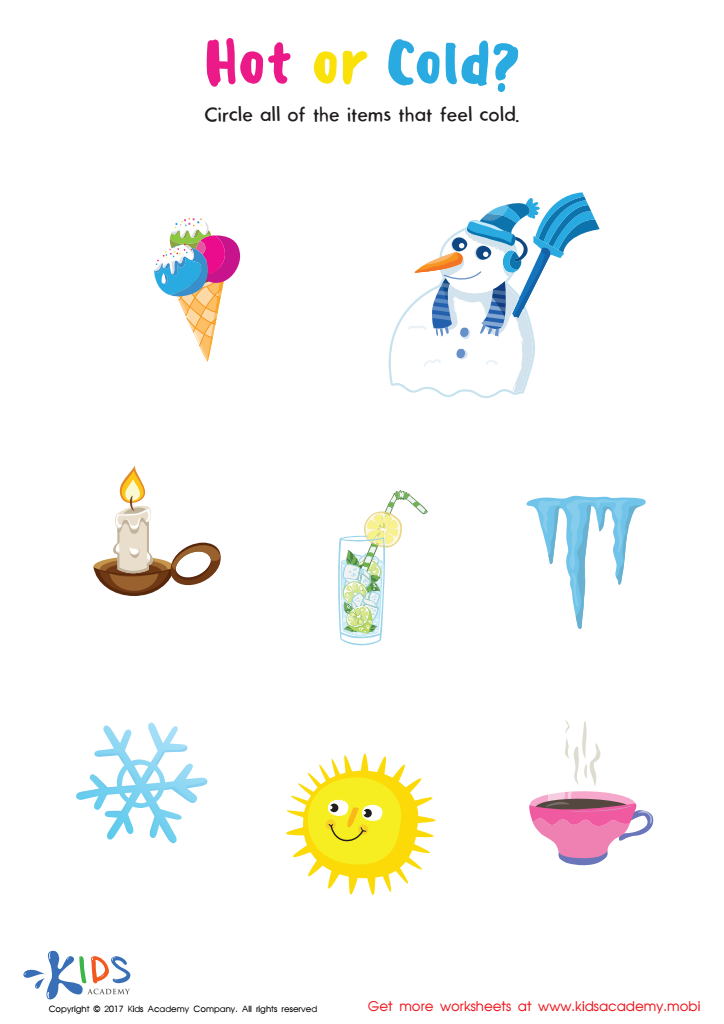
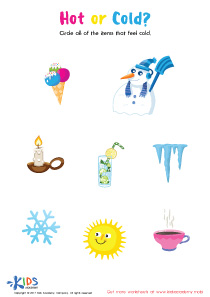
Hot or Cold Printable
Help your child stay safe with this hot or cold worksheet! It promotes problem solving skills and teaches the important concept of temperature differences. Plus, it’s fun! Get your child to learn by playing.
 Assign to My Students
Hot or Cold Printable
Worksheet
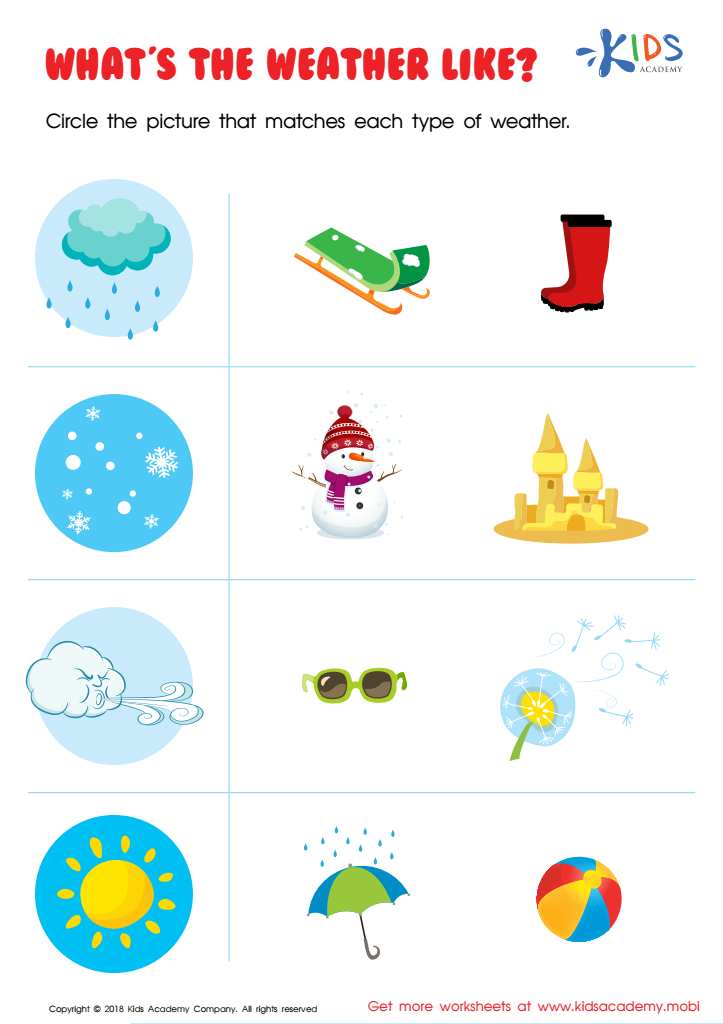
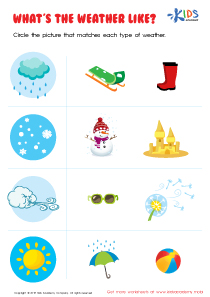
What's the Weather Like? Worksheet
Help budding meteorologists practice matching weather to seasons with this PDF worksheet. Picture clues help identify seasons and fine motor skills are practiced circling the correct weather patterns. Bright and engaging characters make learning fun and reinforce weather knowledge.
What's the Weather Like? Worksheet
Worksheet
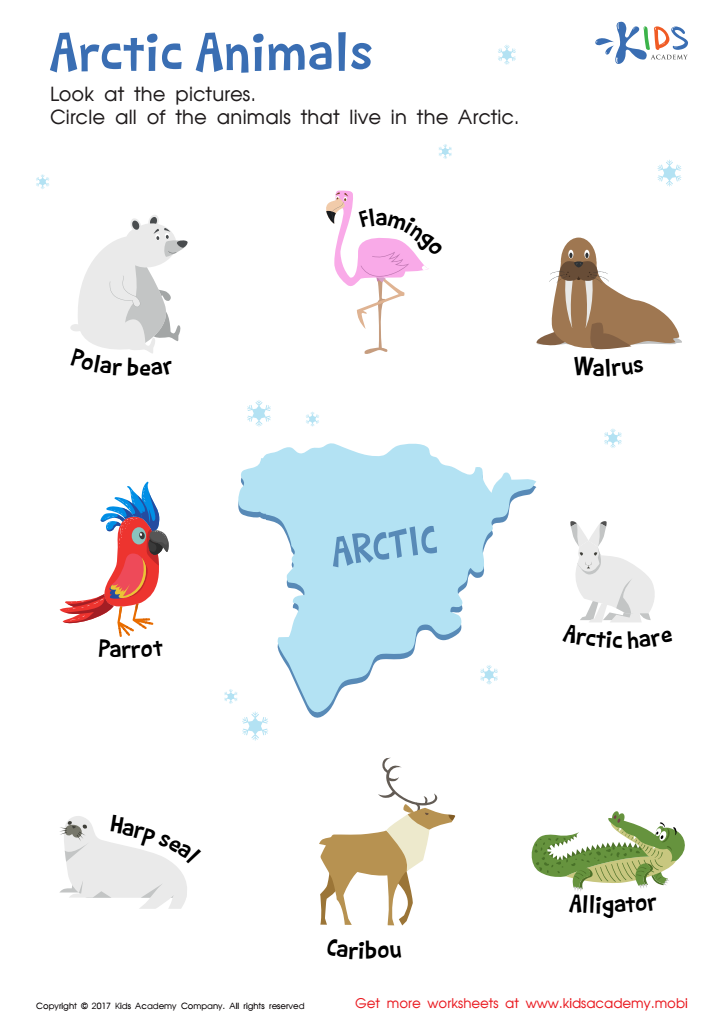
Arctic Animals Worksheet
Kids love animals and this worksheet is a great way to teach them where they live. It reinforces classification skills and introduces new animals, like the Arctic hare. Use it to discuss the Arctic climate and how these animals live, then ask your child where other animals live to keep the conversation going.
Arctic Animals Worksheet
Worksheet
Join Kids Academy for Free
Who is primarily going to use this learning content?








Vocabulary building in young children, especially between ages 3 and 4, is crucial for their cognitive, social, and emotional development. During this stage, children experience rapid brain development, making it an ideal time to enhance their vocabulary by connecting words to the world around them. By expanding their vocabulary, children improve their ability to express thoughts, emotions, and needs, which in turn fosters effective communication skills.
Parents and teachers play a vital role in this process. Engaging in conversations about everyday experiences, using descriptive language, and introducing new words associated with familiar objects can significantly enrich a child's language environment. This practice helps children develop critical thinking skills, as a robust vocabulary allows them to understand and process information more effectively.
Moreover, possessing a strong vocabulary builds self-confidence in social interactions, as children feel more capable of expressing themselves. It also lays the foundation for literacy skills, which are essential for later academic success. Ultimately, by focusing on vocabulary building based on the normal world around them, parents and teachers cultivate curious, expressive, and articulate learners who are prepared for the challenges of formal education and interactions beyond the classroom. Thus, fostering language development is crucial for their overall growth and future success.