Verb identification Normal Grammar Worksheets for Ages 3-4
3 filtered results
-
From - To
Our Verb Identification Normal Grammar Worksheets for Ages 3-4 are specially designed to help young learners grasp the fundamentals of verbs in a fun and engaging way. Perfect for preschoolers, these worksheets use simple activities and age-appropriate exercises to introduce basic action words. With colorful illustrations and easy-to-follow instructions, children can start recognizing and using verbs in sentences. These worksheets not only support language development but also enhance reading and writing skills, giving your little ones a strong grammar foundation. Ideal for at-home practice or classroom use, make learning exciting and effective with our expertly crafted resources.
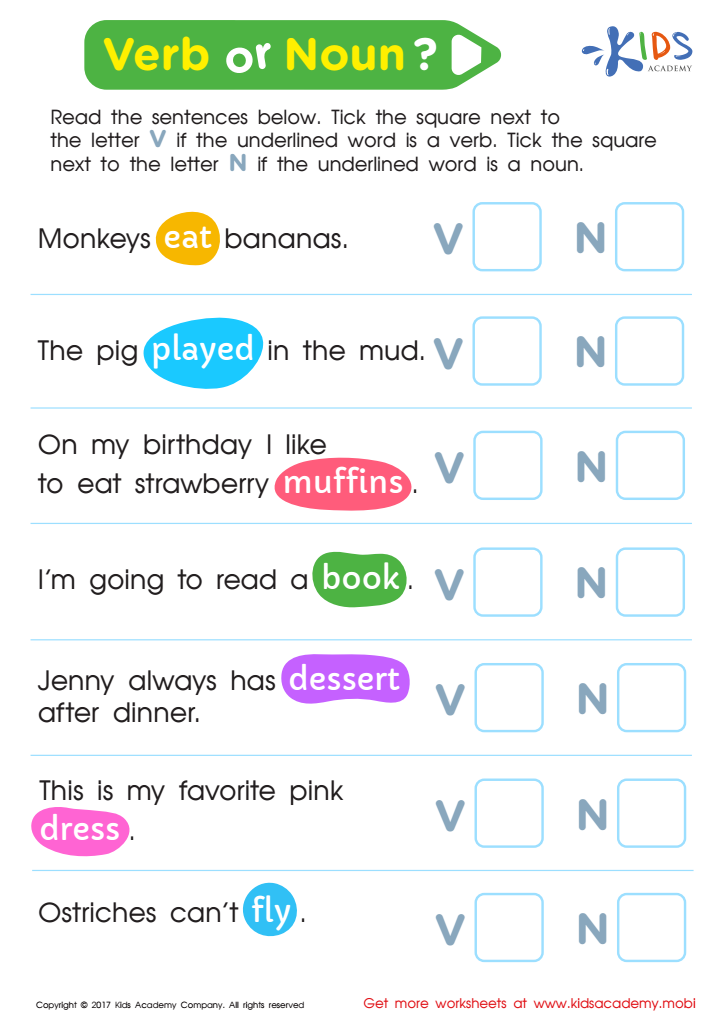
Verb or Noun Worksheet
 Assign to My Students
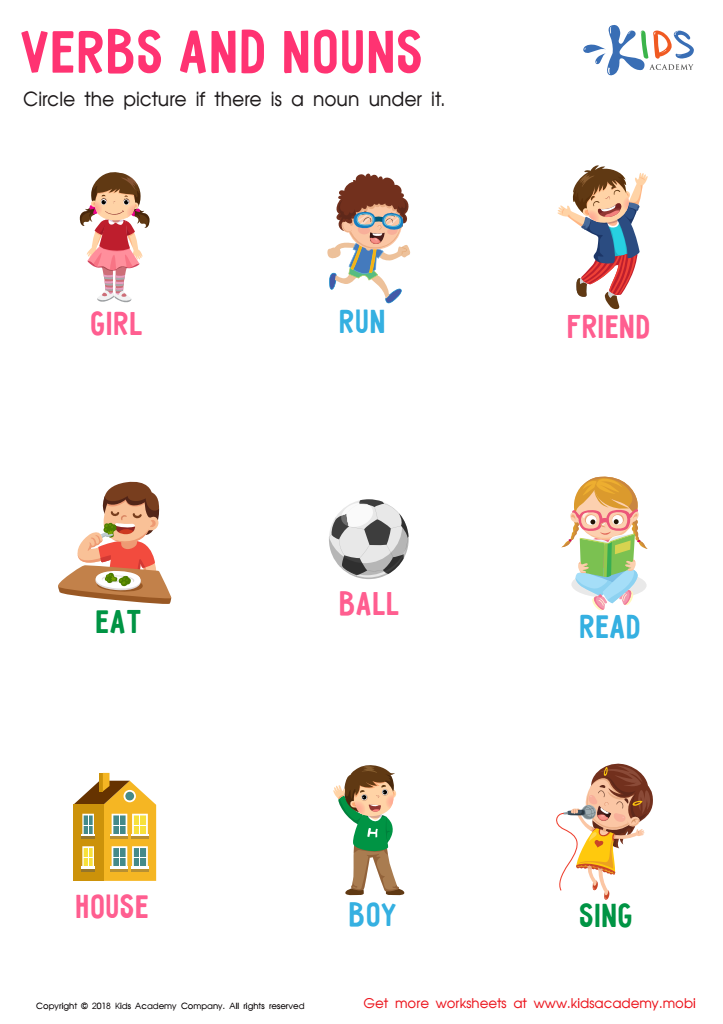
Verbs and Nouns Worksheet
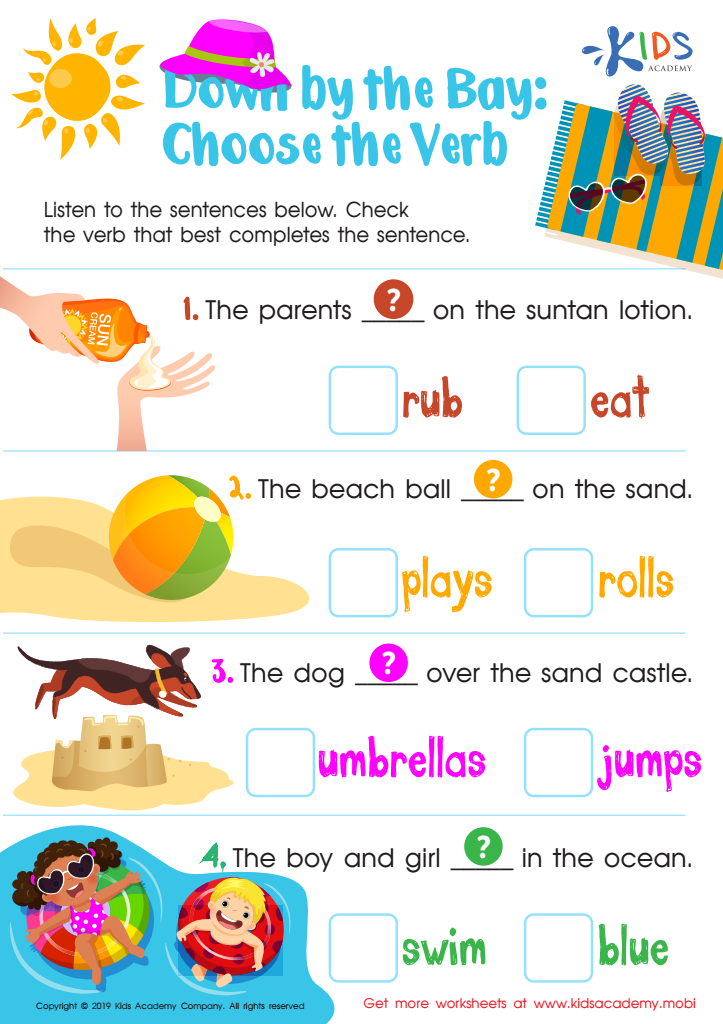
Down by the Bay: Choose the Verb Worksheet








Understanding verb identification is an essential foundation of language development for children ages 3-4. Verbs are action words, and recognizing them helps young learners build sentences, describe their environment, and express their thoughts coherently. Early exposure to verbs enriches a child's vocabulary and enhances their ability to communicate effectively, which is crucial for social interactions and academic readiness.
Parents and teachers should care about verb identification because it fosters critical cognitive skills. At this age, children are in a crucial period of brain development where language acquisition occurs rapidly. Introducing verbs can stimulate neural connections that support language complexity and comprehension. For instance, when a child learns the verb "run," they not only recognize an action but connect it to experiences like playing, thereby contextualizing their world.
Furthermore, verb identification sets a solid foundation for future grammar learning. As children start to recognize verbs, they also intuitively understand sentence structure, aiding reading and writing skills. For example, understanding the difference between "I run" and "He runs" introduces them to subject-verb agreement.
By paying attention to verb identification, parents and teachers equip children with the tools needed for successful communication, learning, and overall cognitive development. This early solid grounding prepares children for more complex language tasks in the future.