Letter tracing skills Normal Tracing Letters Worksheets for Ages 3-5
3 filtered results
-
From - To
Enhance your child's letter tracing skills with our Normal Tracing Letters Worksheets designed specifically for ages 3-5. These expertly crafted worksheets provide young learners with the perfect foundation for handwriting practice, helping them develop fine motor skills and letter recognition. With fun, engaging activities, children trace uppercase and lowercase letters, reinforcing their alphabet knowledge. Ideal for preschool and kindergarten students, our worksheets make learning enjoyable and effective, nurturing early literacy skills. Whether at home or in the classroom, give your child a head start on their writing journey with our high-quality, easy-to-print letter tracing sheets.
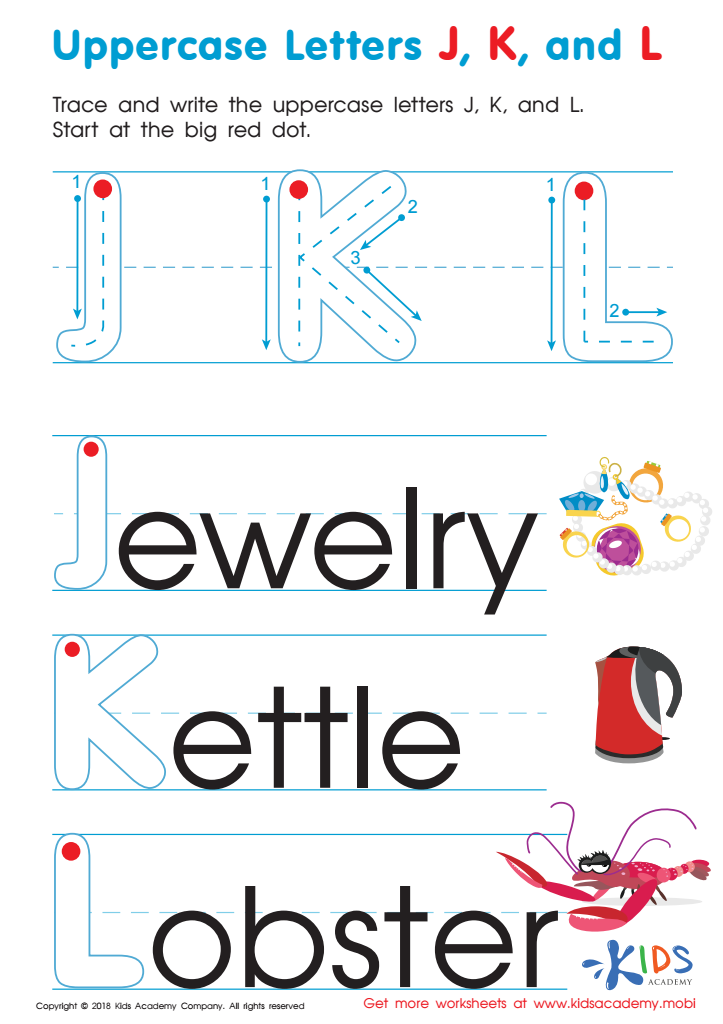
Uppercase Letters J, K, and L Worksheet
 Assign to My Students
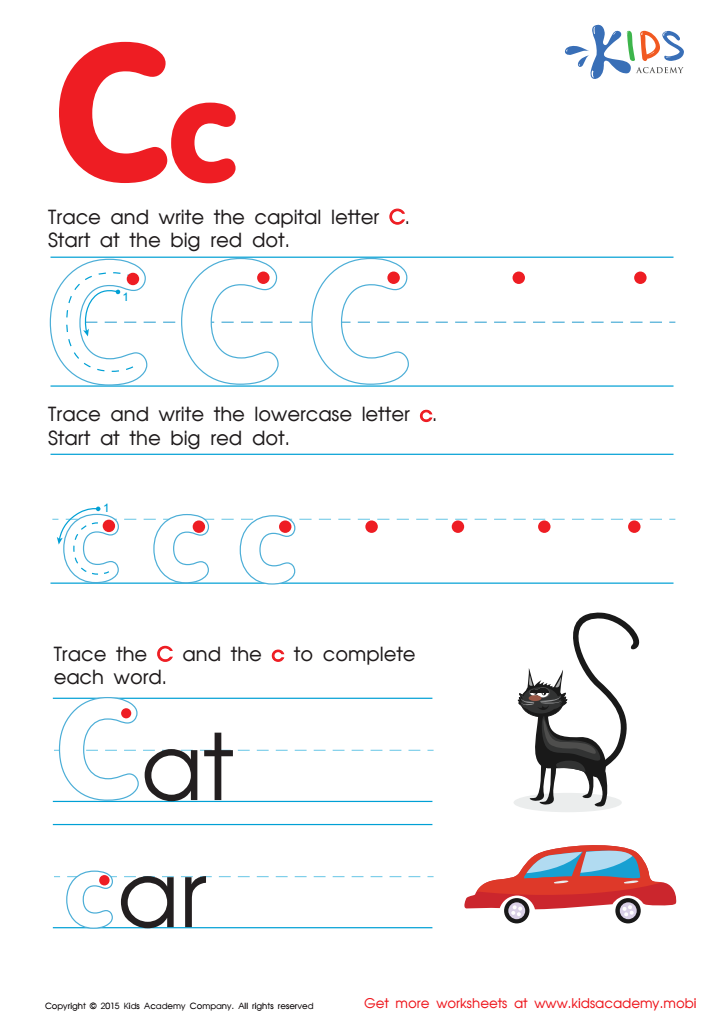
Letter C Tracing Page
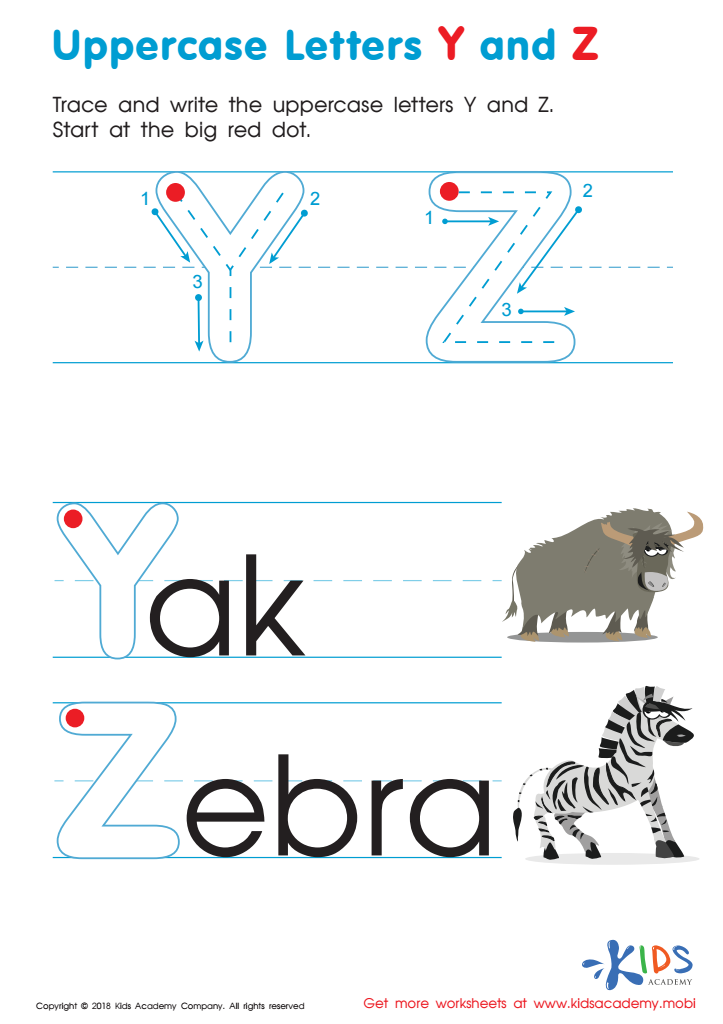
Uppercase Letters Y Z Worksheet








Letter tracing is crucial for children aged 3-5 as it serves as a foundational stepping stone in their literacy development. During this developmental stage, children are honing their fine motor skills and hand-eye coordination. Tracing letters helps fortify these abilities, laying the groundwork for more complex tasks, such as writing independently. It enhances muscle memory and the ability to control small movements, both of which are essential for writing legibly.
Furthermore, letter tracing enforces the understanding of letter shapes, which aids in letter recognition—a critical skill for reading readiness. As children trace, they also become familiar with the structured patterns of letters, supporting their ability to distinguish between similar shapes and improve their visual memory. This familiarity translates into greater ease and confidence when they encounter these letters in books or classroom settings.
Additionally, practicing letter tracing encourages a positive, focused, and patient attitude toward learning. It teaches children to follow directions, practice patience, and persist through repetitive yet engaging learning activities. By integrating tracing into their daily routines, parents and teachers not only enhance the child’s motor and cognitive skills but also ignite a lifelong love of learning. Emphasizing letter tracing during early childhood thus paves the way for academic success and fosters essential developmental milestones.








