Enhance your child's early literacy skills with our Alphabet Familiarity Normal Worksheets designed for ages 3-5. These engaging printable worksheets provide young learners with fun, interactive activities that promote recognition of letters and their sounds. By exploring creative exercises, coloring tasks, and letter tracing, children will build a solid foundation in grasping the alphabet. Our worksheets are age-appropriate and help develop fine motor skills while making learning enjoyable. Ideal for parents and educators, these resources foster a love for reading and writing from an early age, ensuring your child is prepared for future educational success. Download now and support your child's learning journey!

Check out this FREE "Alphabet familiarity" Trial Lesson for age 3-5!

Identify Uppercase Letters A-C

Favorites
With answer key
Interactive
  • 3-5
  • Alphabet familiarity
  • Normal
Find Uppercase Letters G, H, and I Worksheet Preview

Find Uppercase Letters G, H, and I Worksheet

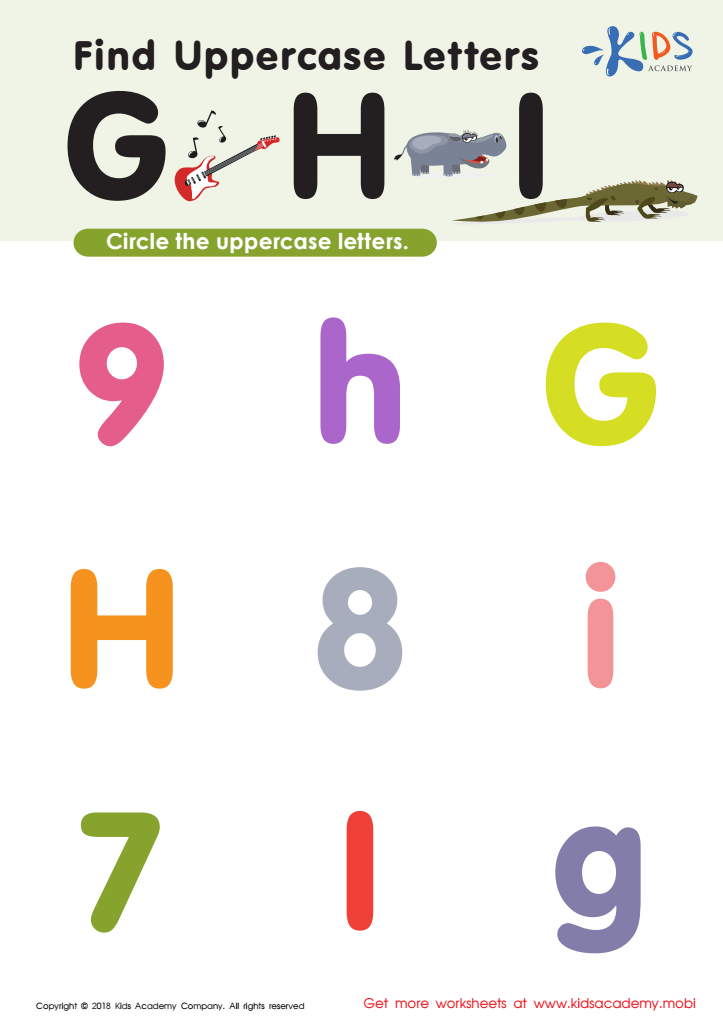
Find G, H, and I in uppercase with this downloadable worksheet! Numbers are included to challenge your kindergartener's letter recognition skills. Plus, practice G, H, and I sounds using the cute graphics. Perfect for learning letter case recognition!
Find Uppercase Letters G, H, and I Worksheet
Worksheet
Find Uppercase Letters Worksheet

Find Uppercase Letters Worksheet

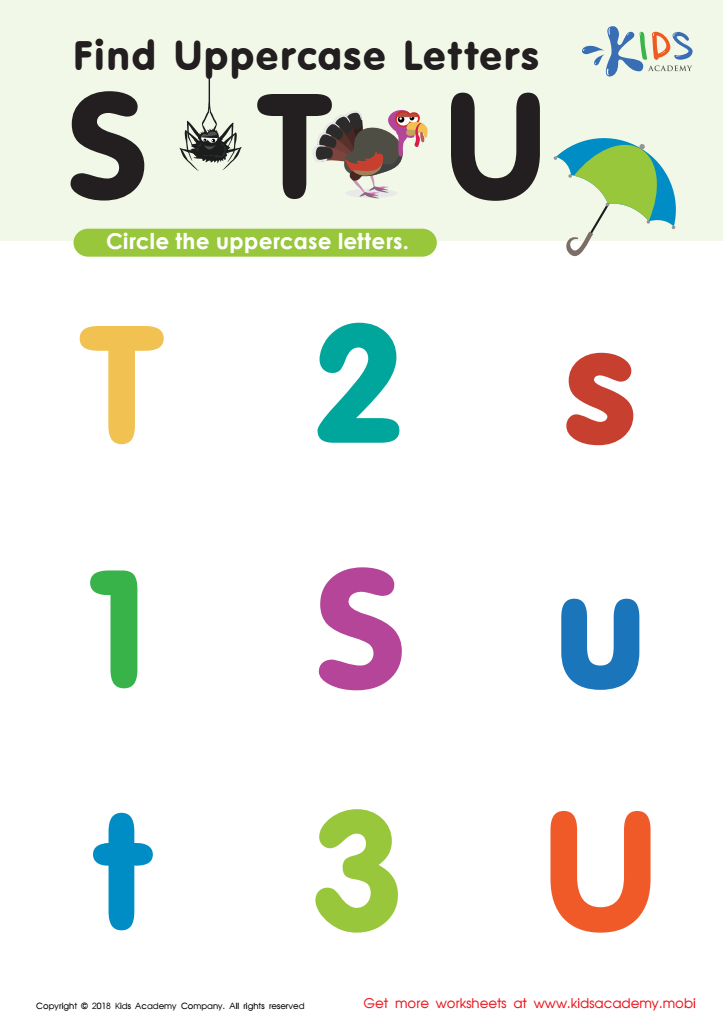
What level is your kid at now? Can they tell the difference between small and uppercase letters? Ask them to name words beginning with S, T and U, then help them find and circle the uppercase letters S, T and U in a mix of small letters, numbers and uppercase letters.
Find Uppercase Letters Worksheet
Worksheet
Find Uppercase Letters J, K, and L Worksheet Preview

Find Uppercase Letters J, K, and L Worksheet

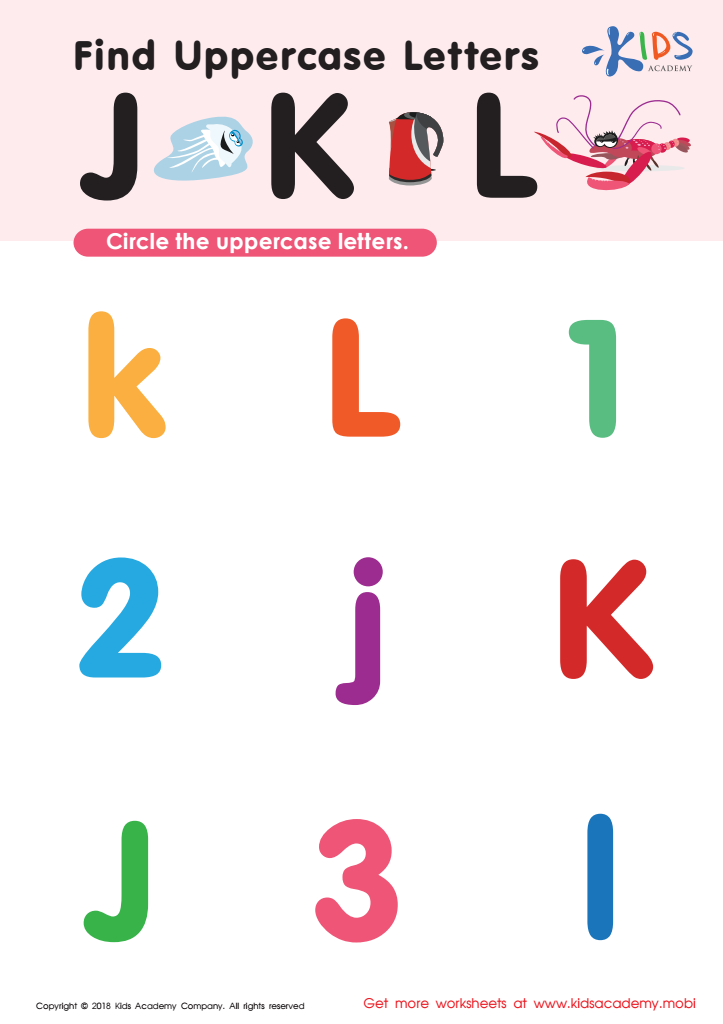
Search for the uppercase letters J, K, and L in this fun worksheet! Help your child identify the starting sound of each picture, then look for the letters. Keep an eye out for numbers that look like letters. Swim with the jellyfish and solve this delightful puzzle!
Find Uppercase Letters J, K, and L Worksheet
Worksheet
Find lowercase Letters s t u Worksheet

Find lowercase Letters s t u Worksheet

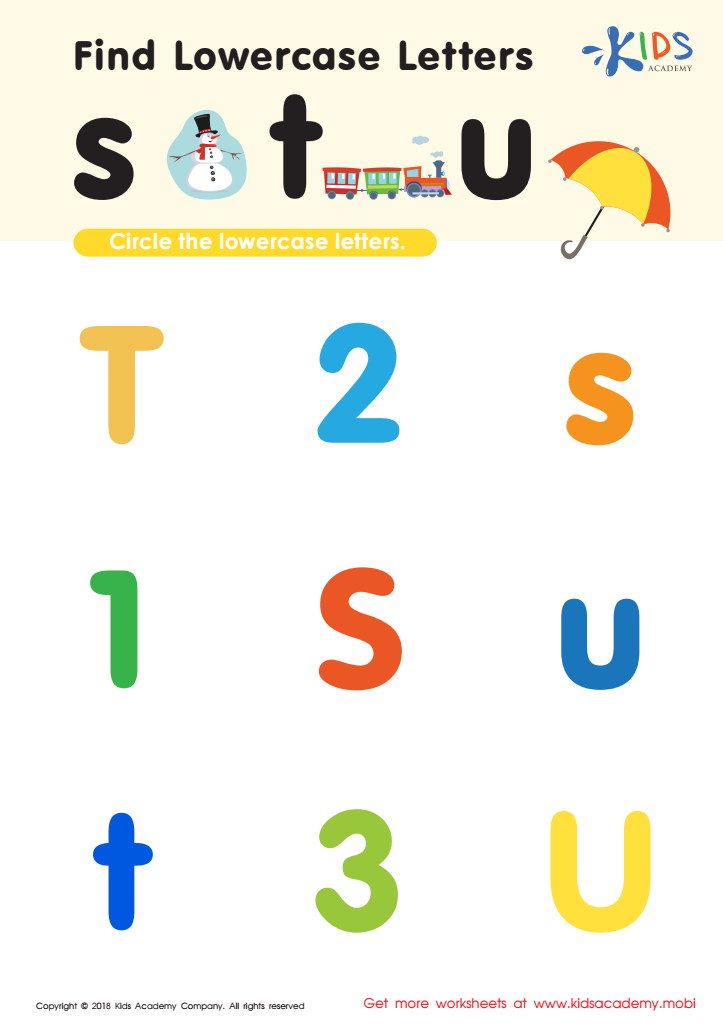
Puzzles are great for boosting your child's thinking skills. Can they identify lowercase letters s, t and u? This free printout contains the letters mixed in with uppercase letters and numbers, all presented in a fun, colorful format - sure to keep them entertained as they learn!
Find lowercase Letters s t u Worksheet
Worksheet
Find Uppercase Letters A, B, and C Worksheet Preview

Find Uppercase Letters A, B, and C Worksheet

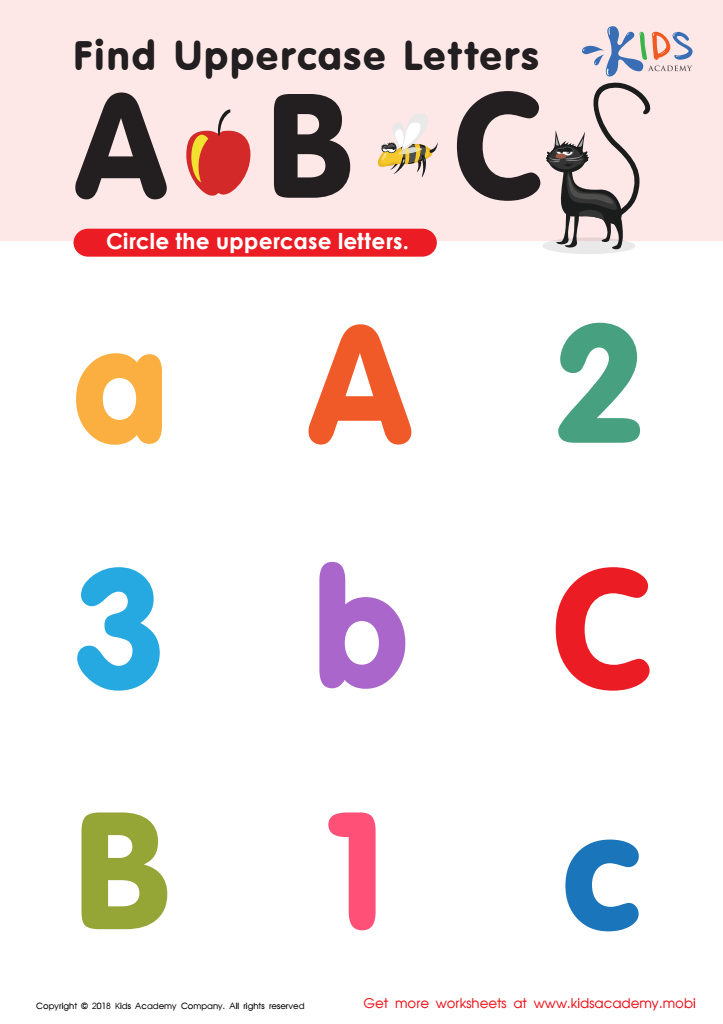
Check out this PDF worksheet and spot all the capital letters! Arranged as a puzzle, this exercise will test little learners to read and recognize uppercase letters and tell the difference between letters and numbers. To help them, use the pictures on top of the page to practice the sounds A, B and C make! 80 words.
Find Uppercase Letters A, B, and C Worksheet
Worksheet
Find Lowercase Letters v w x Worksheet

Find Lowercase Letters v w x Worksheet

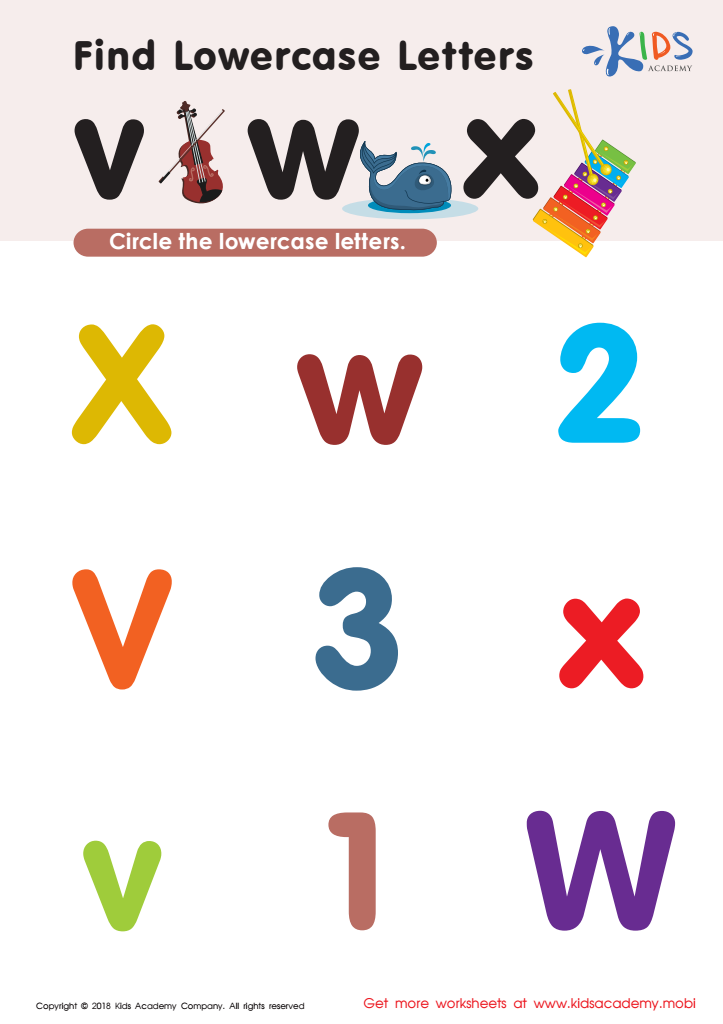
If your child doesn't know the alphabet, get them this helpful worksheet. It's an easy exercise to build their understanding of the alphabet and lowercase letters. Find the letters v, w, and x among other uppercase letters and numbers in the downloadable PDF.
Find Lowercase Letters v w x Worksheet
Worksheet
Phonological Awareness: Assessment 1 Worksheet


Phonological Awareness: Assessment 1 Worksheet

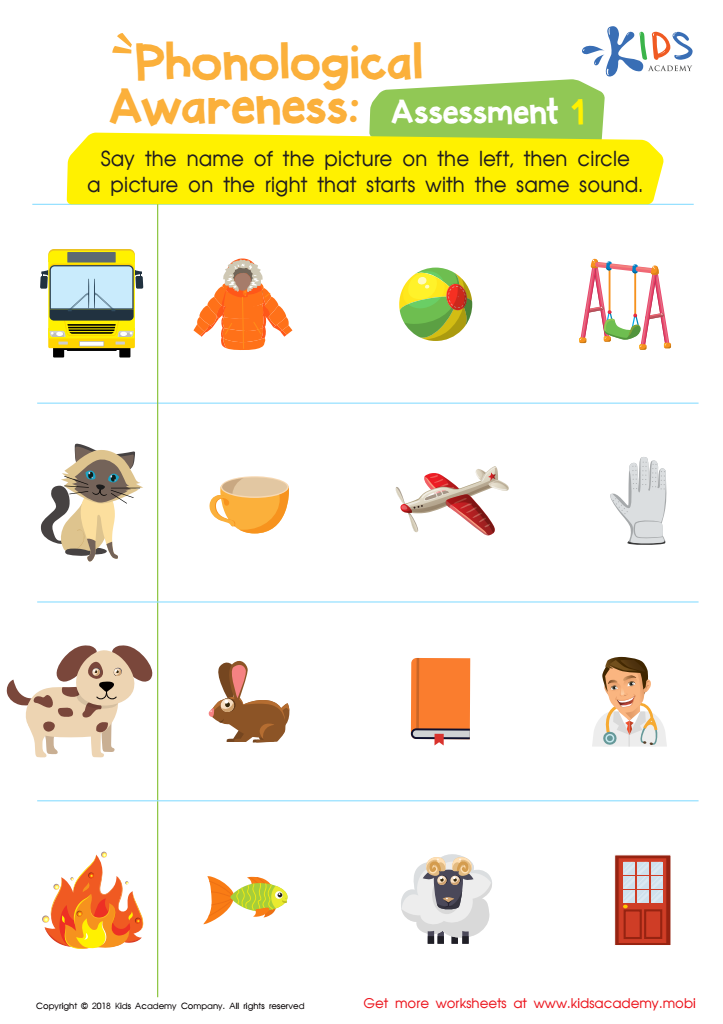
This worksheet helps kids build key phonics skills for pre-reading. They say each picture name aloud, focusing on the starting sound. Then, they match the sound with an image in the same row. Use as a checkpoint for kindergarten or grade 1 phonics readiness.
Phonological Awareness: Assessment 1 Worksheet

Worksheet


Alphabet familiarity is crucial for children aged 3-5 as it lays the foundation for their literacy skills and overall academic success. During these formative years, children are highly receptive to learning and begin to form connections between letters and sounds, which are essential for reading and writing. Familiarity with the alphabet helps develop phonemic awareness, enabling children to identify and manipulate sounds within words—a skill critical for reading proficiency.

Moreover, understanding the alphabet enriches a child's vocabulary and communication skills. It empowers them to recognize their names, label objects, and express their thoughts effectively. From a social perspective, recognizing letters fosters confidence in their ability to participate in classroom activities, improving self-esteem during group settings such as storytime or circle time.

Teachers and parents play a vital role in promoting alphabet familiarity. They can incorporate fun, engaging activities such as singing the alphabet song, reading picture books, or enlisting letter-themed games. By nurturing this familiarity, adults are ensuring that children develop critical early literacy skills that will serve them well throughout their educational journey, setting the stage for lifelong learning and reading enjoyment. Investing in kids' alphabet knowledge today ultimately promotes their future academic persistence and successes.