Basic arithmetic practice Normal Worksheets for Ages 3-5
3 filtered results
-
From - To
Discover fun and engaging basic arithmetic practice worksheets designed specifically for children ages 3-5! Our normal worksheets help young learners build essential math skills through colorful illustrations and interactive activities. With a focus on foundational concepts like addition and subtraction, these worksheets encourage exploration and hands-on learning. Each printable resource is crafted to boost your child’s confidence while paving the way for future math success. Perfect for homeschooling or classroom activities, our easy-to-use worksheets promote essential cognitive development. Visit our site to download the worksheets and watch your little ones flourish in their early arithmetic journey!
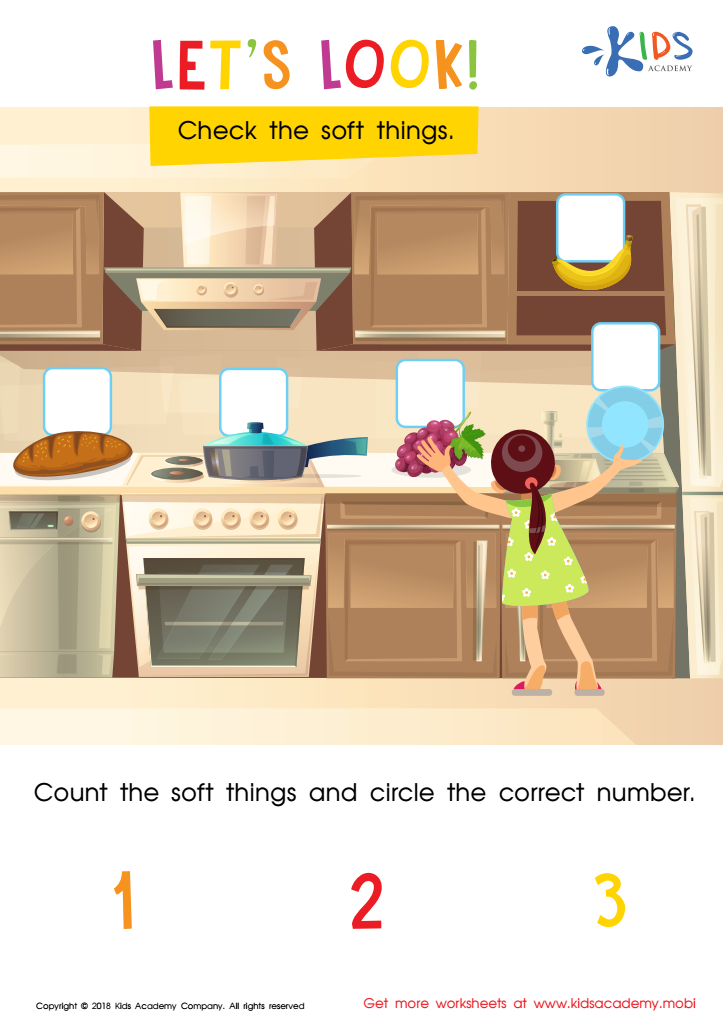
Let's Look! Assessment Worksheet
 Assign to My Students
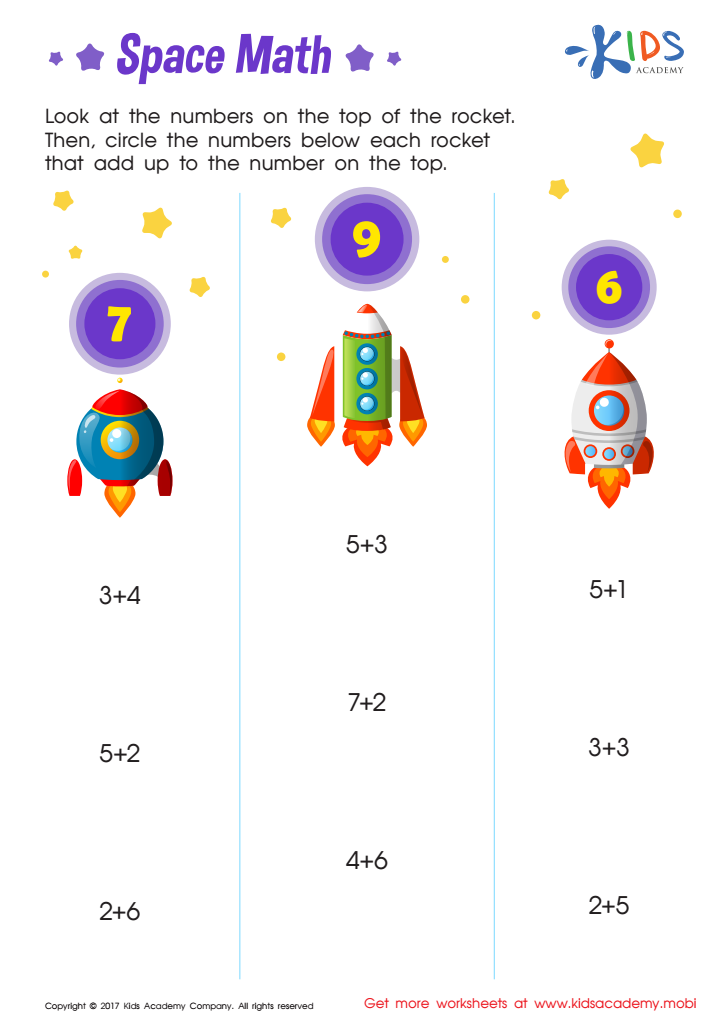
Addition: Space Math Worksheet
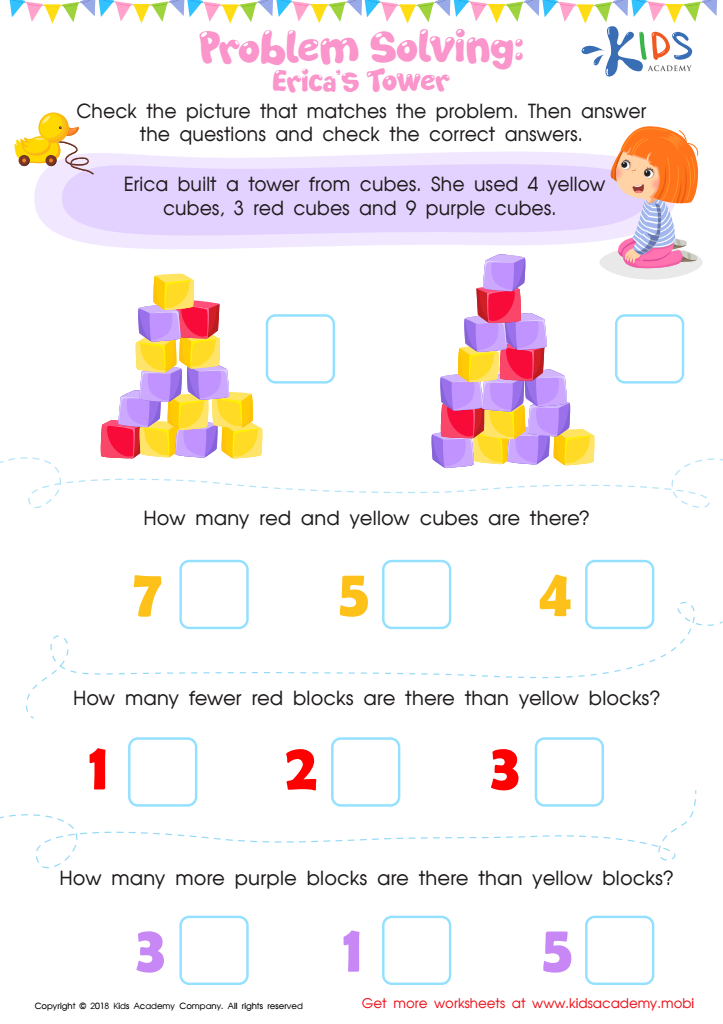
Problem Solving: Erica's Tower Worksheet








Basic arithmetic practice for children aged 3-5 is vital for several reasons, making it a key focus for both parents and teachers. First, early math skills lay the groundwork for future academic success. Children begin to understand numbers, counting, and simple operations, developing a strong mathematical foundation that is essential as they progress in school.
Engaging in these activities at a young age promotes cognitive development, enhancing problem-solving skills and critical thinking. It also supports language development, as discussing numbers and concepts helps expand vocabulary. Furthermore, early arithmetic fosters a sense of accomplishment and confidence. When children grasp these basic concepts, they feel empowered, which can stimulate a love for learning.
Routine practice also cultivates fine motor skills through hands-on activities, such as counting with blocks or using manipulatives. Incorporating basic arithmetic into daily life—such as cooking, shopping, or playing games—makes learning enjoyable and relatable, reinforcing the idea that math is everywhere.
Lastly, partnering with parents and teachers to encourage these practices nurtures a collaborative learning environment where children feel supported. Overall, prioritizing basic arithmetic in early childhood education underscores its significance in shaping well-rounded, confident learners.








