Division practice Normal Worksheets for Ages 3-5
4 filtered results
-
From - To
Discover an engaging collection of Division Practice Normal Worksheets designed specifically for children ages 3-5. These worksheets provide a fun and interactive way for your little ones to understand basic division concepts through colorful illustrations and simple, relatable exercises. Perfect for preschool and early learners, each activity encourages the development of critical thinking and problem-solving skills while boosting confidence in math. Whether used at home or in the classroom, our division practice worksheets align with early learning standards, ensuring your child builds a strong foundation in mathematics. Start your child’s journey to math mastery with these easy and enjoyable worksheets today!
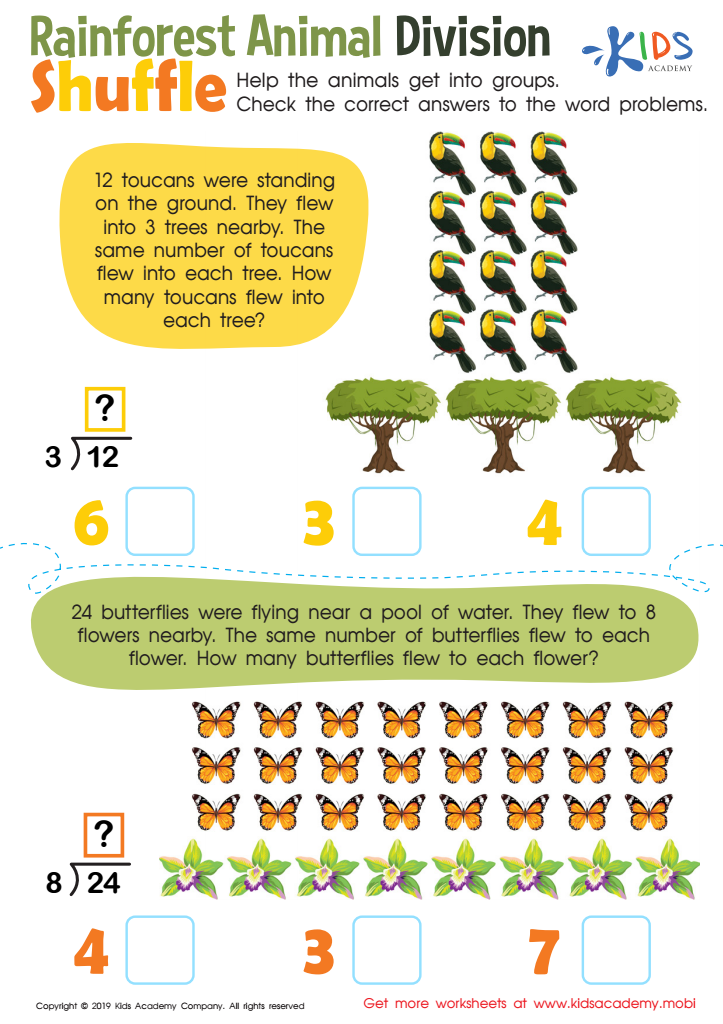
Rainforest Animal Division Worksheet
 Assign to My Students
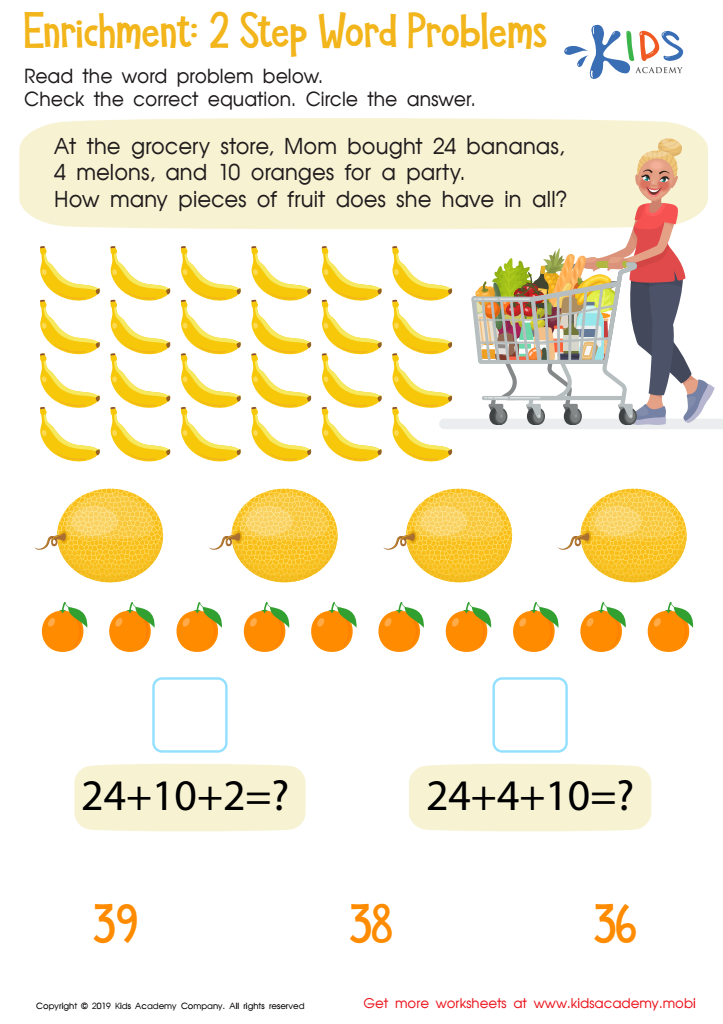
Enrichment -2 Step Word Problems Worksheet
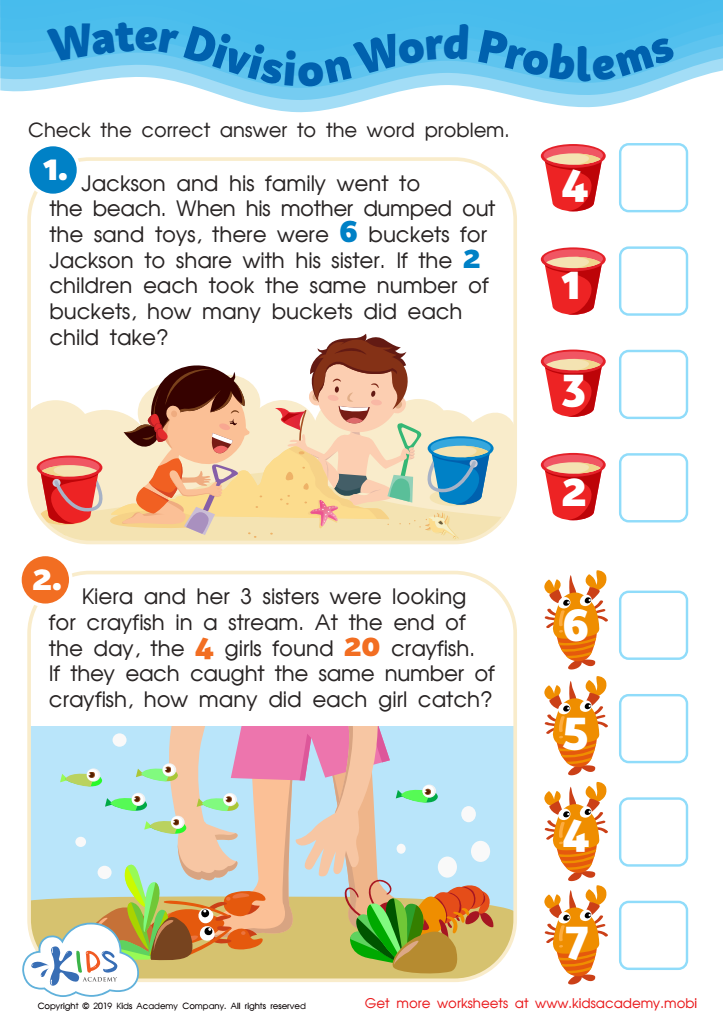
Water Division Word Problems Worksheet
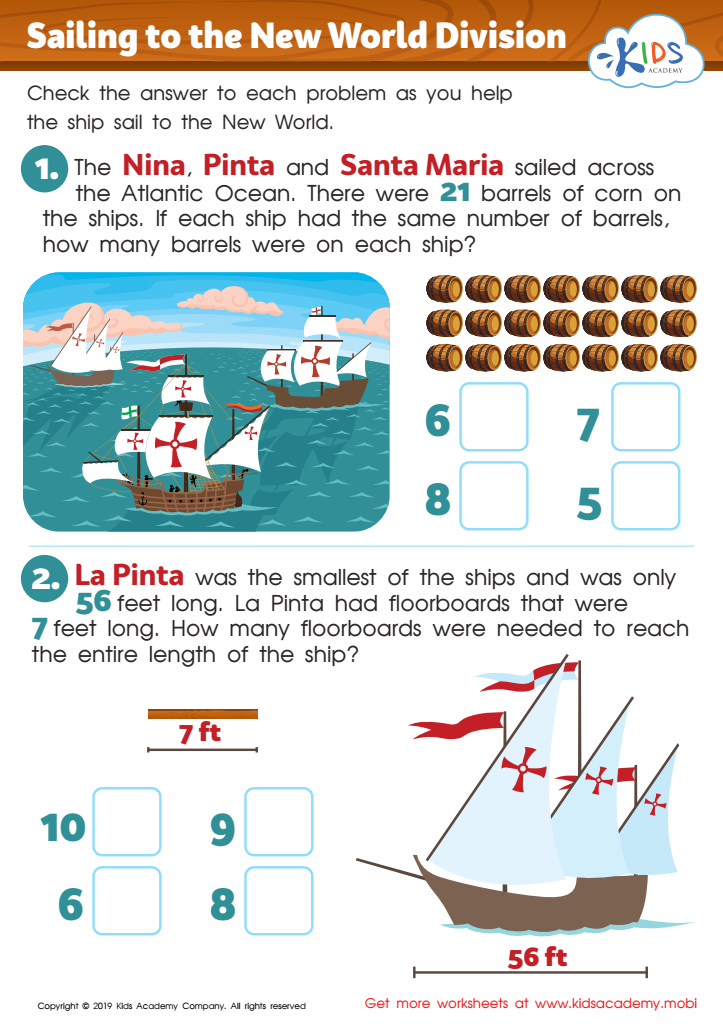
Sailing to the New World Division Worksheet







Division practice for ages 3-5 is essential for building foundational skills in mathematics. Early exposure to basic mathematical concepts helps children develop critical thinking and problem-solving abilities that will benefit them throughout their educational journey. Understanding the idea of division, even in its simplest form, lays the groundwork for more complex concepts they'll encounter later on.
At this age, children begin to grasp the concepts of sharing and grouping, which are natural precursors to division. By engaging in playful activities that involve sharing objects or dividing them into groups, children learn the significance of quantity and how to distribute fairly. Such exercises enhance their cognitive development and teach important social skills, like kindness and cooperation.
Parents and teachers who prioritize division practice help nurture a positive attitude towards math, leading to increased confidence in their abilities. Encouraging these early practices fosters an environment where kids understand the relevance of math in everyday life, making it less intimidating as they grow. Ultimately, a strong foundation in mathematical concepts promotes a love for learning and ensures that children are well-prepared for future academic challenges. Investing time in these early skills can yield lasting benefits in children's educational paths.








