
Verb identification Normal Worksheets for Ages 3-5
3 filtered results
Difficulty Level
Grade
Age
-
From - To
Subject
Activity
Standards
Enhance your child's language skills with our Verb Identification Normal Worksheets designed for ages 3-5. These engaging and interactive activities help young learners recognize and understand the role of verbs in sentences, fostering early grammar comprehension. Each worksheet features colorful illustrations and simple exercises that make learning fun and effective for preschool and kindergarten students. By identifying action words, children not only expand their vocabulary but also develop critical thinking and sentence structure skills. Perfect for both classroom use and at-home learning, these printable worksheets pave the way for a strong foundation in language arts.
Favorites
With answer key
Interactive
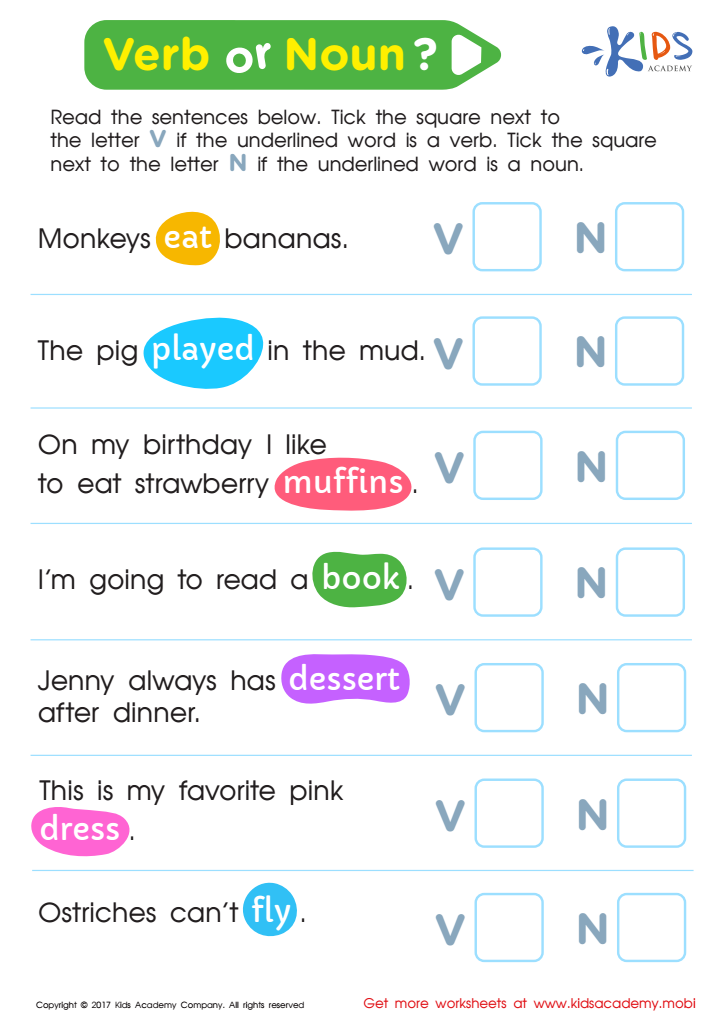
Verb or Noun Worksheet
This worksheet will help your child identify verbs and nouns quickly. With colorful highlights and simple sentences, they'll master parts of speech in no time! Get ahead of the game with this incredible worksheet.
 Assign to My Students
Verb or Noun Worksheet
Worksheet
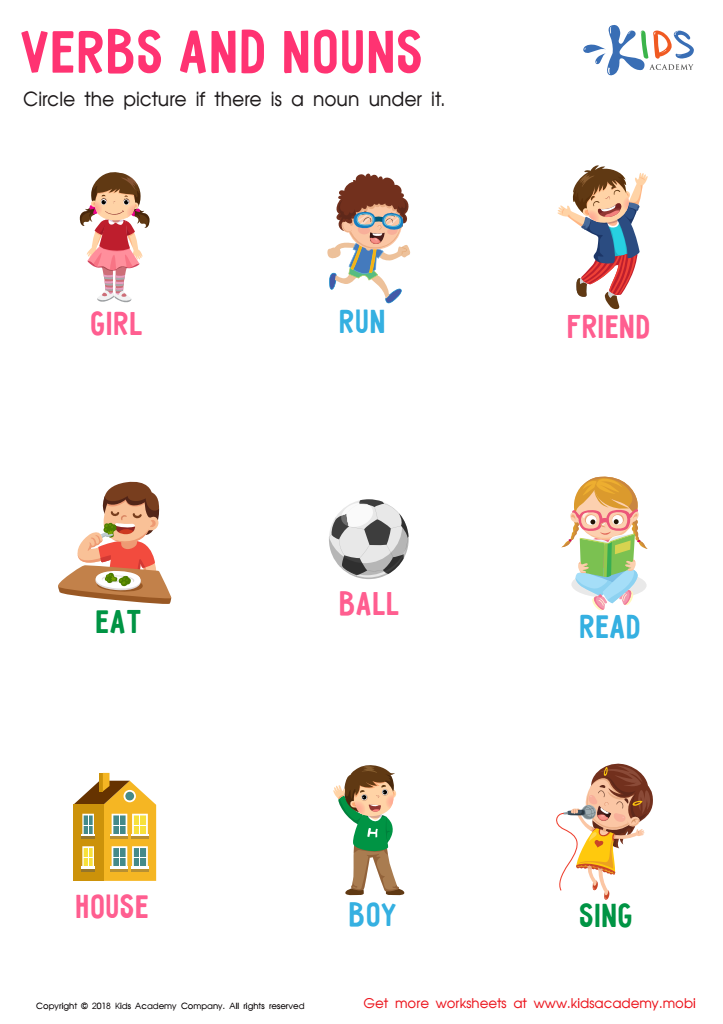
Verbs and Nouns Worksheet
Your child should have basic knowledge of verbs and nouns before starting this worksheet. Go through it with them and ask them to circle the pictures with nouns under them. This way, they'll become more familiar with parts of speech.
Verbs and Nouns Worksheet
Worksheet
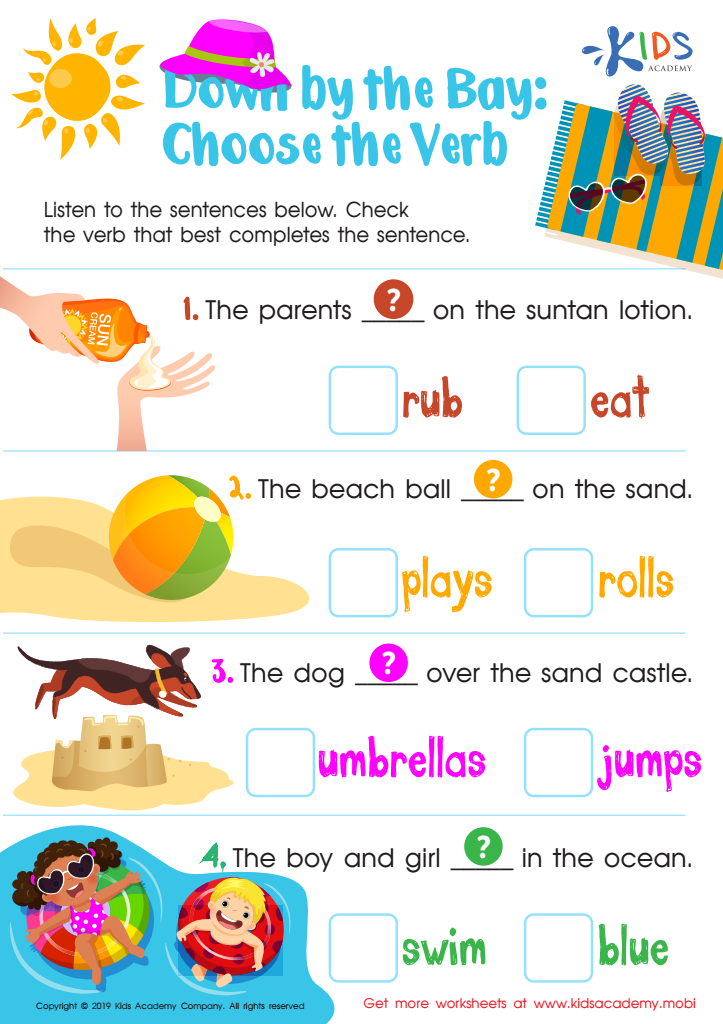
Down by the Bay: Choose the Verb Worksheet
Teach your kids about verbs: words that describe actions, like 'playing', 'eating', 'talking'. Ask your child to give their own verbs, then read the sentences in a worksheet and help them pick the best one for each question.
Down by the Bay: Choose the Verb Worksheet
Worksheet
Join Kids Academy for Free
Who is primarily going to use this learning content?








Verb identification is essential for children ages 3-5 because it lays the groundwork for effective communication and cognitive development. Understanding and recognizing verbs enables young children to form coherent sentences, express their needs, and describe actions. This early language skill is crucial for social interactions, allowing children to convey their thoughts and engage in meaningful conversations with peers and adults.
Moreover, focusing on verb identification helps enhance reading and writing skills. It supports the child's ability to comprehend stories, follow instructions, and eventually grow into proficient readers. Identifying verbs also sharpens critical thinking skills as children learn to interpret and predict actions in various contexts.
Additionally, parents and teachers caring about verb identification foster a love for learning. Interactive activities like singing action songs, reading picture books, and playing word games make this learning process enjoyable and memorable. Such playful engagements encourage curiosity and creativity, building a strong linguistic foundation.
By emphasizing verb identification, parents and teachers not only ensure linguistic competence but also support overall cognitive and social development. This foundational skill prepares children for future academic success and enhances their ability to interact with the world around them. Therefore, dedicating attention to verb recognition in early childhood is vital for holistic development.








